 Add to Chrome
 Add to Firefox
 Add to Edge
Unsupervised Multidomain Approaches to Named Entity Recognition with Small Datasets
Aug 02, 2026
This paper explores the challenges and the methodologies associated with learning quality representations in scenarios with unlabelled small or limited datasets for downstream information extraction task (Multidomain Named Entity Recognition (NER). The study adopts a Transfer Learning on small datasets. Traditional NER systems often rely on large, labelled data, which is impractical for many domains. This study, therefore, applies an unsupervised pre-training approach to precondition and identify entities without annotated datasets, then applies transfer learning models to different simulated limited datasets for a named entity recognition task. Entity Recognition (NER) is essential in natural language processing (NLP), it identifies and classifies related entities within the text. This study addresses the complexities of domain variability, data sparsity, and overfitting and investigates innovative approaches such as data augmentation, few-shot learning, and domain adversarial training. Integrating these techniques promises to enhance the performance and generalizability of NER systems across diverse and resource-constrained domains, paving the way for more efficient and adaptable NLP applications.

Enhancing tutoring systems by leveraging tailored promptings and domain knowledge with Large Language Models
May 02, 2025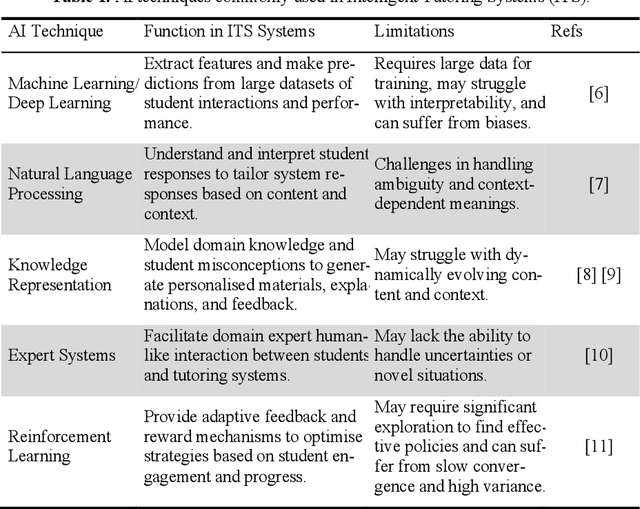
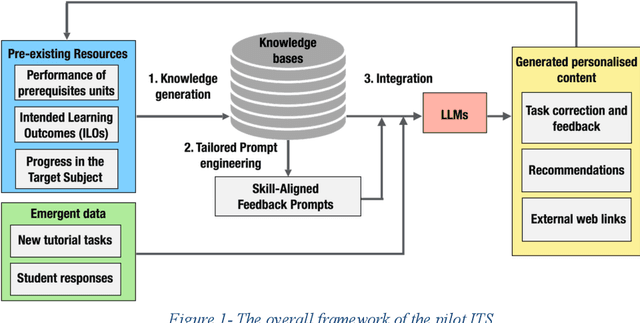
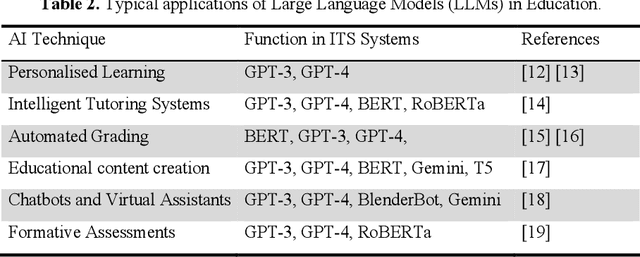
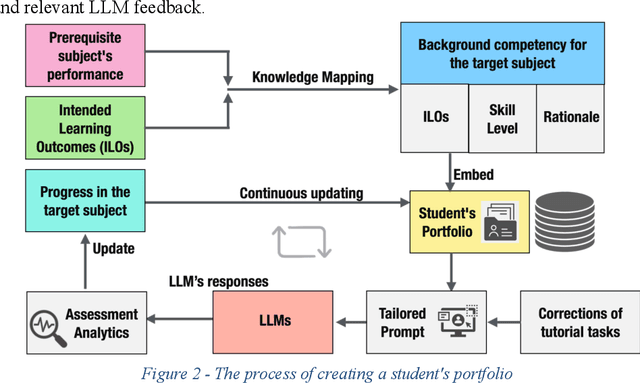
Recent advancements in artificial intelligence (AI) and machine learning have reignited interest in their impact on Computer-based Learning (CBL). AI-driven tools like ChatGPT and Intelligent Tutoring Systems (ITS) have enhanced learning experiences through personalisation and flexibility. ITSs can adapt to individual learning needs and provide customised feedback based on a student's performance, cognitive state, and learning path. Despite these advances, challenges remain in accommodating diverse learning styles and delivering real-time, context-aware feedback. Our research aims to address these gaps by integrating skill-aligned feedback via Retrieval Augmented Generation (RAG) into prompt engineering for Large Language Models (LLMs) and developing an application to enhance learning through personalised tutoring in a computer science programming context. The pilot study evaluated a proposed system using three quantitative metrics: readability score, response time, and feedback depth, across three programming tasks of varying complexity. The system successfully sorted simulated students into three skill-level categories and provided context-aware feedback. This targeted approach demonstrated better effectiveness and adaptability compared to general methods.
GPSPiChain-Blockchain based Self-Contained Family Security System in Smart Home
Feb 13, 2021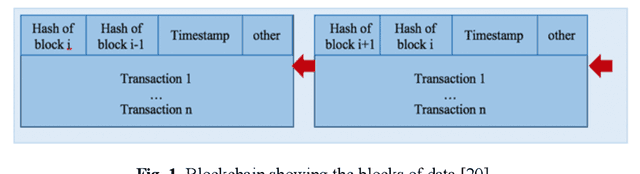
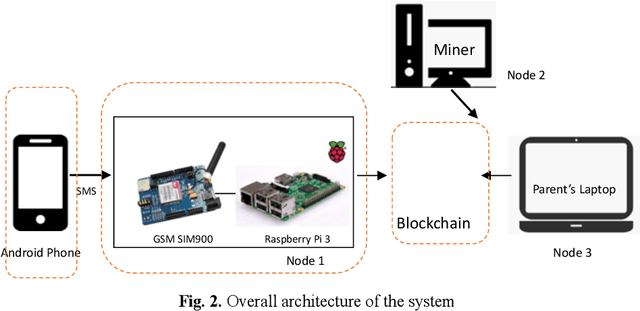
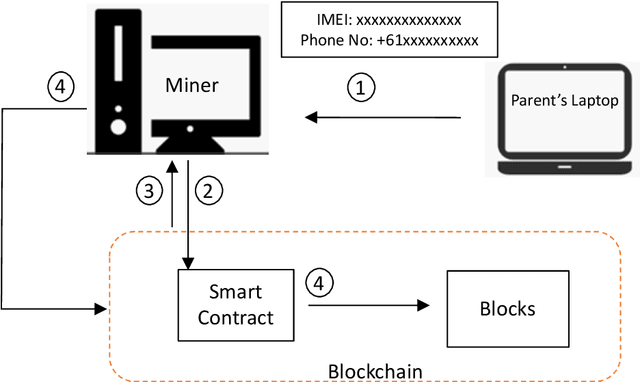
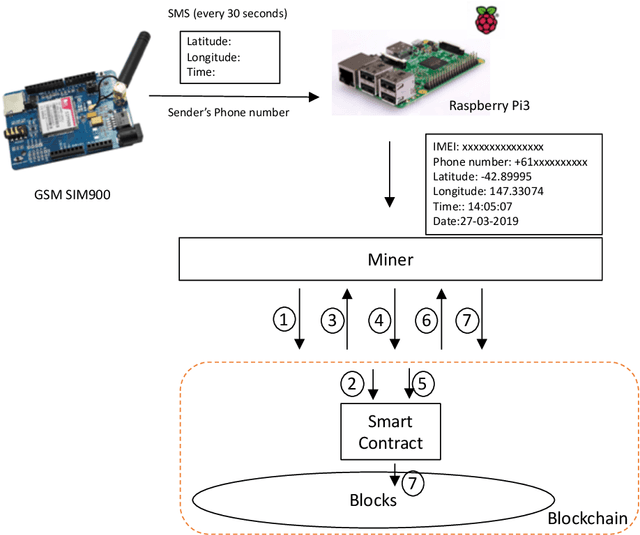
With advancements in technology, personal computing devices are better adapted for and further integrated into people's lives and homes. The integration of technology into society also results in an increasing desire to control who and what has access to sensitive information, especially for vulnerable people including children and the elderly. With blockchain coming in to the picture as a technology that can revolutionise the world, it is now possible to have an immutable audit trail of locational data over time. By controlling the process through inexpensive equipment in the home, it is possible to control whom has access to such personal data. This paper presents a blockchain based family security system for tracking the location of consenting family members' smart phones. The locations of the family members' smart phones are logged and stored in a private blockchain which can be accessed through a node installed in the family home on a computer. The data for the whereabouts of family members stays within the family unit and does not go to any third party. The system is implemented in a small scale (one miner and two other nodes) and the technical feasibility is discussed along with the limitations of the system. Further research will cover the integration of the system into a smart home environment, and ethical implementations of tracking, especially of vulnerable people, using the immutability of blockchain.