 Add to Chrome
 Add to Firefox
 Add to Edge
Pan-Cancer Mapping of the Tumor Immune Landscape through Metagene Clustering and Predictive Modeling
Mar 28, 2026
As immunotherapies become standard cancer treatments, it is increasingly important to identify a patient's immune profile, which encompasses the activity of immune cells within the tumor microenvironment and the presence of specific biomarkers. However, we lack mechanistic explanations drivers of immune phenotypes. Despite advances in immune profiling with high-throughput sequencing, the mechanisms driving them remain unclear. This study aimed to identify novel, robust immune-related gene clusters (metagenes) and evaluate their prognostic significance and functional relevance across various pan-cancer types using a comprehensive computational pipeline. We acquired pan-cancer bulk RNA-seq and established immune subtypes from The Cancer Genome Atlas (TCGA). Using expression-based filtering and clustering of genes with ANOVA and Gaussian Mixture Model (GMM), we identified 48 unique metagenes. These metagenes achieved 87% accuracy in predicting the established subtypes. SHAP analysis revealed the most predictive metagenes per subtype, while functional enrichment analysis identified their associated pathways. Genes were ranked by differential expression between high- and low-expression groups. The metagenes revealed insights, including co-expression of immune activation and regulatory factors, links between cell cycle regulation and immune evasion, and dynamic microenvironment remodeling signatures. Kaplan-Meier survival analysis and multivariate Cox Regression revealed that many metagenes had prognostic value for overall survival. Overall, the metagenes represent coordinated biological programs across diverse cancer types, providing a foundation for developing robust, broadly applicable immuno-oncology biomarkers that extend beyond single-gene markers. They demonstrate prognostic value across cancer types and hold potential to guide immunotherapy treatment decisions.

Multi-Modal Adapter for Vision-Language Models
Sep 03, 2024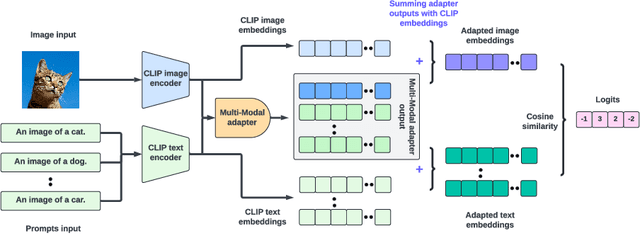
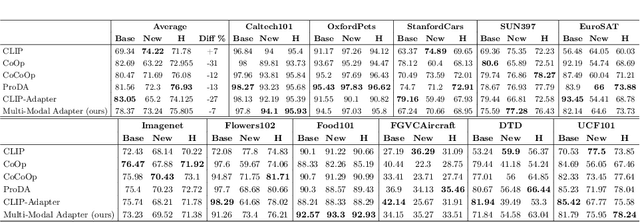
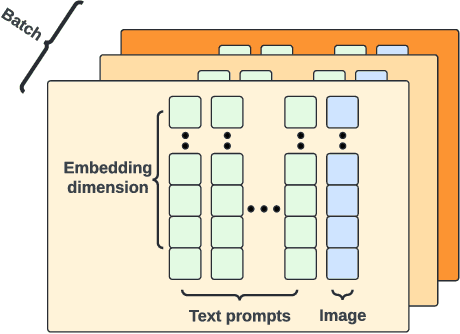

Large pre-trained vision-language models, such as CLIP, have demonstrated state-of-the-art performance across a wide range of image classification tasks, without requiring retraining. Few-shot CLIP is competitive with existing specialized architectures that were trained on the downstream tasks. Recent research demonstrates that the performance of CLIP can be further improved using lightweight adaptation approaches. However, previous methods adapt different modalities of the CLIP model individually, ignoring the interactions and relationships between visual and textual representations. In this work, we propose Multi-Modal Adapter, an approach for Multi-Modal adaptation of CLIP. Specifically, we add a trainable Multi-Head Attention layer that combines text and image features to produce an additive adaptation of both. Multi-Modal Adapter demonstrates improved generalizability, based on its performance on unseen classes compared to existing adaptation methods. We perform additional ablations and investigations to validate and interpret the proposed approach.
HyNNA: Improved Performance for Neuromorphic Vision Sensor based Surveillance using Hybrid Neural Network Architecture
Mar 19, 2020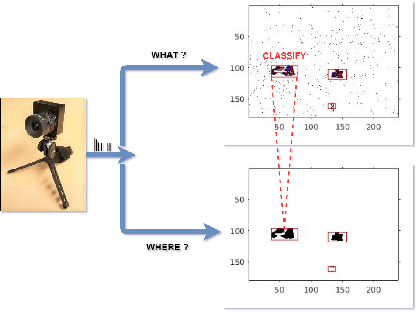
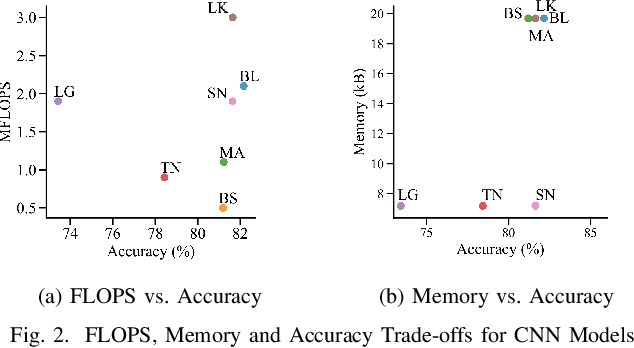
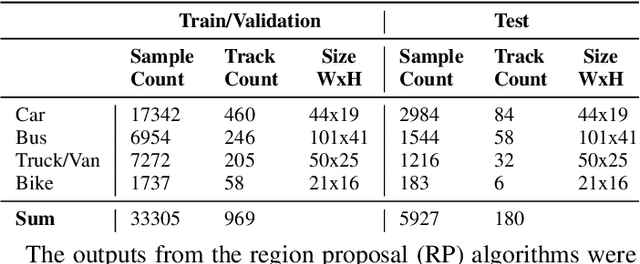

Applications in the Internet of Video Things (IoVT) domain have very tight constraints with respect to power and area. While neuromorphic vision sensors (NVS) may offer advantages over traditional imagers in this domain, the existing NVS systems either do not meet the power constraints or have not demonstrated end-to-end system performance. To address this, we improve on a recently proposed hybrid event-frame approach by using morphological image processing algorithms for region proposal and address the low-power requirement for object detection and classification by exploring various convolutional neural network (CNN) architectures. Specifically, we compare the results obtained from our object detection framework against the state-of-the-art low-power NVS surveillance system and show an improved accuracy of 82.16% from 63.1%. Moreover, we show that using multiple bits does not improve accuracy, and thus, system designers can save power and area by using only single bit event polarity information. In addition, we explore the CNN architecture space for object classification and show useful insights to trade-off accuracy for lower power using lesser memory and arithmetic operations.
Convolutional Neural Networks In Classifying Cancer Through DNA Methylation
Jul 24, 2018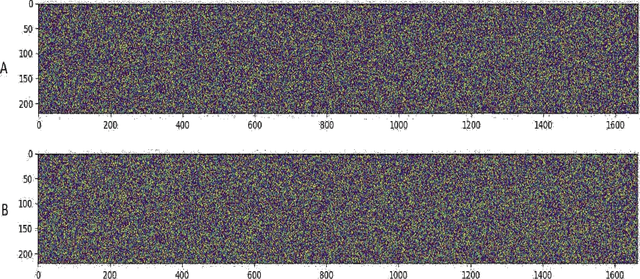
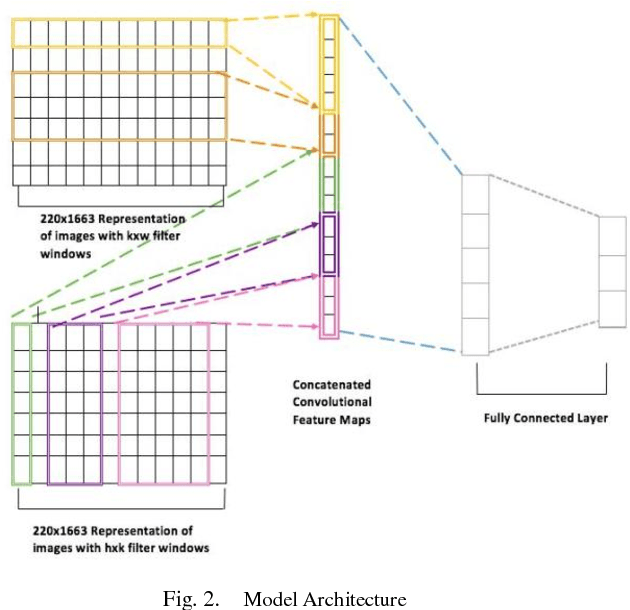
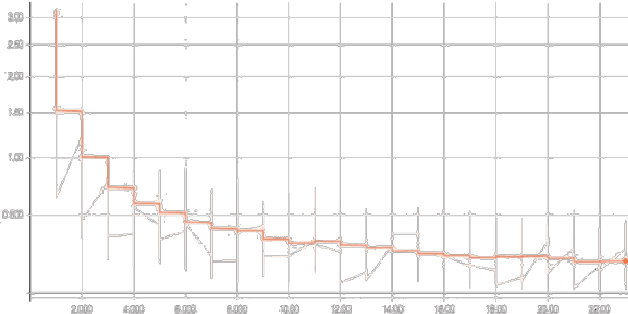
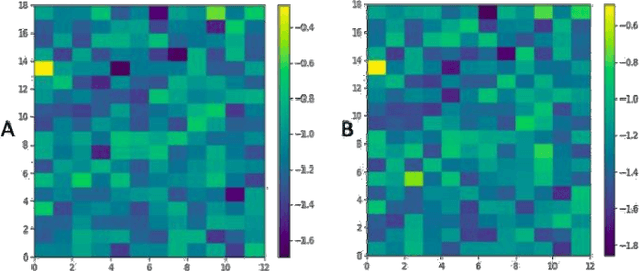
DNA Methylation has been the most extensively studied epigenetic mark. Usually a change in the genotype, DNA sequence, leads to a change in the phenotype, observable characteristics of the individual. But DNA methylation, which happens in the context of CpG (cytosine and guanine bases linked by phosphate backbone) dinucleotides, does not lead to a change in the original DNA sequence but has the potential to change the phenotype. DNA methylation is implicated in various biological processes and diseases including cancer. Hence there is a strong interest in understanding the DNA methylation patterns across various epigenetic related ailments in order to distinguish and diagnose the type of disease in its early stages. In this work, the relationship between methylated versus unmethylated CpG regions and cancer types is explored using Convolutional Neural Networks (CNNs). A CNN based Deep Learning model that can classify the cancer of a new DNA methylation profile based on the learning from publicly available DNA methylation datasets is then proposed.