 Add to Chrome
 Add to Firefox
 Add to Edge
FinAgent: An Agentic AI Framework Integrating Personal Finance and Nutrition Planning
Dec 24, 2025
The issue of limited household budgets and nutritional demands continues to be a challenge especially in the middle-income environment where food prices fluctuate. This paper introduces a price aware agentic AI system, which combines personal finance management with diet optimization. With household income and fixed expenditures, medical and well-being status, as well as real-time food costs, the system creates nutritionally sufficient meals plans at comparatively reasonable prices that automatically adjust to market changes. The framework is implemented in a modular multi-agent architecture, which has specific agents (budgeting, nutrition, price monitoring, and health personalization). These agents share the knowledge base and use the substitution graph to ensure that the nutritional quality is maintained at a minimum cost. Simulations with a representative Saudi household case study show a steady 12-18\% reduction in costs relative to a static weekly menu, nutrient adequacy of over 95\% and high performance with price changes of 20-30%. The findings indicate that the framework can locally combine affordability with nutritional adequacy and provide a viable avenue of capacity-building towards sustainable and fair diet planning in line with Sustainable Development Goals on Zero Hunger and Good Health.

Power Transformer Health Index and Life Span Assessment: A Comprehensive Review of Conventional and Machine Learning based Approaches
Apr 19, 2025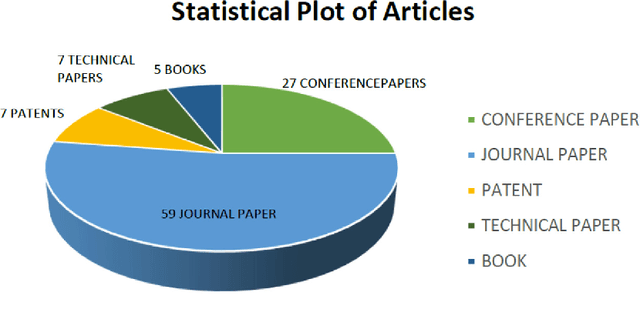

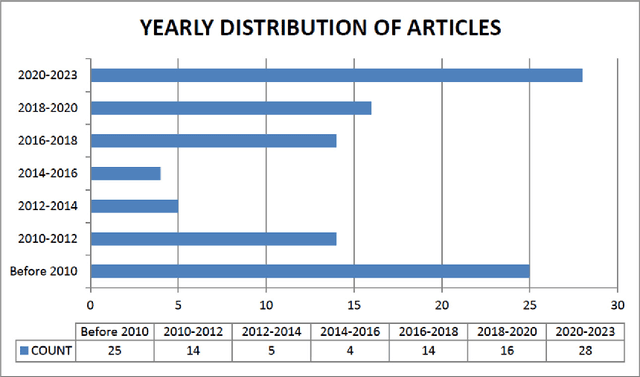
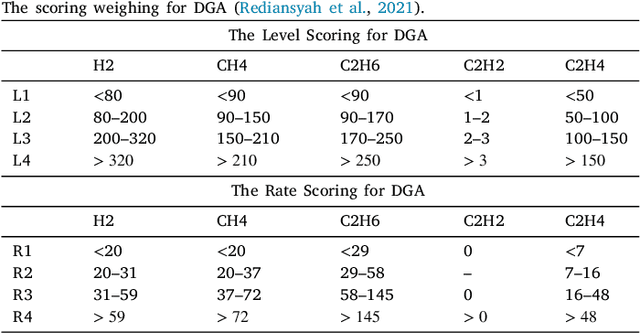
Power transformers play a critical role within the electrical power system, making their health assessment and the prediction of their remaining lifespan paramount for the purpose of ensuring efficient operation and facilitating effective maintenance planning. This paper undertakes a comprehensive examination of existent literature, with a primary focus on both conventional and cutting-edge techniques employed within this domain. The merits and demerits of recent methodologies and techniques are subjected to meticulous scrutiny and explication. Furthermore, this paper expounds upon intelligent fault diagnosis methodologies and delves into the most widely utilized intelligent algorithms for the assessment of transformer conditions. Diverse Artificial Intelligence (AI) approaches, including Artificial Neural Networks (ANN) and Convolutional Neural Network (CNN), Support Vector Machine (SVM), Random Forest (RF), Genetic Algorithm (GA), and Particle Swarm Optimization (PSO), are elucidated offering pragmatic solutions for enhancing the performance of transformer fault diagnosis. The amalgamation of multiple AI methodologies and the exploration of timeseries analysis further contribute to the augmentation of diagnostic precision and the early detection of faults in transformers. By furnishing a comprehensive panorama of AI applications in the field of transformer fault diagnosis, this study lays the groundwork for future research endeavors and the progression of this critical area of study.