 Add to Chrome
 Add to Firefox
 Add to Edge
PhyAgentOS: A Self-Evolving Operating System for Embodied Agents with Decoupled Cognitive Planning and Physical Execution
Jul 18, 2026
Vision-language-action models, world models, and agentic planners each advance physical intelligence, yet their composition lacks a common execution abstraction, shared state, semantic verification, and persistent experience across heterogeneous embodiments. We present PhyAgentOS, a runtime foundation delivering scheduling, verification, memory, benchmarking, and safety as system-level services. Its Session-Centered Runtime treats a session, not an action, as the minimum unit of scheduling, compatibility preflight, supervised execution, evidence collection, and acceptance. To decouple cognition from physical execution, the cognition-physics boundary is a file system: the State-as-a-File protocol materializes cross-layer state as Markdown with YAML, yielding inspectable, versionable records without code dependencies between Agent and Runtime layers. These views form a unified cognitive state space aligning intent, capabilities, environment, execution, and experience. The SessionVerifier distinguishes execution termination from semantic task completion via evidence-grounded verdicts of success, failure, or replan. Verified outcomes are consolidated through epistemic memory into reusable knowledge and corrective lessons, closing a trial-and-error loop without retraining. Benchmarking reuses the deployment session and verification path, so results trace to real execution. Layered safety constrains both policy-driven and agent-driven execution: preflight, action bridges, SafetyGuard, heartbeat monitoring, and target-local constraints. Validation is progressive: games test cognitive planning, simulation adds dynamics and control, real robots add hardware noise, with the cognitive layer held constant. PhyAgentOS is benchmarked on Optimus-67, StarDojo, and DST-Dojo, validated on 19+ simulated and physical embodiments, and gains on LIBERO, Calvin, and RoboCasa365 across multiple VLA models.

Canonical Correlation Guided Deep Neural Network
Sep 28, 2024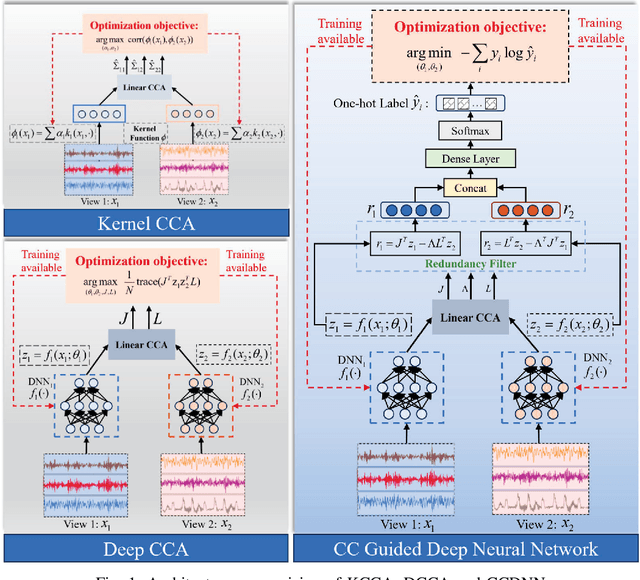
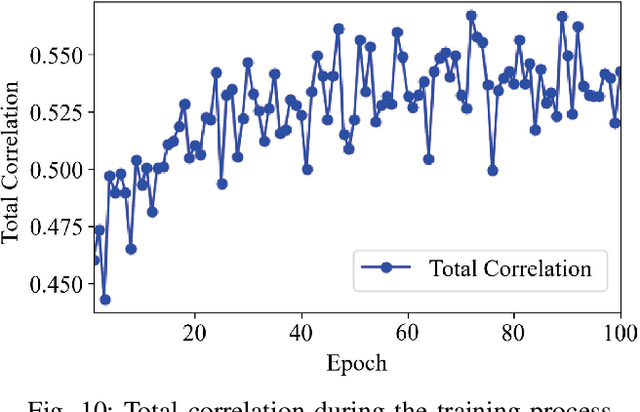
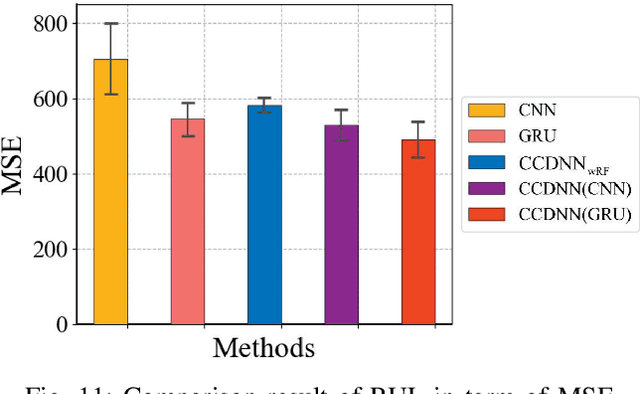
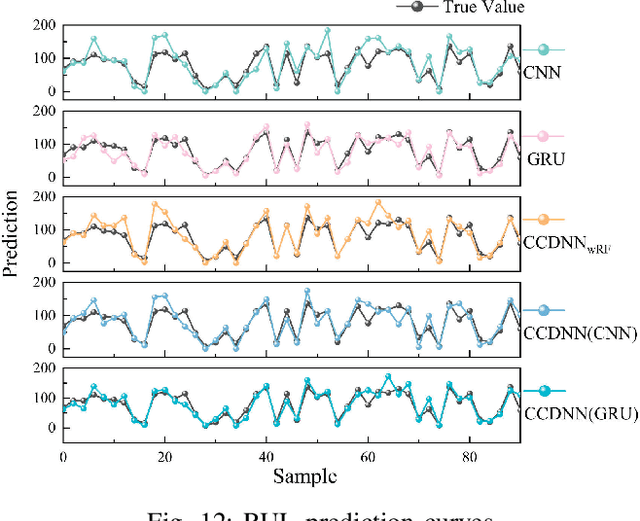
Learning representations of two views of data such that the resulting representations are highly linearly correlated is appealing in machine learning. In this paper, we present a canonical correlation guided learning framework, which allows to be realized by deep neural networks (CCDNN), to learn such a correlated representation. It is also a novel merging of multivariate analysis (MVA) and machine learning, which can be viewed as transforming MVA into end-to-end architectures with the aid of neural networks. Unlike the linear canonical correlation analysis (CCA), kernel CCA and deep CCA, in the proposed method, the optimization formulation is not restricted to maximize correlation, instead we make canonical correlation as a constraint, which preserves the correlated representation learning ability and focuses more on the engineering tasks endowed by optimization formulation, such as reconstruction, classification and prediction. Furthermore, to reduce the redundancy induced by correlation, a redundancy filter is designed. We illustrate the performance of CCDNN on various tasks. In experiments on MNIST dataset, the results show that CCDNN has better reconstruction performance in terms of mean squared error and mean absolute error than DCCA and DCCAE. Also, we present the application of the proposed network to industrial fault diagnosis and remaining useful life cases for the classification and prediction tasks accordingly. The proposed method demonstrates superior performance in both tasks when compared to existing methods. Extension of CCDNN to much more deeper with the aid of residual connection is also presented in appendix.