 Add to Chrome
 Add to Firefox
 Add to Edge
Who Would You Vote For? Auditing Political Alignment in LLMs: An Italian Case-Study
Aug 12, 2026
As users increasingly turn to Large Language Models (LLMs) for information and advice on political matters, particularly during election periods, the political preferences expressed by these systems have become a matter of public interest. Prior research has shown that interactions with LLMs can influence users' political attitudes and choices, raising questions about how these models themselves evaluate political actors. In this paper, we investigate whether and how LLMs express preferences toward political parties and political leaders. We introduce a systematic and reproducible auditing framework in which multiple LLMs are prompted to evaluate parties and leaders across nine criteria. Rather than attempting to infer the models' "true" political beliefs, we focus on their observable behavior, examining consistency across evaluations, differences between models, refusal rates, and sensitivity to prompt formulation. We further investigate how these evaluations vary when models are instructed to adopt different personas. We demonstrate the framework through an Italian case study, providing a systematic analysis of LLM-generated political evaluations on italian parties and leaders.

Is Grokipedia Right-Leaning? Comparing Political Framing in Wikipedia and Grokipedia on Controversial Topics
Jan 21, 2026Online encyclopedias are central to contemporary information infrastructures and have become focal points of debates over ideological bias. Wikipedia, in particular, has long been accused of left-leaning bias, while Grokipedia, an AI-generated encyclopedia launched by xAI, has been framed as a right-leaning alternative. This paper presents a comparative analysis of Wikipedia and Grokipedia on well-established politically contested topics. Specifically, we examine differences in semantic framing, political orientation, and content prioritization. We find that semantic similarity between the two platforms decays across article sections and diverges more strongly on controversial topics than on randomly sampled ones. Additionally, we show that both encyclopedias predominantly exhibit left-leaning framings, although Grokipedia exhibits a more bimodal distribution with increased prominence of right-leaning content. The experimental code is publicly available.
Unexpected Knowledge: Auditing Wikipedia and Grokipedia Search Recommendations
Dec 18, 2025Encyclopedic knowledge platforms are key gateways through which users explore information online. The recent release of Grokipedia, a fully AI-generated encyclopedia, introduces a new alternative to traditional, well-established platforms like Wikipedia. In this context, search engine mechanisms play an important role in guiding users exploratory paths, yet their behavior across different encyclopedic systems remains underexplored. In this work, we address this gap by providing the first comparative analysis of search engine in Wikipedia and Grokipedia. Using nearly 10,000 neutral English words and their substrings as queries, we collect over 70,000 search engine results and examine their semantic alignment, overlap, and topical structure. We find that both platforms frequently generate results that are weakly related to the original query and, in many cases, surface unexpected content starting from innocuous queries. Despite these shared properties, the two systems often produce substantially different recommendation sets for the same query. Through topical annotation and trajectory analysis, we further identify systematic differences in how content categories are surfaced and how search engine results evolve over multiple stages of exploration. Overall, our findings show that unexpected search engine outcomes are a common feature of both the platforms, even though they exhibit discrepancies in terms of topical distribution and query suggestions.
Algorithmic Drift: A Simulation Framework to Study the Effects of Recommender Systems on User Preferences
Sep 24, 2024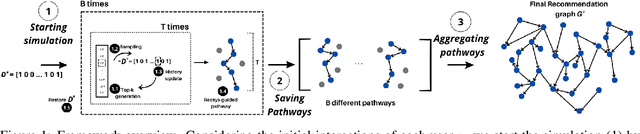
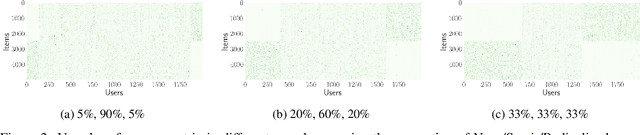
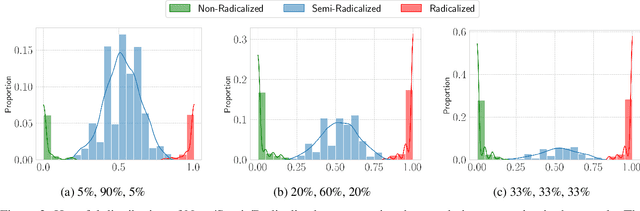
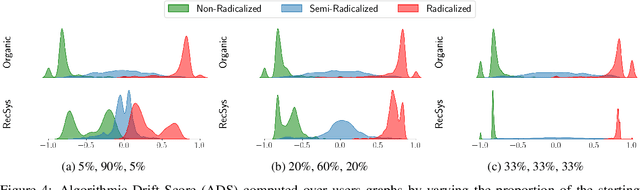
Digital platforms such as social media and e-commerce websites adopt Recommender Systems to provide value to the user. However, the social consequences deriving from their adoption are still unclear. Many scholars argue that recommenders may lead to detrimental effects, such as bias-amplification deriving from the feedback loop between algorithmic suggestions and users' choices. Nonetheless, the extent to which recommenders influence changes in users leaning remains uncertain. In this context, it is important to provide a controlled environment for evaluating the recommendation algorithm before deployment. To address this, we propose a stochastic simulation framework that mimics user-recommender system interactions in a long-term scenario. In particular, we simulate the user choices by formalizing a user model, which comprises behavioral aspects, such as the user resistance towards the recommendation algorithm and their inertia in relying on the received suggestions. Additionally, we introduce two novel metrics for quantifying the algorithm's impact on user preferences, specifically in terms of drift over time. We conduct an extensive evaluation on multiple synthetic datasets, aiming at testing the robustness of our framework when considering different scenarios and hyper-parameters setting. The experimental results prove that the proposed methodology is effective in detecting and quantifying the drift over the users preferences by means of the simulation. All the code and data used to perform the experiments are publicly available.
GenRec: A Flexible Data Generator for Recommendations
Jul 23, 2024The scarcity of realistic datasets poses a significant challenge in benchmarking recommender systems and social network analysis methods and techniques. A common and effective solution is to generate synthetic data that simulates realistic interactions. However, although various methods have been proposed, the existing literature still lacks generators that are fully adaptable and allow easy manipulation of the underlying data distributions and structural properties. To address this issue, the present work introduces GenRec, a novel framework for generating synthetic user-item interactions that exhibit realistic and well-known properties observed in recommendation scenarios. The framework is based on a stochastic generative process based on latent factor modeling. Here, the latent factors can be exploited to yield long-tailed preference distributions, and at the same time they characterize subpopulations of users and topic-based item clusters. Notably, the proposed framework is highly flexible and offers a wide range of hyper-parameters for customizing the generation of user-item interactions. The code used to perform the experiments is publicly available at https://anonymous.4open.science/r/GenRec-DED3.