 Add to Chrome
 Add to Firefox
 Add to Edge
ResDynUNet++: A nested U-Net with residual dynamic convolution blocks for dual-spectral CT
Dec 18, 2025
We propose a hybrid reconstruction framework for dual-spectral CT (DSCT) that integrates iterative methods with deep learning models. The reconstruction process consists of two complementary components: a knowledge-driven module and a data-driven module. In the knowledge-driven phase, we employ the oblique projection modification technique (OPMT) to reconstruct an intermediate solution of the basis material images from the projection data. We select OPMT for this role because of its fast convergence, which allows it to rapidly generate an intermediate solution that successfully achieves basis material decomposition. Subsequently, in the data-driven phase, we introduce a novel neural network, ResDynUNet++, to refine this intermediate solution. The ResDynUNet++ is built upon a UNet++ backbone by replacing standard convolutions with residual dynamic convolution blocks, which combine the adaptive, input-specific feature extraction of dynamic convolution with the stable training of residual connections. This architecture is designed to address challenges like channel imbalance and near-interface large artifacts in DSCT, producing clean and accurate final solutions. Extensive experiments on both synthetic phantoms and real clinical datasets validate the efficacy and superior performance of the proposed method.

A CT Image Denoising Method Based on Projection Domain Feature
Dec 09, 2024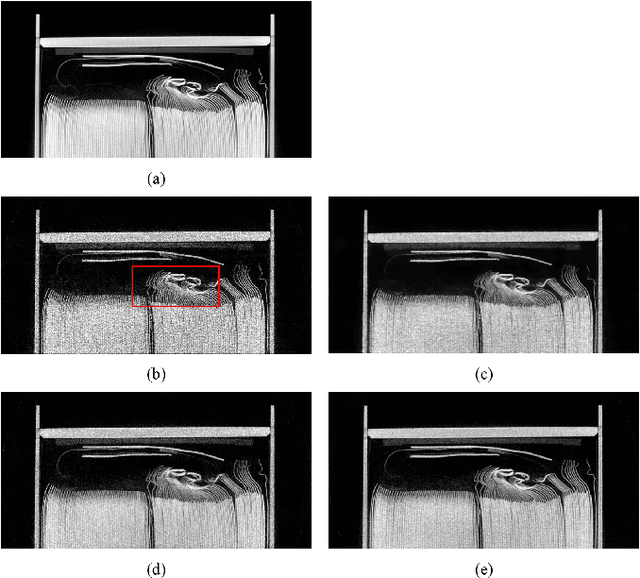
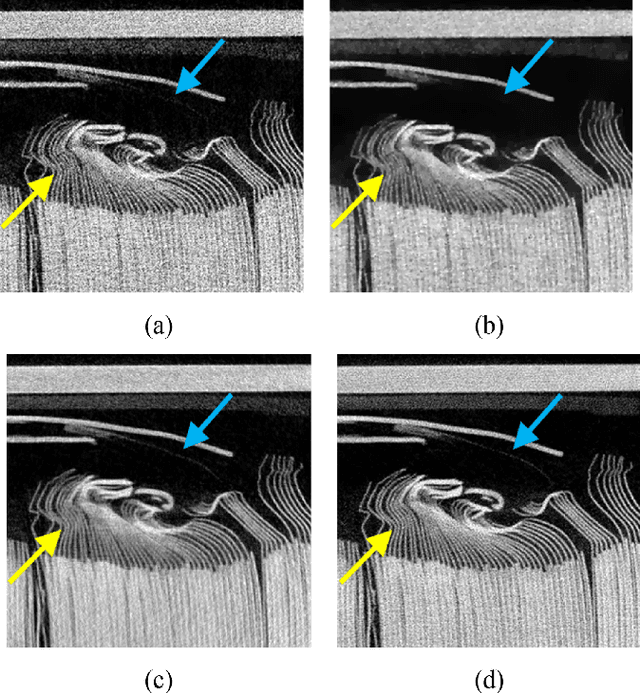
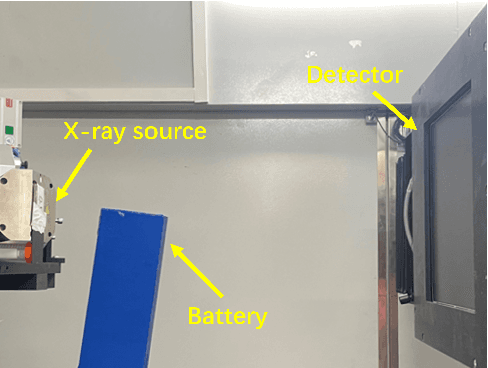
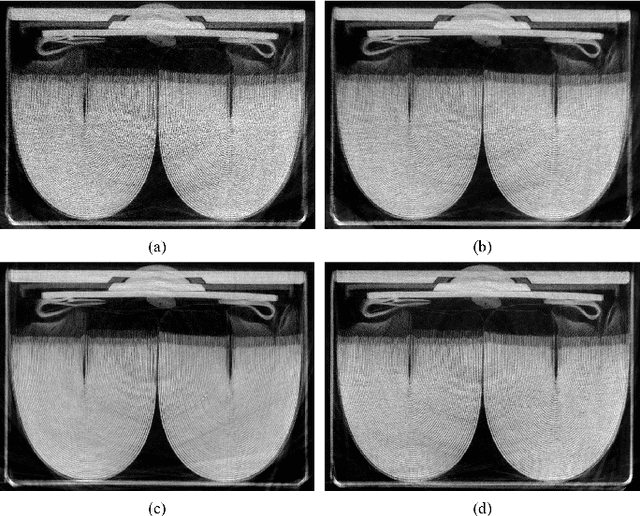
In order to improve image quality of projection in industrial applications, generally, a standard method is to increase the current or exposure time, which might cause overexposure of detector units in areas of thin objects or backgrounds. Increasing the projection sampling is a better method to address the issue, but it also leads to significant noise in the reconstructed image. This paper proposed a projection domain denoising algorithm based on the features of the projection domain for this case. This algorithm utilized the similarity of projections of neighboring veiws to reduce image noise quickly and effectively. The availability of the algorithm proposed in this work has been conducted by numerical simulation and practical data experiments.