 Add to Chrome
 Add to Firefox
 Add to Edge
Confident Learning for Object Detection under Model Constraints
Jan 14, 2026
Agricultural weed detection on edge devices is subject to strict constraints on model capacity, computational resources, and real-time inference latency, which prevent performance improvements through model scaling or ensembling. This paper proposes Model-Driven Data Correction (MDDC), a data-centric framework that enhances detection performance by iteratively diagnosing and correcting data quality deficiencies. An automated error analysis procedure categorizes detection failures into four types: false negatives, false positives, class confusion, and localization errors. These error patterns are systematically addressed through a structured train-fix-retrain pipeline with version-controlled data management. Experimental results on multiple weed detection datasets demonstrate consistent improvements of 5-25 percent in mAP at 0.5 using a fixed lightweight detector (YOLOv8n), indicating that systematic data quality optimization can effectively alleviate performance bottlenecks under fixed model capacity constraints.

Efficient and Scalable Chinese Vector Font Generation via Component Composition
Apr 10, 2024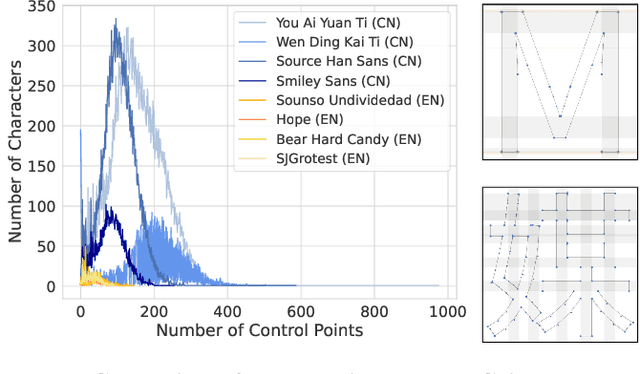
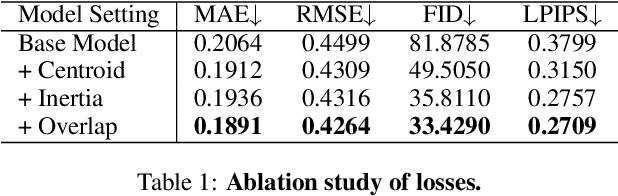
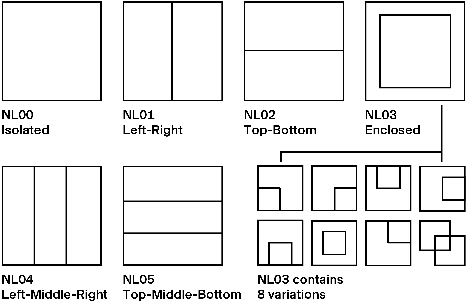
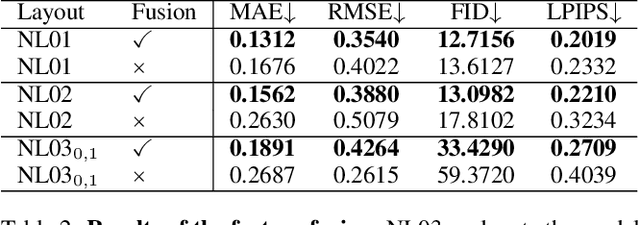
Chinese vector font generation is challenging due to the complex structure and huge amount of Chinese characters. Recent advances remain limited to generating a small set of characters with simple structure. In this work, we first observe that most Chinese characters can be disassembled into frequently-reused components. Therefore, we introduce the first efficient and scalable Chinese vector font generation approach via component composition, allowing generating numerous vector characters from a small set of components. To achieve this, we collect a large-scale dataset that contains over \textit{90K} Chinese characters with their components and layout information. Upon the dataset, we propose a simple yet effective framework based on spatial transformer networks (STN) and multiple losses tailored to font characteristics to learn the affine transformation of the components, which can be directly applied to the B\'ezier curves, resulting in Chinese characters in vector format. Our qualitative and quantitative experiments have demonstrated that our method significantly surpasses the state-of-the-art vector font generation methods in generating large-scale complex Chinese characters in both font generation and zero-shot font extension.