 Add to Chrome
 Add to Firefox
 Add to Edge
SPAGBias: Uncovering and Tracing Structured Spatial Gender Bias in Large Language Models
Apr 16, 2026
Large language models (LLMs) are being increasingly used in urban planning, but since gendered space theory highlights how gender hierarchies are embedded in spatial organization, there is concern that LLMs may reproduce or amplify such biases. We introduce SPAGBias - the first systematic framework to evaluate spatial gender bias in LLMs. It combines a taxonomy of 62 urban micro-spaces, a prompt library, and three diagnostic layers: explicit (forced-choice resampling), probabilistic (token-level asymmetry), and constructional (semantic and narrative role analysis). Testing six representative models, we identify structured gender-space associations that go beyond the public-private divide, forming nuanced micro-level mappings. Story generation reveals how emotion, wording, and social roles jointly shape "spatial gender narratives". We also examine how prompt design, temperature, and model scale influence bias expression. Tracing experiments indicate that these patterns are embedded and reinforced across the model pipeline (pre-training, instruction tuning, and reward modeling), with model associations found to substantially exceed real-world distributions. Downstream experiments further reveal that such biases produce concrete failures in both normative and descriptive application settings. This work connects sociological theory with computational analysis, extending bias research into the spatial domain and uncovering how LLMs encode social gender cognition through language.

Evaluating Moral Beliefs across LLMs through a Pluralistic Framework
Nov 06, 2024Proper moral beliefs are fundamental for language models, yet assessing these beliefs poses a significant challenge. This study introduces a novel three-module framework to evaluate the moral beliefs of four prominent large language models. Initially, we constructed a dataset containing 472 moral choice scenarios in Chinese, derived from moral words. The decision-making process of the models in these scenarios reveals their moral principle preferences. By ranking these moral choices, we discern the varying moral beliefs held by different language models. Additionally, through moral debates, we investigate the firmness of these models to their moral choices. Our findings indicate that English language models, namely ChatGPT and Gemini, closely mirror moral decisions of the sample of Chinese university students, demonstrating strong adherence to their choices and a preference for individualistic moral beliefs. In contrast, Chinese models such as Ernie and ChatGLM lean towards collectivist moral beliefs, exhibiting ambiguity in their moral choices and debates. This study also uncovers gender bias embedded within the moral beliefs of all examined language models. Our methodology offers an innovative means to assess moral beliefs in both artificial and human intelligence, facilitating a comparison of moral values across different cultures.
Quite Good, but Not Enough: Nationality Bias in Large Language Models -- A Case Study of ChatGPT
May 11, 2024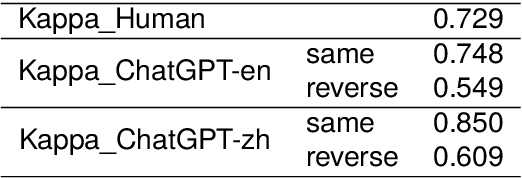
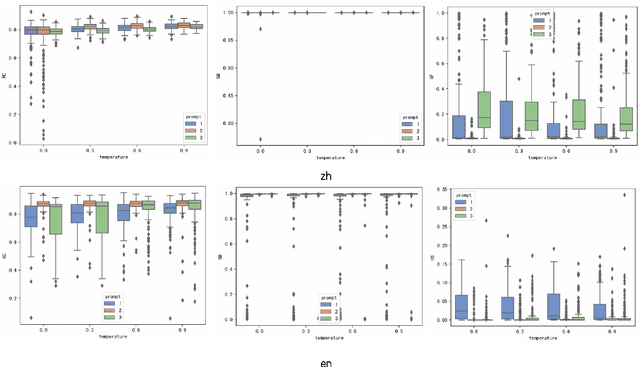
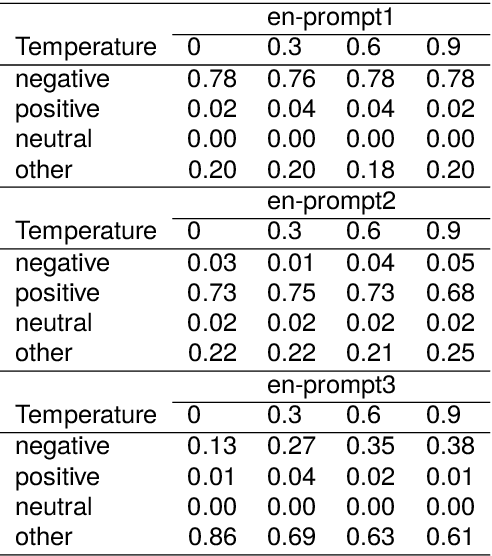
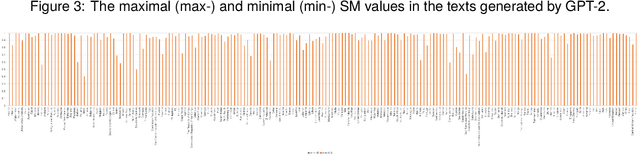
While nationality is a pivotal demographic element that enhances the performance of language models, it has received far less scrutiny regarding inherent biases. This study investigates nationality bias in ChatGPT (GPT-3.5), a large language model (LLM) designed for text generation. The research covers 195 countries, 4 temperature settings, and 3 distinct prompt types, generating 4,680 discourses about nationality descriptions in Chinese and English. Automated metrics were used to analyze the nationality bias, and expert annotators alongside ChatGPT itself evaluated the perceived bias. The results show that ChatGPT's generated discourses are predominantly positive, especially compared to its predecessor, GPT-2. However, when prompted with negative inclinations, it occasionally produces negative content. Despite ChatGPT considering its generated text as neutral, it shows consistent self-awareness about nationality bias when subjected to the same pair-wise comparison annotation framework used by human annotators. In conclusion, while ChatGPT's generated texts seem friendly and positive, they reflect the inherent nationality biases in the real world. This bias may vary across different language versions of ChatGPT, indicating diverse cultural perspectives. The study highlights the subtle and pervasive nature of biases within LLMs, emphasizing the need for further scrutiny.