 Add to Chrome
 Add to Firefox
 Add to Edge
Models for minimalist RAG: B1ade 335M Embedding and 1B Parameter Small Language Models
Jul 29, 2026
Language and embedding models used in RAG systems are conventionally assumed to require large-scale pretraining and explicit grounding supervision. We present B1ade, an efficient RAG architecture comprising two purpose-built components: a compact embedding model and a purpose-built SLM. B1ade-embed, a 335M parameter retrieval model constructed via parameter-free fusion of five pretrained encoders achieves top MTEB scores among sub-500M models with zero additional training, and B1ade-1B, an SLM trained on low-cost GPUs using Group Relative Policy Optimization (GRPO) on 723M tokens (2.2M examples) of curated context-question pairs with rewards that optimize only answer similarity. Our central finding is emergent attribution: despite receiving no explicit supervision for source citation, B1ade-1B cites retrieved passages in 42.4% of responses, exceeding the attribution rate of its training distribution by 5.5 percentage points. This demonstrates that grounding behavior can emerge as an accuracy-maximizing strategy under RL training, without explicit reward engineering. On standard QA benchmarks, B1ade-1B achieves 81.82% on PopQA, 65.8% on PubMedQA, and 51.09% on FEVER. In end-to-end RAG evaluation, B1ade-1B achieves an average score of 0.654 across correctness, completeness, coherence, and faithfulness, a 10.8% improvement over the SFT, while closing the gap with models 1.5x its size. These results show that strategic model composition and reward design suffice for resource-efficient RAG, without large-scale pretraining.

Super Weights in LLMs and the Failure of Selective Training
Jul 09, 2026Recent work identified Super Weights, individual parameters whose removal degrades model performance by orders of magnitude. We show that this degradation due to pruning Super Weights does not universally apply to all LLMs. Furthermore, if these parameters are so important, Super Weight-aware training should be effective. We show the opposite. Training Super Weights in isolation (100 to 8,192 parameters) drops accuracy to random-guessing levels on both OLMo-1B and OLMo-7B, and expanding to local neighborhoods of up to 36K parameters provides no improvement. The failure is specific to Super Weight coordinates: training an equal number of randomly chosen positions in the same down_proj layers instead improves over the baseline, so the collapse comes from targeting Super Weights, not from sparsity itself. Vanilla LoRA, updating every position in attention weight matrices through low-rank structure, succeeds with only 0.16% of parameters, and applying the same low-rank update to down_proj succeeds as well. A 10-seed ablation confirms that constraining LoRA updates at positions corresponding to Super Weight coordinates yields statistically indistinguishable results. These findings establish that parameter importance does not imply parameter trainability in isolation, and that effective fine-tuning relies on structured decompositions over entire layers rather than targeting individually important weights.
Small Language Models for Efficient Agentic Tool Calling: Outperforming Large Models with Targeted Fine-tuning
Dec 17, 2025As organizations scale adoption of generative AI, model cost optimization and operational efficiency have emerged as critical factors determining sustainability and accessibility. While Large Language Models (LLMs) demonstrate impressive capabilities across diverse tasks, their extensive computational requirements make them cost-prohibitive for routine enterprise use. This limitation motivates the exploration of Small Language Models (SLMs), which can deliver comparable performance in targeted applications while drastically reducing infrastructure overhead (Irugalbandara et al., 2023). In this work, we investigate the feasibility of replacing LLM-driven workflows with optimized SLMs. We trained a domain-adapted SLM to execute representative tasks traditionally handled by LLMs, such as document summarization, query answering, and structured data interpretation. As part of the experiment, we investigated the fine-tuning of facebook/opt-350m model (single epoch only) using the Hugging Face TRL (Transformer Reinforcement Learning), specifically the Supervised Fine-Tuning (SFT) trainer. The OPT-350M model was released by Meta AI in 2022 as part of the OPT (Open Pretrained Transformer) family of models. Similar studies demonstrate that even models at the 350M parameter scale can meaningfully contribute to instruction-tuning pipelines (Mekala et al., 2024). Experimental results demonstrated that our fine-tuned SLM achieves exceptional performance with a 77.55\% pass rate on ToolBench evaluation, significantly outperforming all baseline models including ChatGPT-CoT (26.00\%), ToolLLaMA-DFS (30.18\%), and ToolLLaMA-CoT (16.27\%). These findings emphasize that thoughtful design and targeted training of SLMs can significantly lower barriers to adoption, enabling cost-effective, large-scale integration of generative AI into production systems.
Dynamic Learning Rate Scheduling based on Loss Changes Leads to Faster Convergence
Dec 16, 2025
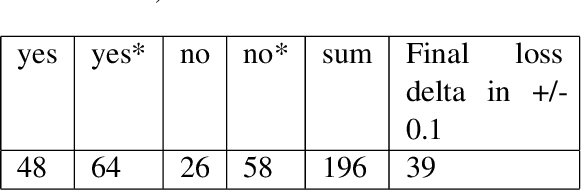
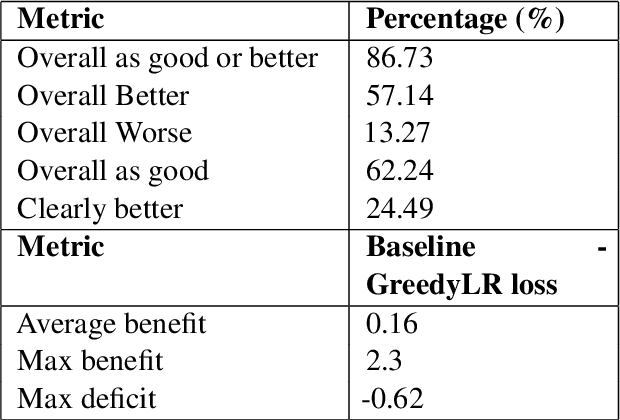
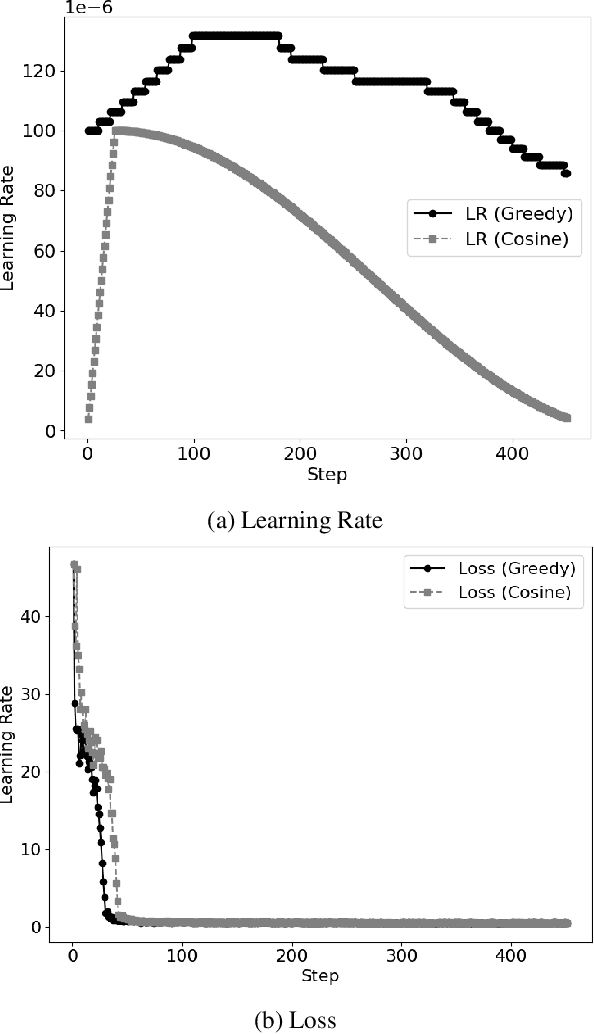
Despite significant advances in optimizers for training, most research works use common scheduler choices like Cosine or exponential decay. In this paper, we study \emph{GreedyLR}, a novel scheduler that adaptively adjusts the learning rate during training based on the current loss. To validate the effectiveness of our proposed scheduler, we conduct experiments on several NLP, CV, and LLM tasks with up to $7B$ parameters, including both fine-tuning and pre-training experiments. The results show that our approach outperforms several state-of-the-art schedulers in terms of accuracy, speed, and convergence. We also provide a theoretical analysis of the GreedyLR algorithm, including a proof of convergence and derivation of the optimal scaling factor $F$ that maximizes the convergence rate, along with experiments to show robustness of the algorithm to realistic noisy landscapes. Our scheduler is easy to implement, computationally efficient, and could be considered a good default scheduler for training.
VERAFI: Verified Agentic Financial Intelligence through Neurosymbolic Policy Generation
Dec 12, 2025Financial AI systems suffer from a critical blind spot: while Retrieval-Augmented Generation (RAG) excels at finding relevant documents, language models still generate calculation errors and regulatory violations during reasoning, even with perfect retrieval. This paper introduces VERAFI (Verified Agentic Financial Intelligence), an agentic framework with neurosymbolic policy generation for verified financial intelligence. VERAFI combines state-of-the-art dense retrieval and cross-encoder reranking with financial tool-enabled agents and automated reasoning policies covering GAAP compliance, SEC requirements, and mathematical validation. Our comprehensive evaluation on FinanceBench demonstrates remarkable improvements: while traditional dense retrieval with reranking achieves only 52.4\% factual correctness, VERAFI's integrated approach reaches 94.7\%, an 81\% relative improvement. The neurosymbolic policy layer alone contributes a 4.3 percentage point gain over pure agentic processing, specifically targeting persistent mathematical and logical errors. By integrating financial domain expertise directly into the reasoning process, VERAFI offers a practical pathway toward trustworthy financial AI that meets the stringent accuracy demands of regulatory compliance, investment decisions, and risk management.
Small Language Models (SLMs) Can Still Pack a Punch: A survey
Jan 03, 2025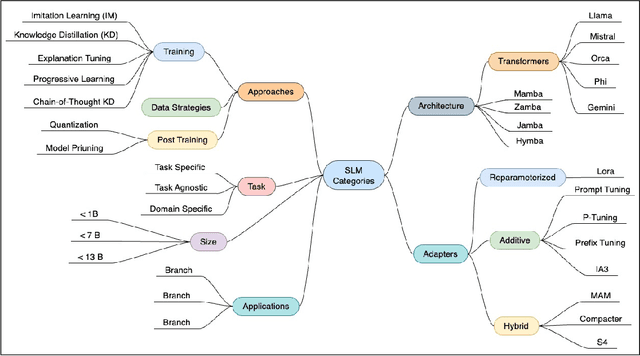
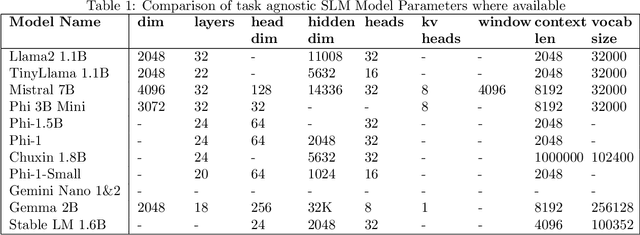
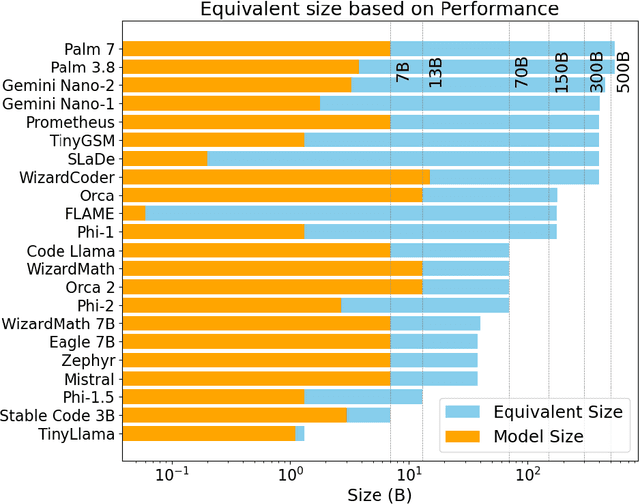
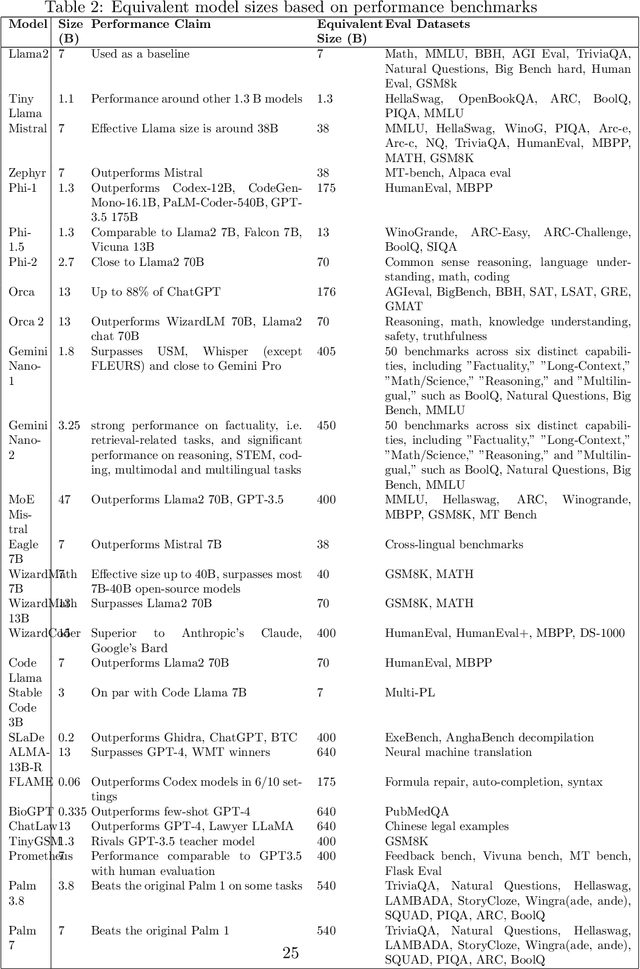
As foundation AI models continue to increase in size, an important question arises - is massive scale the only path forward? This survey of about 160 papers presents a family of Small Language Models (SLMs) in the 1 to 8 billion parameter range that demonstrate smaller models can perform as well, or even outperform large models. We explore task agnostic, general purpose SLMs, task-specific SLMs and techniques to create SLMs that can guide the community to build models while balancing performance, efficiency, scalability and cost. Furthermore we define and characterize SLMs' effective sizes, representing increased capability with respect to LLMs.