 Add to Chrome
 Add to Firefox
 Add to Edge
Temporal convolutional neural networks to generate a head-related impulse response from one direction to another
Oct 21, 2023
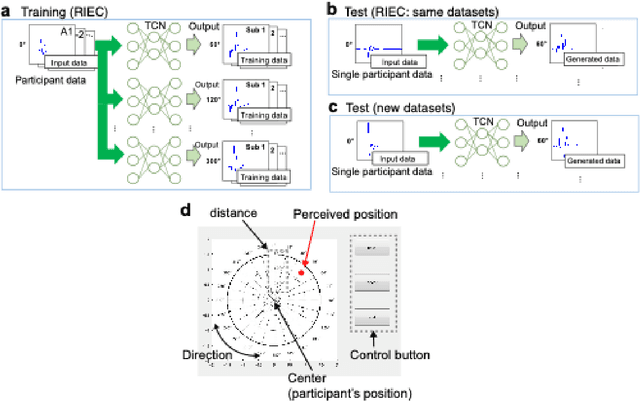
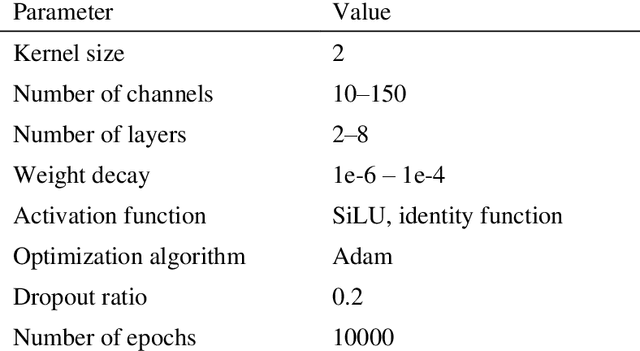
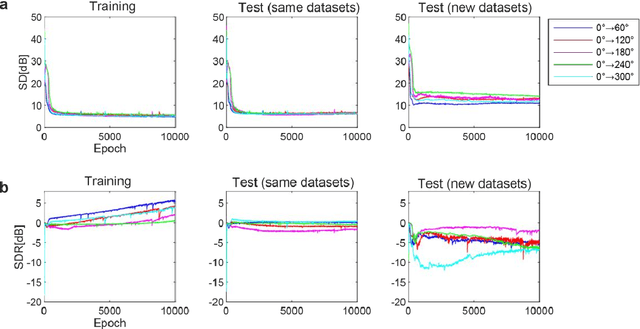
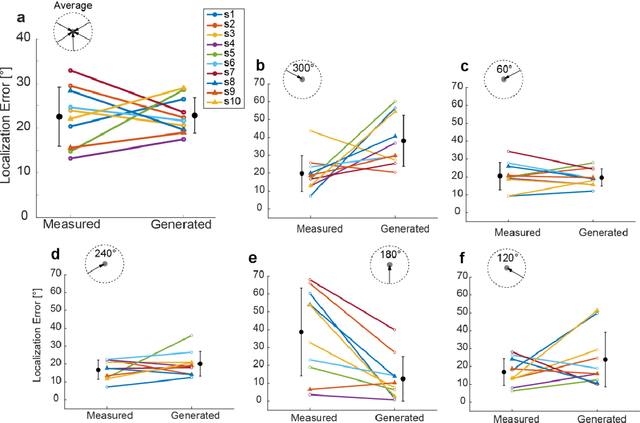
Virtual sound synthesis is a technology that allows users to perceive spatial sound through headphones or earphones. However, accurate virtual sound requires an individual head-related transfer function (HRTF), which can be difficult to measure due to the need for a specialized environment. In this study, we proposed a method to generate HRTFs from one direction to the other. To this end, we used temporal convolutional neural networks (TCNs) to generate head-related impulse responses (HRIRs). To train the TCNs, publicly available datasets in the horizontal plane were used. Using the trained networks, we successfully generated HRIRs for directions other than the front direction in the dataset. We found that the proposed method successfully generated HRIRs for publicly available datasets. To test the generalization of the method, we measured the HRIRs of a new dataset and tested whether the trained networks could be used for this new dataset. Although the similarity evaluated by spectral distortion was slightly degraded, behavioral experiments with human participants showed that the generated HRIRs were equivalent to the measured ones. These results suggest that the proposed TCNs can be used to generate personalized HRIRs from one direction to another, which could contribute to the personalization of virtual sound.

A Study on the relationship between the geometrical shapes and the biometrical acoustic characteristics of human ear canal
Sep 01, 2022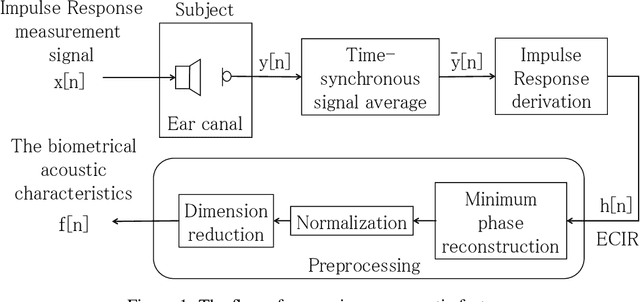


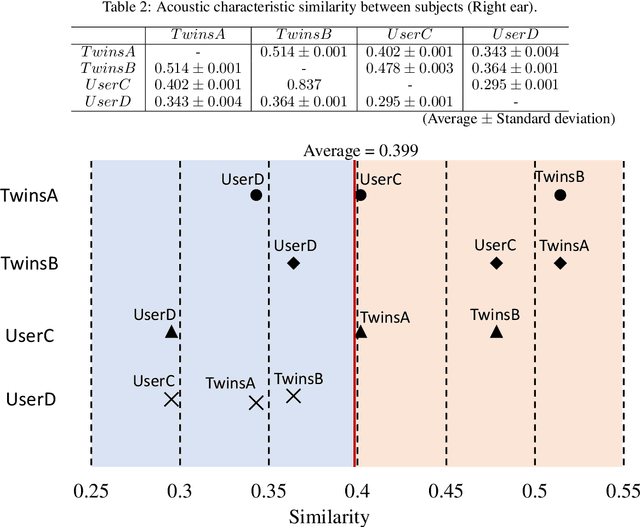
Ear acoustic authentication is a new biometrics method and it utilizes the differences in acoustic characteristics of the ear canal between users. However, there have been few reports on the factors that cause differences in the acoustic characteristics. We investigate the relationship between ear canal shapes and acoustic characteristics in terms of user-to-user similarity. We used magnetic resonance imaging (MRI) to measure ear canal geometry. As a result, the correlation coefficient between shape similarity and acoustic characteristic similarity is higher than 0.7 and the coefficient of determination is higher than 0.5. This suggests that the difference in the shape of the ear canal is one of the important factors.