 Add to Chrome
 Add to Firefox
 Add to Edge
Probably Approximately Consensus: On the Learning Theory of Finding Common Ground
Apr 23, 2026
A primary goal of online deliberation platforms is to identify ideas that are broadly agreeable to a community of users through their expressed preferences. Yet, consensus elicitation should ideally extend beyond the specific statements provided by users and should incorporate the relative salience of particular topics. We address this issue by modelling consensus as an interval in a one-dimensional opinion space derived from potentially high-dimensional data via embedding and dimensionality reduction. We define an objective that maximizes expected agreement within a hypothesis interval where the expectation is over an underlying distribution of issues, implicitly taking into account their salience. We propose an efficient Empirical Risk Minimization (ERM) algorithm and establish PAC-learning guarantees. Our initial experiments demonstrate the performance of our algorithm and examine more efficient approaches to identifying optimal consensus regions. We find that through selectively querying users on an existing sample of statements, we can reduce the number of queries needed to a practical number.

The Cost Perspective of Liquid Democracy: Feasibility and Control
Feb 04, 2025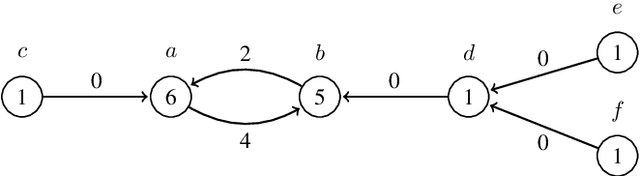
We examine an approval-based model of Liquid Democracy with a budget constraint on voting and delegating costs, aiming to centrally select casting voters ensuring complete representation of the electorate. From a computational complexity perspective, we focus on minimizing overall costs, maintaining short delegation paths, and preventing excessive concentration of voting power. Furthermore, we explore computational aspects of strategic control, specifically, whether external agents can change election components to influence the voting power of certain voters.