 Add to Chrome
 Add to Firefox
 Add to Edge
Temporal Hyperbolic Graph Representation Learning for Scale-Free Internet Routing and Delay Prediction
May 27, 2026
Predicting Internet round-trip time (RTT) is critical for routing optimization, quality-of-service (QoS) provisioning, and traffic engineering, yet remains challenging due to long-term temporal dependencies, evolving routing dynamics, and heavy-tailed latency distributions. While Temporal Graph Neural Networks (TGNNs) can model evolving network topologies, most existing approaches operate in Euclidean space, which poorly captures the hierarchical and scale-free structure of Internet routing graphs. Hyperbolic geometry provides a more suitable representation space. We propose HERMIT (Hyperbolic Edge-aware RTT Modeling via Integrated Topology), a hybrid framework combining a hyperbolic manifold-preserving temporal GNN with a Random Forest regressor for joint link prediction and RTT prediction. Built on HMPTGN, HERMIT introduces RTT-aware edge features and a learnable edge encoder to improve modeling of evolving link states and routing behavior. The resulting hyperbolic node representations are combined with historical RTT statistics for robust latency prediction. We evaluate HERMIT on a large-scale real Internet dataset spanning 2015-2024. HERMIT consistently outperforms a strong Random Forest baseline using only historical RTT statistics, achieving a 6% RMSE improvement while reducing large errors on heavy-tailed samples. It also surpasses prior hyperbolic TGNN models, including HMPTGN and HTGN, in link prediction performance. These results demonstrate that combining hyperbolic temporal graph learning with tree-based regression provides a scalable solution for RTT prediction in real-world Internet topologies.

Patrol Security Game: Defending Against Adversary with Freedom in Attack Timing, Location, and Duration
Oct 21, 2024
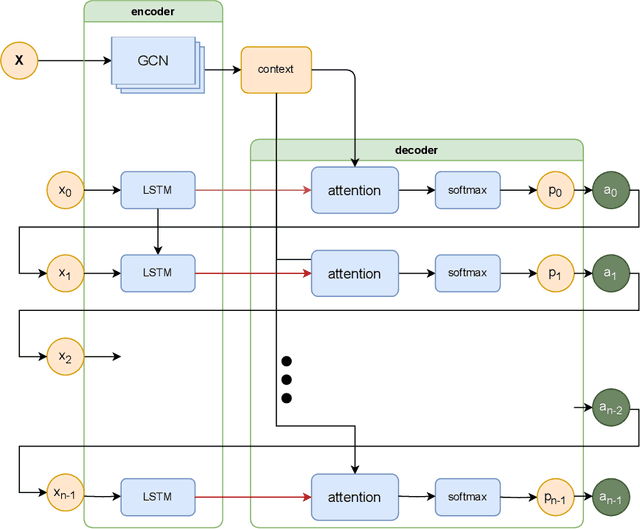
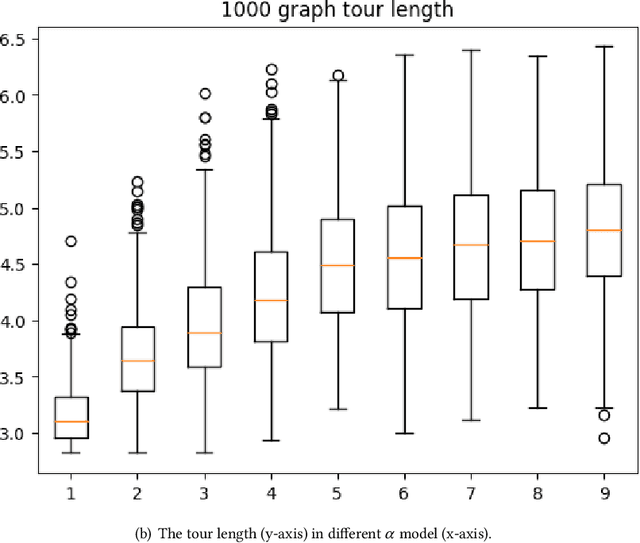
We explored the Patrol Security Game (PSG), a robotic patrolling problem modeled as an extensive-form Stackelberg game, where the attacker determines the timing, location, and duration of their attack. Our objective is to devise a patrolling schedule with an infinite time horizon that minimizes the attacker's payoff. We demonstrated that PSG can be transformed into a combinatorial minimax problem with a closed-form objective function. By constraining the defender's strategy to a time-homogeneous first-order Markov chain (i.e., the patroller's next move depends solely on their current location), we proved that the optimal solution in cases of zero penalty involves either minimizing the expected hitting time or return time, depending on the attacker model, and that these solutions can be computed efficiently. Additionally, we observed that increasing the randomness in the patrol schedule reduces the attacker's expected payoff in high-penalty cases. However, the minimax problem becomes non-convex in other scenarios. To address this, we formulated a bi-criteria optimization problem incorporating two objectives: expected maximum reward and entropy. We proposed three graph-based algorithms and one deep reinforcement learning model, designed to efficiently balance the trade-off between these two objectives. Notably, the third algorithm can identify the optimal deterministic patrol schedule, though its runtime grows exponentially with the number of patrol spots. Experimental results validate the effectiveness and scalability of our solutions, demonstrating that our approaches outperform state-of-the-art baselines on both synthetic and real-world crime datasets.