 Add to Chrome
 Add to Firefox
 Add to Edge
Pseudo-Text-Conditioned 3D Grounding DINO for Organ Localization in Abdominal CT
Jun 25, 2026
Reliable organ localization in abdominal CT can provide spatial priors for downstream trauma analysis. We propose CT-3GDINO, a lightweight 3D detector that adapts a Grounding-DINO-style query-based architecture to fixed organ localization using frozen pseudo-text class tokens instead of a real text encoder. The model combines a Swin3D visual backbone, bidirectional feature enhancement, pseudo-text-guided query selection, and a cross-modality decoder to predict normalized 3D boxes for liver, spleen, left kidney, right kidney, and bowel. We train and evaluate on 193 matched RSNA/RATIC CT volumes with segmentation-derived boxes. The best multi-scale model, trained from scratch, achieves 0.5830 overall top-1 class-wise mAP over 3D IoU thresholds from 0.1 to 0.7, outperforming fixed- and trainable-backbone classification-pretrained variants with 0.5570 and 0.4657 mAP. Performance is strong for coarse localization, with 0.9649 AP at IoU 0.1, but remains limited for strict box alignment, with 0.1552 AP at IoU 0.7. These results establish CT-3GDINO as an open-source baseline for pseudo-text-conditioned 3D organ localization and motivate future work on localization-aware pretraining, richer multimodal conditioning, and injury-focused detection.

Retina-RAG: Retrieval-Augmented Vision-Language Modeling for Joint Retinal Diagnosis and Clinical Report Generation
May 07, 2026Diabetic Retinopathy (DR) is a leading cause of preventable blindness among working-age adults worldwide, yet most automated screening systems are limited to image-level classification and lack clinically structured reporting. We propose Retina-RAG, a low-cost modular framework that jointly performs DR severity grading, macular edema (ME) detection, and report generation. The architecture decouples a high-performance retinal classifier and a parameter-efficient vision-language model (Qwen2.5-VL-7B-Instruct) adapted via Low-Rank Adaptation (LoRA), enabling flexible component integration. A retrieval-augmented generation (RAG) module injects curated ophthalmic knowledge together with structured classifier outputs at inference time to improve diagnostic consistency and reduce hallucinations. Retina-RAG achieves an F1-score of 0.731 for DR grading and 0.948 for ME detection, substantially outperforming zero-shot Qwen (0.096, 0.732) and MMed-RAG (0.541, 0.641) on a retinal disease detection dataset with captions. For report generation, Retina-RAG attains ROUGE-L 0.429 and SBERT similarity 0.884, exceeding all baselines. The full framework operates on a single consumer-grade GPU, demonstrating that clinically structured retinal AI can be achieved with modest computational resources.
ProtoCLIP: Prototype-Aligned Latent Refinement for Robust Zero-Shot Chest X-Ray Classification
Apr 20, 2026Zero-shot vision-language models (VLMs) have shown promise for chest radiograph classification, but their performance is often limited by confounding label co-occurrence, long-tail class imbalance, and transfer instability under domain shift. We propose ProtoCLIP, a refinement strategy for CLIP-style VLMs that improves zero-shot discrimination through targeted data curation and distilled anchor alignment. Specifically, we construct pathology-focused training subsets with curated negative samples to reduce co-occurrence bias. We also introduce a representation-preserving distillation objective to stabilize adaptation while maintaining semantic structure and improving discrimination of clinically relevant co-occurring pathologies. Evaluated on an unseen dataset VinDr-CXR, ProtoCLIP improves AUC by 2-10 percentage points over a strong CLIP-based baseline across multiple findings. For pneumothorax specifically, ProtoCLIP achieves a state-of-the-art AUC of 0.94. These results demonstrate that anchor-guided refinement, coupled with curated supervision and controlled adaptation, can mitigate common zero-shot transfer failures in medical VLMs without requiring large-scale retraining.
Benchmarking CNN-based Models against Transformer-based Models for Abdominal Multi-Organ Segmentation on the RATIC Dataset
Mar 19, 2026Accurate multi-organ segmentation in abdominal CT scans is essential for computer-aided diagnosis and treatment. While convolutional neural networks (CNNs) have long been the standard approach in medical image segmentation, transformer-based architectures have recently gained attention due to their ability to model long-range dependencies. In this study, we systematically benchmark the three hybrid transformer-based models UNETR, SwinUNETR, and UNETR++ against a strong CNN baseline, SegResNet, for volumetric multi-organ segmentation on the heterogeneous RATIC dataset. The dataset comprises 206 annotated CT scans from 23 institutions worldwide, covering five abdominal organs. All models were trained and evaluated under identical preprocessing and training conditions using the Dice Similarity Coefficient (DSC) as the primary metric. The results show that the CNN-based SegResNet achieves the highest overall performance, outperforming all hybrid transformer-based models across all organs. Among the transformer-based approaches, UNETR++ delivers the most competitive results, while UNETR demonstrates notably faster convergence with fewer training iterations. These findings suggest that, for small- to medium-sized heterogeneous datasets, well-optimized CNN architectures remain highly competitive and may outperform hybrid transformer-based designs.
LoGSAM: Parameter-Efficient Cross-Modal Grounding for MRI Segmentation
Mar 18, 2026Precise localization and delineation of brain tumors using Magnetic Resonance Imaging (MRI) are essential for planning therapy and guiding surgical decisions. However, most existing approaches rely on task-specific supervised models and are constrained by the limited availability of annotated data. To address this, we propose LoGSAM, a parameter-efficient, detection-driven framework that transforms radiologist dictation into text prompts for foundation-model-based localization and segmentation. Radiologist speech is first transcribed and translated using a pretrained Whisper ASR model, followed by negation-aware clinical NLP to extract tumor-specific textual prompts. These prompts guide text-conditioned tumor localization via a LoRA-adapted vision-language detection model, Grounding DINO (GDINO). The LoRA adaptation updates using 5% of the model parameters, thereby enabling computationally efficient domain adaptation while preserving pretrained cross-modal knowledge. The predicted bounding boxes are used as prompts for MedSAM to generate pixel-level tumor masks without any additional fine-tuning. Conditioning the frozen MedSAM on LoGSAM-derived priors yields a state-of-the-art dice score of 80.32% on BRISC 2025. In addition, we evaluate the full pipeline using German dictations from a board-certified radiologist on 12 unseen MRI scans, achieving 91.7% case-level accuracy. These results highlight the feasibility of constructing a modular, speech-to-segmentation pipeline by intelligently leveraging pretrained foundation models with minimal parameter updates.
Addressing Data Scarcity in 3D Trauma Detection through Self-Supervised and Semi-Supervised Learning with Vertex Relative Position Encoding
Mar 12, 2026Accurate detection and localization of traumatic injuries in abdominal CT scans remains a critical challenge in emergency radiology, primarily due to severe scarcity of annotated medical data. This paper presents a label-efficient approach combining self-supervised pre-training with semi-supervised detection for 3D medical image analysis. We employ patch-based Masked Image Modeling (MIM) to pre-train a 3D U-Net encoder on 1,206 CT volumes without annotations, learning robust anatomical representations. The pretrained encoder enables two downstream clinical tasks: 3D injury detection using VDETR with Vertex Relative Position Encoding, and multi-label injury classification. For detection, semi-supervised learning with 2,000 unlabeled volumes and consistency regularization achieves 56.57% validation mAP@0.50 and 45.30% test mAP@0.50 with only 144 labeled training samples, representing a 115% improvement over supervised-only training. For classification, expanding to 2,244 labeled samples yields 94.07% test accuracy across seven injury categories using only a frozen encoder, demonstrating immediately transferable self-supervised features. Our results validate that self-supervised pre-training combined with semi-supervised learning effectively addresses label scarcity in medical imaging, enabling robust 3D object detection with limited annotations.
Enhancing zero-shot learning in medical imaging: integrating clip with advanced techniques for improved chest x-ray analysis
Mar 17, 2025Due to the large volume of medical imaging data, advanced AI methodologies are needed to assist radiologists in diagnosing thoracic diseases from chest X-rays (CXRs). Existing deep learning models often require large, labeled datasets, which are scarce in medical imaging due to the time-consuming and expert-driven annotation process. In this paper, we extend the existing approach to enhance zero-shot learning in medical imaging by integrating Contrastive Language-Image Pre-training (CLIP) with Momentum Contrast (MoCo), resulting in our proposed model, MoCoCLIP. Our method addresses challenges posed by class-imbalanced and unlabeled datasets, enabling improved detection of pulmonary pathologies. Experimental results on the NIH ChestXray14 dataset demonstrate that MoCoCLIP outperforms the state-of-the-art CheXZero model, achieving relative improvement of approximately 6.5%. Furthermore, on the CheXpert dataset, MoCoCLIP demonstrates superior zero-shot performance, achieving an average AUC of 0.750 compared to CheXZero with 0.746 AUC, highlighting its enhanced generalization capabilities on unseen data.
Review of Zero-Shot and Few-Shot AI Algorithms in The Medical Domain
Jun 23, 2024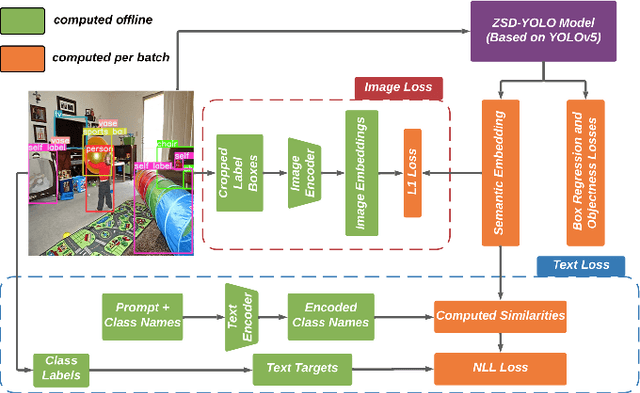
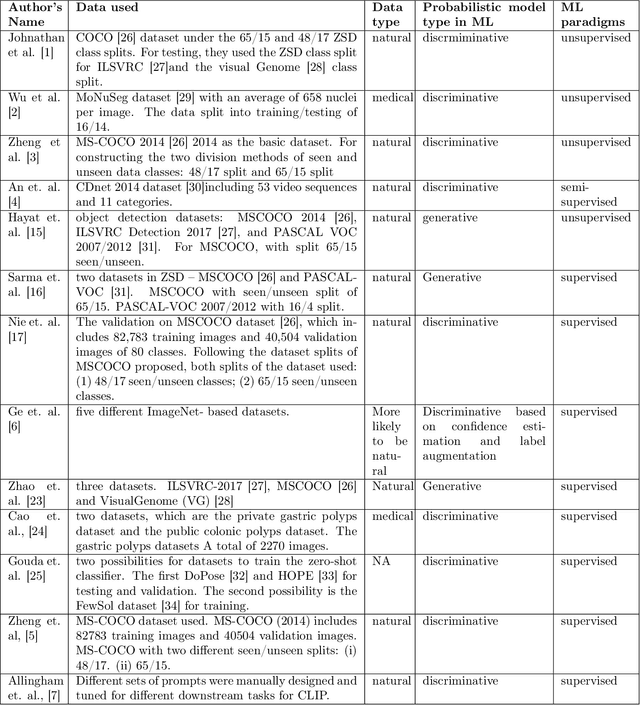
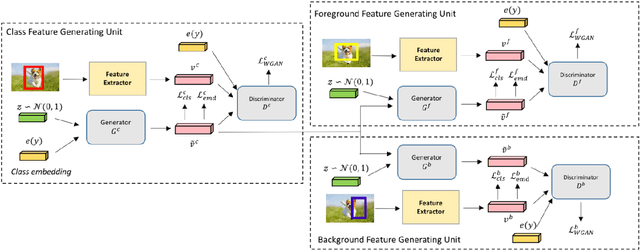
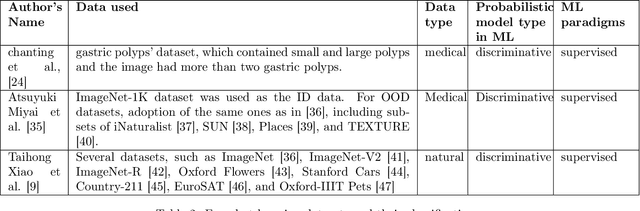
In this paper, different techniques of few-shot, zero-shot, and regular object detection have been investigated. The need for few-shot learning and zero-shot learning techniques is crucial and arises from the limitations and challenges in traditional machine learning, deep learning, and computer vision methods where they require large amounts of data, plus the poor generalization of those traditional methods. Those techniques can give us prominent results by using only a few training sets reducing the required amounts of data and improving the generalization. This survey will highlight the recent papers of the last three years that introduce the usage of few-shot learning and zero-shot learning techniques in addressing the challenges mentioned earlier. In this paper we reviewed the Zero-shot, few-shot and regular object detection methods and categorized them in an understandable manner. Based on the comparison made within each category. It been found that the approaches are quite impressive. This integrated review of diverse papers on few-shot, zero-shot, and regular object detection reveals a shared focus on advancing the field through novel frameworks and techniques. A noteworthy observation is the scarcity of detailed discussions regarding the difficulties encountered during the development phase. Contributions include the introduction of innovative models, such as ZSD-YOLO and GTNet, often showcasing improvements with various metrics such as mean average precision (mAP),Recall@100 (RE@100), the area under the receiver operating characteristic curve (AUROC) and precision. These findings underscore a collective move towards leveraging vision-language models for versatile applications, with potential areas for future research including a more thorough exploration of limitations and domain-specific adaptations.
Attention-Guided Erasing: A Novel Augmentation Method for Enhancing Downstream Breast Density Classification
Jan 08, 2024The assessment of breast density is crucial in the context of breast cancer screening, especially in populations with a higher percentage of dense breast tissues. This study introduces a novel data augmentation technique termed Attention-Guided Erasing (AGE), devised to enhance the downstream classification of four distinct breast density categories in mammography following the BI-RADS recommendation in the Vietnamese cohort. The proposed method integrates supplementary information during transfer learning, utilizing visual attention maps derived from a vision transformer backbone trained using the self-supervised DINO method. These maps are utilized to erase background regions in the mammogram images, unveiling only the potential areas of dense breast tissues to the network. Through the incorporation of AGE during transfer learning with varying random probabilities, we consistently surpass classification performance compared to scenarios without AGE and the traditional random erasing transformation. We validate our methodology using the publicly available VinDr-Mammo dataset. Specifically, we attain a mean F1-score of 0.5910, outperforming values of 0.5594 and 0.5691 corresponding to scenarios without AGE and with random erasing (RE), respectively. This superiority is further substantiated by t-tests, revealing a p-value of p<0.0001, underscoring the statistical significance of our approach.