 Add to Chrome
 Add to Firefox
 Add to Edge
ABM-UDE: Developing Surrogates for Epidemic Agent-Based Models via Scientific Machine Learning
Feb 25, 2026
Agent-based epidemic models (ABMs) encode behavioral and policy heterogeneity but are too slow for nightly hospital planning. We develop county-ready surrogates that learn directly from exascale ABM trajectories using Universal Differential Equations (UDEs): mechanistic SEIR-family ODEs with a neural-parameterized contact rate $κ_φ(u,t)$ (no additive residual). Our contributions are threefold: we adapt multiple shooting and an observer-based prediction-error method (PEM) to stabilize identification of neural-augmented epidemiological dynamics across intervention-driven regime shifts; we enforce positivity and mass conservation and show the learned contact-rate parameterization yields a well-posed vector field; and we quantify accuracy, calibration, and compute against ABM ensembles and UDE baselines. On a representative ExaEpi scenario, PEM-UDE reduces mean MSE by 77% relative to single-shooting UDE (3.00 vs. 13.14) and by 20% relative to MS-UDE (3.75). Reliability improves in parallel: empirical coverage of ABM $10$-$90$% and $25$-$75$% bands rises from 0.68/0.43 (UDE) and 0.79/0.55 (MS-UDE) to 0.86/0.61 with PEM-UDE and 0.94/0.69 with MS+PEM-UDE, indicating calibrated uncertainty rather than overconfident fits. Inference runs in seconds on commodity CPUs (20-35 s per $\sim$90-day forecast), enabling nightly ''what-if'' sweeps on a laptop. Relative to a $\sim$100 CPU-hour ABM reference run, this yields $\sim10^{4}\times$ lower wall-clock per scenario. This closes the realism-cadence gap, supports threshold-aware decision-making (e.g., maintaining ICU occupancy $<75$%), preserves mechanistic interpretability, and enables calibrated, risk-aware scenario planning on standard institutional hardware. Beyond epidemics, the ABM$\to$UDE recipe provides a portable path to distill agent-based simulators into fast, trustworthy surrogates for other scientific domains.

A Scientific Machine Learning Approach for Predicting and Forecasting Battery Degradation in Electric Vehicles
Oct 18, 2024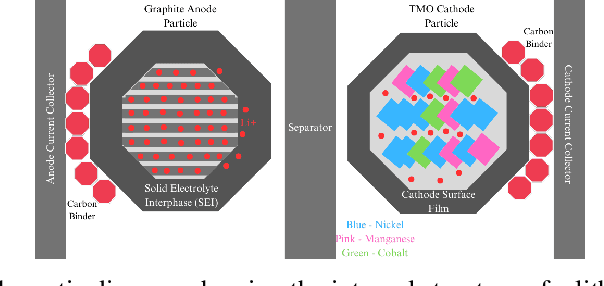
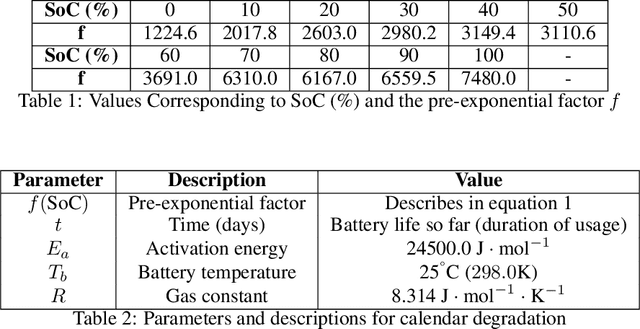
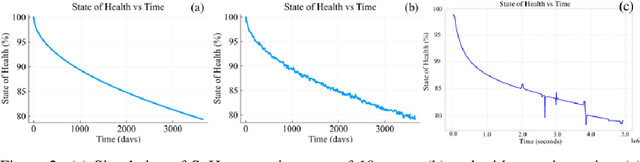
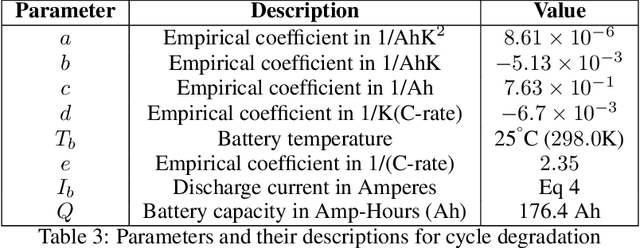
Carbon emissions are rising at an alarming rate, posing a significant threat to global efforts to mitigate climate change. Electric vehicles have emerged as a promising solution, but their reliance on lithium-ion batteries introduces the critical challenge of battery degradation. Accurate prediction and forecasting of battery degradation over both short and long time spans are essential for optimizing performance, extending battery life, and ensuring effective long-term energy management. This directly influences the reliability, safety, and sustainability of EVs, supporting their widespread adoption and aligning with key UN SDGs. In this paper, we present a novel approach to the prediction and long-term forecasting of battery degradation using Scientific Machine Learning framework which integrates domain knowledge with neural networks, offering more interpretable and scientifically grounded solutions for both predicting short-term battery health and forecasting degradation over extended periods. This hybrid approach captures both known and unknown degradation dynamics, improving predictive accuracy while reducing data requirements. We incorporate ground-truth data to inform our models, ensuring that both the predictions and forecasts reflect practical conditions. The model achieved MSE of 9.90 with the UDE and 11.55 with the NeuralODE, in experimental data, a loss of 1.6986 with the UDE, and a MSE of 2.49 in the NeuralODE, demonstrating the enhanced precision of our approach. This integration of data-driven insights with SciML's strengths in interpretability and scalability allows for robust battery management. By enhancing battery longevity and minimizing waste, our approach contributes to the sustainability of energy systems and accelerates the global transition toward cleaner, more responsible energy solutions, aligning with the UN's SDG agenda.