 Add to Chrome
 Add to Firefox
 Add to Edge
Rethinking Indic AI from a Lens of Cultural Heritage Preservation
Jul 07, 2026
As Artificial Intelligence (AI) makes inroads into different parts of the Indian subcontinent, there is significant interest in studying how AI impacts the linguistic and cultural foundations of this civilization. AI is seen as a ''double-edged sword'' where on the one hand, it can enable access and inclusion for a large population, on the other, it can homogenize worldviews and exclude underrepresented languages and worldviews. In this paper, we try to characterize this problem by addressing the extensive characteristic nature of Indian linguistics and the way they closely connect to cultural practices and worldview. We then perform a longitudinal survey of how Natural Language Processing (NLP) techniques have evolved in this space, tracing the historical development of Indic NLP, covering key milestones, methodological shifts, and resource creation efforts. In addition, the paper also examines the structural and sociolinguistic characteristics of Indian languages, such as rich morphology, complex scripts and grammar rules, diglossia, and large dialectal variation, and explains how these create unique challenges for building AI foundation models. We then discuss the growing role of Indic foundation models and analyze how these models address these long-standing resource and representation gaps. Finally, we propose a research direction called 'Culture Sensing', which re-imagines AI based on hermeneutic reasoning. Culture Sensing aims to address open problems such as ensuring equitable performance across low-resource languages and producing outputs that are culturally meaningful. By bringing together past work, current techniques, and emerging trends, this paper outlines research directions that can guide the next phase of Indic NLP and contribute to the development of more robust and inclusive Indic foundation models.

Characterizing Latent Perspectives of Media Houses Towards Public Figures
Sep 12, 2023Media houses reporting on public figures, often come with their own biases stemming from their respective worldviews. A characterization of these underlying patterns helps us in better understanding and interpreting news stories. For this, we need diverse or subjective summarizations, which may not be amenable for classifying into predefined class labels. This work proposes a zero-shot approach for non-extractive or generative characterizations of person entities from a corpus using GPT-2. We use well-articulated articles from several well-known news media houses as a corpus to build a sound argument for this approach. First, we fine-tune a GPT-2 pre-trained language model with a corpus where specific person entities are characterized. Second, we further fine-tune this with demonstrations of person entity characterizations, created from a corpus of programmatically constructed characterizations. This twice fine-tuned model is primed with manual prompts consisting of entity names that were not previously encountered in the second fine-tuning, to generate a simple sentence about the entity. The results were encouraging, when compared against actual characterizations from the corpus.
Zero-shot Entity and Tweet Characterization with Designed Conditional Prompts and Contexts
Apr 18, 2022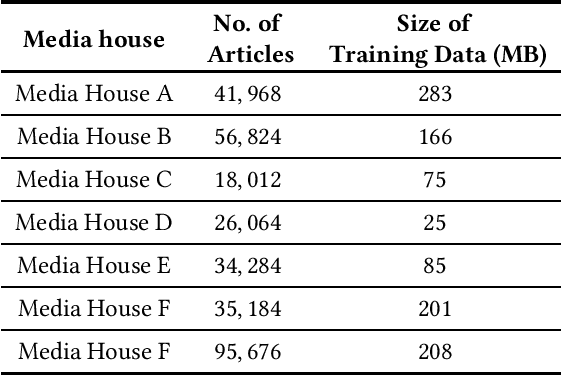
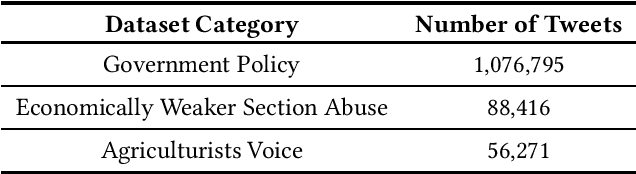
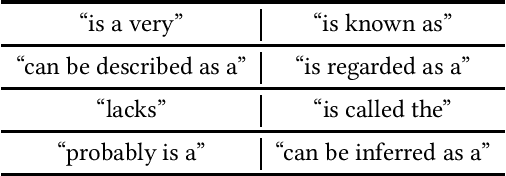
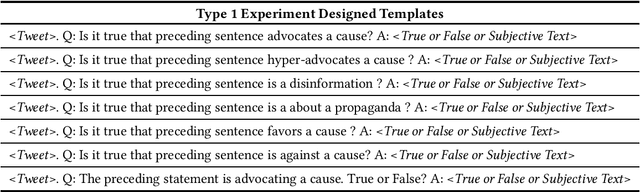
Online news and social media have been the de facto mediums to disseminate information globally from the beginning of the last decade. However, bias in content and purpose of intentions are not regulated, and managing bias is the responsibility of content consumers. In this regard, understanding the stances and biases of news sources towards specific entities becomes important. To address this problem, we use pretrained language models, which have been shown to bring about good results with no task-specific training or few-shot training. In this work, we approach the problem of characterizing Named Entities and Tweets as an open-ended text classification and open-ended fact probing problem.We evaluate the zero-shot language model capabilities of Generative Pretrained Transformer 2 (GPT-2) to characterize Entities and Tweets subjectively with human psychology-inspired and logical conditional prefixes and contexts. First, we fine-tune the GPT-2 model on a sufficiently large news corpus and evaluate subjective characterization of popular entities in the corpus by priming with prefixes. Second, we fine-tune GPT-2 with a Tweets corpus from a few popular hashtags and evaluate characterizing tweets by priming the language model with prefixes, questions, and contextual synopsis prompts. Entity characterization results were positive across measures and human evaluation.