 Add to Chrome
 Add to Firefox
 Add to Edge
A Comparative Study of UMAP and Other Dimensionality Reduction Methods
Mar 01, 2026
Uniform Manifold Approximation and Projection (UMAP) is a widely used manifold learning technique for dimensionality reduction. This paper studies UMAP, supervised UMAP, and several competing dimensionality reduction methods, including Principal Component Analysis (PCA), Kernel PCA, Sliced Inverse Regression (SIR), Kernel SIR, and t-distributed Stochastic Neighbor Embedding, through a comprehensive comparative analysis. Although UMAP has attracted substantial attention for preserving local and global structures, its supervised extensions, particularly for regression settings, remain rather underexplored. We provide a systematic evaluation of supervised UMAP for both regression and classification using simulated and real datasets, with performance assessed via predictive accuracy on low-dimensional embeddings. Our results show that supervised UMAP performs well for classification but exhibits limitations in effectively incorporating response information for regression, highlighting an important direction for future development.

Understanding the factors driving the opioid epidemic using machine learning
Aug 16, 2021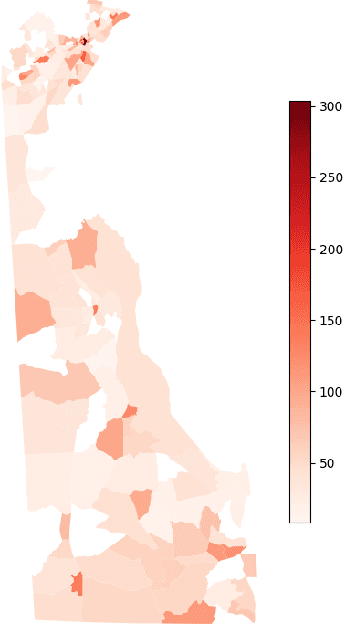
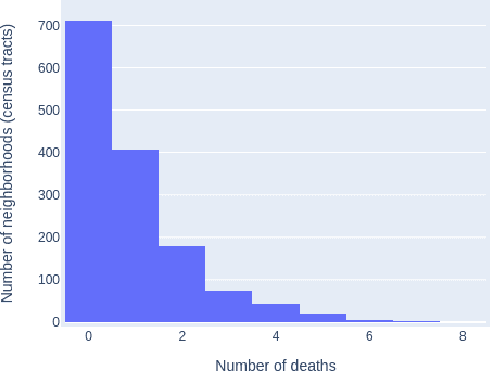
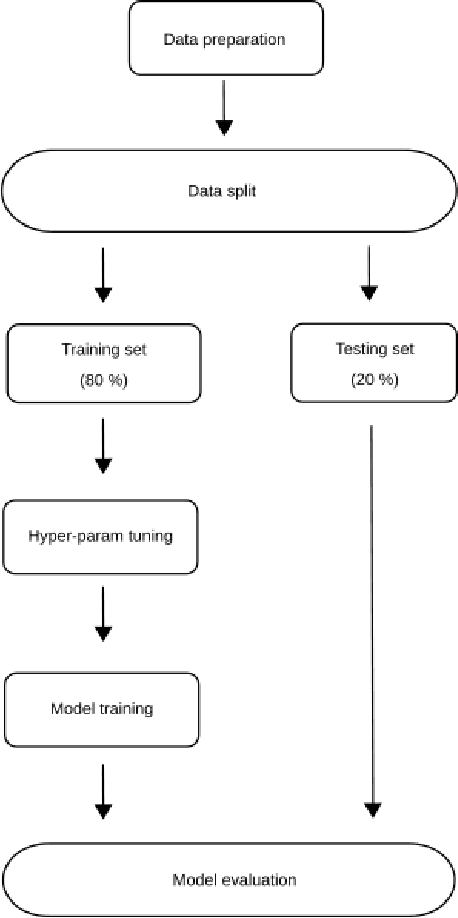
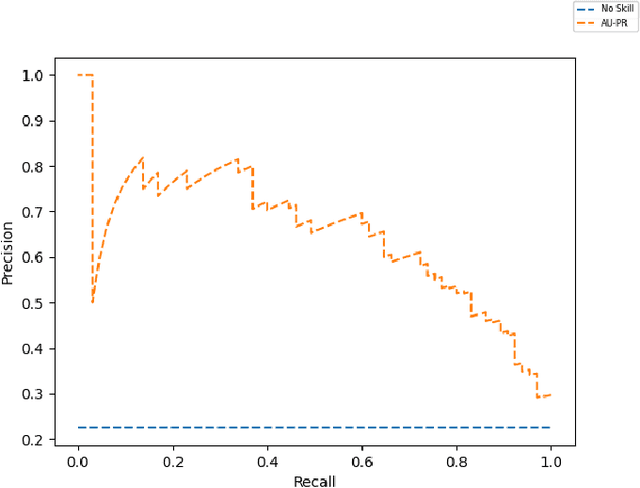
In recent years, the US has experienced an opioid epidemic with an unprecedented number of drugs overdose deaths. Research finds such overdose deaths are linked to neighborhood-level traits, thus providing opportunity to identify effective interventions. Typically, techniques such as Ordinary Least Squares (OLS) or Maximum Likelihood Estimation (MLE) are used to document neighborhood-level factors significant in explaining such adverse outcomes. These techniques are, however, less equipped to ascertain non-linear relationships between confounding factors. Hence, in this study we apply machine learning based techniques to identify opioid risks of neighborhoods in Delaware and explore the correlation of these factors using Shapley Additive explanations (SHAP). We discovered that the factors related to neighborhoods environment, followed by education and then crime, were highly correlated with higher opioid risk. We also explored the change in these correlations over the years to understand the changing dynamics of the epidemic. Furthermore, we discovered that, as the epidemic has shifted from legal (i.e., prescription opioids) to illegal (e.g.,heroin and fentanyl) drugs in recent years, the correlation of environment, crime and health related variables with the opioid risk has increased significantly while the correlation of economic and socio-demographic variables has decreased. The correlation of education related factors has been higher from the start and has increased slightly in recent years suggesting a need for increased awareness about the opioid epidemic.