 Add to Chrome
 Add to Firefox
 Add to Edge
PERSPECTRA: A Scalable and Configurable Pluralist Benchmark of Perspectives from Arguments
Feb 09, 2026
Pluralism, the capacity to engage with diverse perspectives without collapsing them into a single viewpoint, is critical for developing large language models that faithfully reflect human heterogeneity. Yet this characteristic has not been carefully examined in the LLM research community and remains absent from most alignment studies. Debate-oriented sources provide a natural entry point for pluralism research. Previous work builds on online debate sources but remains constrained by costly human validation. Other debate-rich platforms such as Reddit and Kialo also offer promising material: Reddit provides linguistic diversity and scale but lacks clear argumentative structure, while Kialo supplies explicit pro/con graphs but remains overly concise and detached from natural discourse. We introduce PERSPECTRA, a pluralist benchmark that integrates the structural clarity of Kialo debate graphs with the linguistic diversity of real Reddit discussions. Using a controlled retrieval-and-expansion pipeline, we construct 3,810 enriched arguments spanning 762 pro/con stances on 100 controversial topics. Each opinion is expanded to multiple naturalistic variants, enabling robust evaluation of pluralism. We initialise three tasks with PERSPECTRA: opinion counting (identifying distinct viewpoints), opinion matching (aligning supporting stances and discourse to source opinions), and polarity check (inferring aggregate stance in mixed discourse). Experiments with state-of-the-art open-source and proprietary LLMs, highlight systematic failures, such as overestimating the number of viewpoints and misclassifying concessive structures, underscoring the difficulty of pluralism-aware understanding and reasoning. By combining diversity with structure, PERSPECTRA establishes the first scalable, configurable benchmark for evaluating how well models represent, distinguish, and reason over multiple perspectives.

Do Multilingual Large Language Models Mitigate Stereotype Bias?
Jul 09, 2024
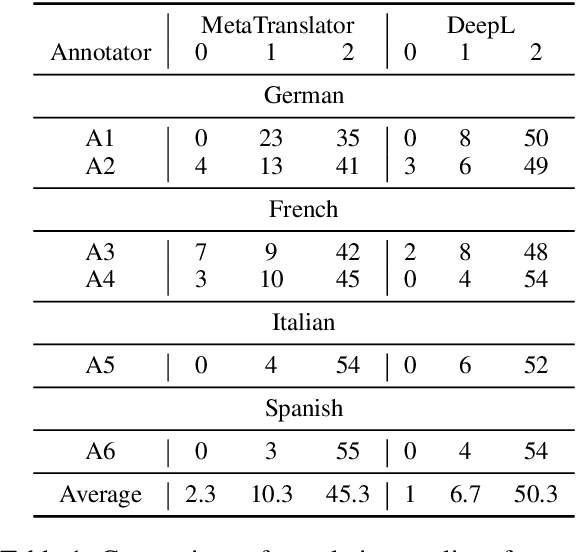


While preliminary findings indicate that multilingual LLMs exhibit reduced bias compared to monolingual ones, a comprehensive understanding of the effect of multilingual training on bias mitigation, is lacking. This study addresses this gap by systematically training six LLMs of identical size (2.6B parameters) and architecture: five monolingual models (English, German, French, Italian, and Spanish) and one multilingual model trained on an equal distribution of data across these languages, all using publicly available data. To ensure robust evaluation, standard bias benchmarks were automatically translated into the five target languages and verified for both translation quality and bias preservation by human annotators. Our results consistently demonstrate that multilingual training effectively mitigates bias. Moreover, we observe that multilingual models achieve not only lower bias but also superior prediction accuracy when compared to monolingual models with the same amount of training data, model architecture, and size.