 Add to Chrome
 Add to Firefox
 Add to Edge
On the Reliability of Cue Conflict and Beyond
Mar 12, 2026
Understanding how neural networks rely on visual cues offers a human-interpretable view of their internal decision processes. The cue-conflict benchmark has been influential in probing shape-texture preference and in motivating the insight that stronger, human-like shape bias is often associated with improved in-domain performance. However, we find that the current stylization-based instantiation can yield unstable and ambiguous bias estimates. Specifically, stylization may not reliably instantiate perceptually valid and separable cues nor control their relative informativeness, ratio-based bias can obscure absolute cue sensitivity, and restricting evaluation to preselected classes can distort model predictions by ignoring the full decision space. Together, these factors can confound preference with cue validity, cue balance, and recognizability artifacts. We introduce REFINED-BIAS, an integrated dataset and evaluation framework for reliable and interpretable shape-texture bias diagnosis. REFINED-BIAS constructs balanced, human- and model- recognizable cue pairs using explicit definitions of shape and texture, and measures cue-specific sensitivity over the full label space via a ranking-based metric, enabling fairer cross-model comparisons. Across diverse training regimes and architectures, REFINED-BIAS enables fairer cross-model comparison, more faithful diagnosis of shape and texture biases, and clearer empirical conclusions, resolving inconsistencies that prior cue-conflict evaluations could not reliably disambiguate.

A Unified Approach for Comprehensive Analysis of Various Spectral and Tissue Doppler Echocardiography
Nov 14, 2023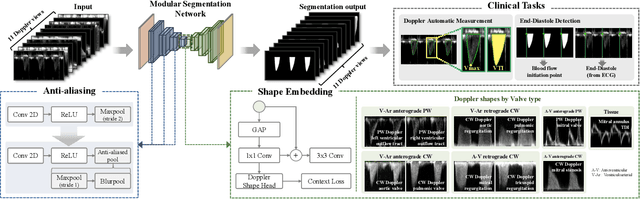
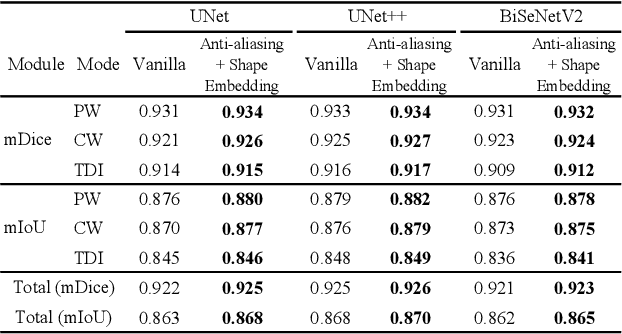
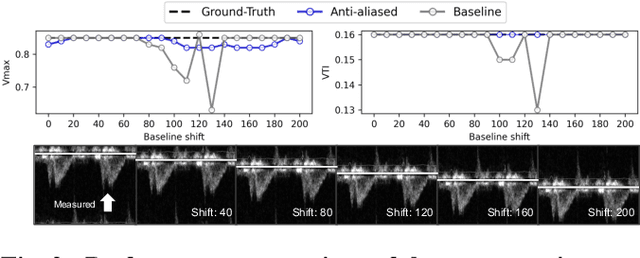
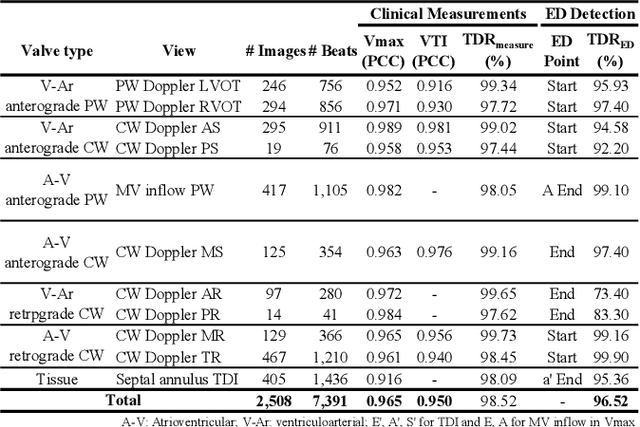
Doppler echocardiography offers critical insights into cardiac function and phases by quantifying blood flow velocities and evaluating myocardial motion. However, previous methods for automating Doppler analysis, ranging from initial signal processing techniques to advanced deep learning approaches, have been constrained by their reliance on electrocardiogram (ECG) data and their inability to process Doppler views collectively. We introduce a novel unified framework using a convolutional neural network for comprehensive analysis of spectral and tissue Doppler echocardiography images that combines automatic measurements and end-diastole (ED) detection into a singular method. The network automatically recognizes key features across various Doppler views, with novel Doppler shape embedding and anti-aliasing modules enhancing interpretation and ensuring consistent analysis. Empirical results indicate a consistent outperformance in performance metrics, including dice similarity coefficients (DSC) and intersection over union (IoU). The proposed framework demonstrates strong agreement with clinicians in Doppler automatic measurements and competitive performance in ED detection.
Self supervised convolutional kernel based handcrafted feature harmonization: Enhanced left ventricle hypertension disease phenotyping on echocardiography
Oct 13, 2023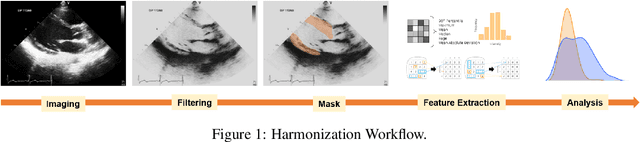

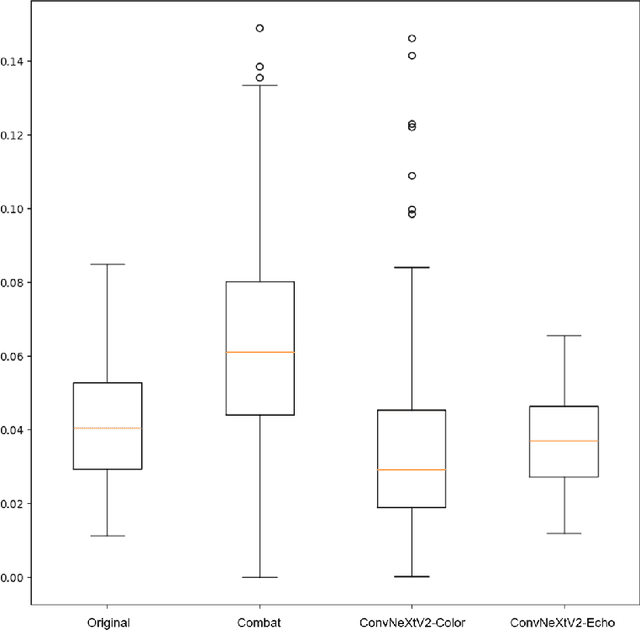
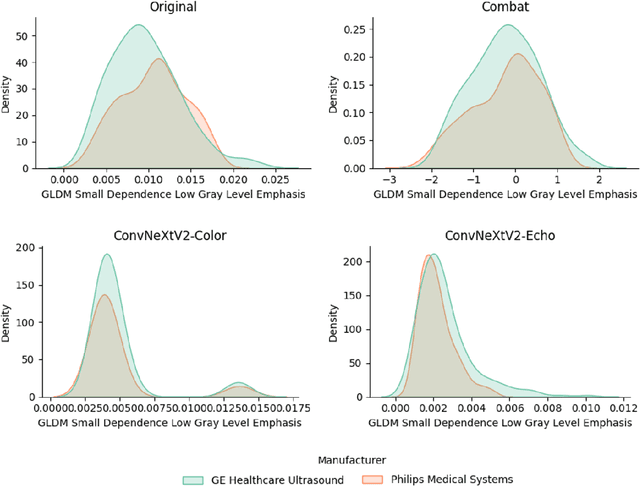
Radiomics, a medical imaging technique, extracts quantitative handcrafted features from images to predict diseases. Harmonization in those features ensures consistent feature extraction across various imaging devices and protocols. Methods for harmonization include standardized imaging protocols, statistical adjustments, and evaluating feature robustness. Myocardial diseases such as Left Ventricular Hypertrophy (LVH) and Hypertensive Heart Disease (HHD) are diagnosed via echocardiography, but variable imaging settings pose challenges. Harmonization techniques are crucial for applying handcrafted features in disease diagnosis in such scenario. Self-supervised learning (SSL) enhances data understanding within limited datasets and adapts to diverse data settings. ConvNeXt-V2 integrates convolutional layers into SSL, displaying superior performance in various tasks. This study focuses on convolutional filters within SSL, using them as preprocessing to convert images into feature maps for handcrafted feature harmonization. Our proposed method excelled in harmonization evaluation and exhibited superior LVH classification performance compared to existing methods.