 Add to Chrome
 Add to Firefox
 Add to Edge
DiPhon: Diffusion on Graphons for Scalable Graph Generation
Jul 08, 2026
Diffusion models represent a leading paradigm for graph generation, with notable impact in domains such as molecular design. Yet, scaling these models to large graphs remains an open problem. We approach this question in the dense-graph setting through the lens of graphons, the size-agnostic limit objects of dense graph sequences, to study how structural graph statistics behave across node-size scales. This perspective leads to DiPhon, a diffusion framework for size-scalable graph generation. Specifically, we formulate a continuous diffusion process on the graphon space via a Jacobi stochastic differential equation (SDE), and propose DiPhon, a discretized graph-level process that mimics these dynamics on finite graphs. We further derive the corresponding reverse-time process, which requires access to the marginal score. For the Jacobi process, this score interestingly admits a tractable form, which we estimate from data via graph denoising and plug into the reverse process to generate graph samples. We prove that DiPhon matches exactly the first moment of the marginal distributions induced by the continuous graphon process, and approximates the second moment up to a closed-form discrepancy. Thus, DiPhon inherits key size-agnostic statistical properties of the graphon dynamics, providing a principled route toward scalable graph generation. Empirically, we demonstrate this scalability by training on small graphs and generating progressively larger graphs at inference time, without retraining, while preserving their core topological properties.

Generative Diffusion Models of Stochastic Graph Signals
Jul 07, 2026Sampling stochastic signals supported on a graph underlies many graph machine learning tasks, including recommender systems, forecasting in financial markets, and wireless network optimization. In these settings, the target signals are realizations of unknown conditional distributions. However, prevailing approaches rely mostly on intricate, application-tailored designs that often regress to a conditional mean instead of sampling from the conditional law. This paper unifies such problems as conditional graph signal generative modeling and tackles them with a single denoising diffusion framework. We learn a reverse diffusion process, parametrized by graph neural networks (GNNs), that draws graph signals conditioned directly on the graph topology and on node-feature side information. The reverse process is realized by a novel architecture, the U-Graph Neural Network (U-GNN), which generalizes the image-convolutional U-Net to graph-structured signals. The U-GNN performs multi-resolution encoder--decoder processing in which pooling and unpooling reduce to a learned node selection, expressed by nested selection matrices, and a zero-padded lifting of coarse signals back to the full node set. The graph convolutions are carried out on the original graph, with a stride that sets their hop reach, so the U-GNN bypasses explicit graph coarsening at every resolution. We demonstrate our method on two generative tasks: stock price forecasting and optimal wireless resource allocation, with extensive numerical results in both domains.
Graph Convolutional Attention: A Spectral Perspective on Graph Denoising and Diffusion
Jul 07, 2026Denoising graphs is a fundamental problem in graph learning and the core operation of graph diffusion models. Attention-based architectures like graph transformers have recently shown promise in denoising graphs. However, our principled understanding of attention-based graph denoising remains limited, making it unclear whether standard attention is the right mechanism for this task. Here we show that, under a denoising objective, linear attention is suboptimal and can only learn an average spectral denoising filter over the training distribution. This creates a fundamental limitation as graphs often vary spectrally across the distribution. To overcome this limitation, we introduce Spectral Attention, which directly utilizes the input graph spectrum and provably outperforms linear attention by a margin governed by the spectral diversity of the distribution. We then derive Graph Convolutional Attention (GCA), a practical and permutation-equivariant realization of this idea that implements spectral denoising through graph-filtered queries and keys. For stochastic block models, GCA provably matches the idealized Spectral Attention mechanism. We further show that the softmax operation, that follows the attention, provides additional denoising by approximately projecting noisy eigenvectors onto the clean eigenspace. Empirically, replacing linear attention with GCA consistently improves graph denoising and diffusion on synthetic and real datasets, with gains strongly correlated with spectral diversity. In DiGress, GCA matches standard graph-transformer performance without computing expensive structural features, and when combined with the recently proposed PEARL positional encodings, avoids explicit eigendecomposition computations resulting in faster inference without degrading quality. The code can be found here: github.com/shervinkhalafi/graph_conv_att
Learning Policy Representations for Steerable Behavior Synthesis
Jan 29, 2026Given a Markov decision process (MDP), we seek to learn representations for a range of policies to facilitate behavior steering at test time. As policies of an MDP are uniquely determined by their occupancy measures, we propose modeling policy representations as expectations of state-action feature maps with respect to occupancy measures. We show that these representations can be approximated uniformly for a range of policies using a set-based architecture. Our model encodes a set of state-action samples into a latent embedding, from which we decode both the policy and its value functions corresponding to multiple rewards. We use variational generative approach to induce a smooth latent space, and further shape it with contrastive learning so that latent distances align with differences in value functions. This geometry permits gradient-based optimization directly in the latent space. Leveraging this capability, we solve a novel behavior synthesis task, where policies are steered to satisfy previously unseen value function constraints without additional training.
Graph-Aware Diffusion for Signal Generation
Oct 06, 2025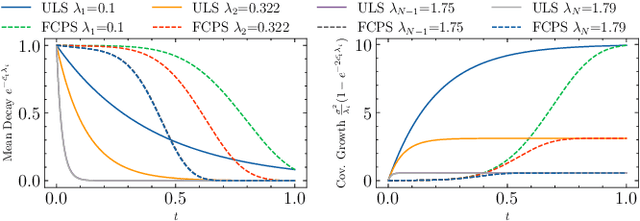
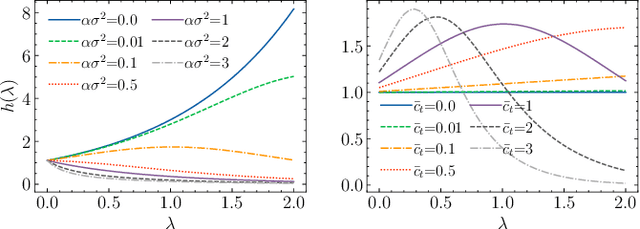
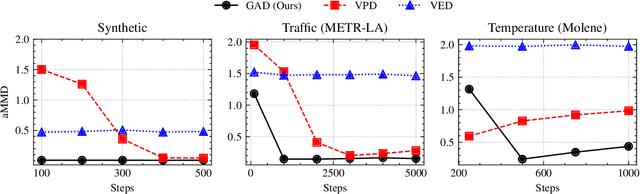
We study the problem of generating graph signals from unknown distributions defined over given graphs, relevant to domains such as recommender systems or sensor networks. Our approach builds on generative diffusion models, which are well established in vision and graph generation but remain underexplored for graph signals. Existing methods lack generality, either ignoring the graph structure in the forward process or designing graph-aware mechanisms tailored to specific domains. We adopt a forward process that incorporates the graph through the heat equation. Rather than relying on the standard formulation, we consider a time-warped coefficient to mitigate the exponential decay of the drift term, yielding a graph-aware generative diffusion model (GAD). We analyze its forward dynamics, proving convergence to a Gaussian Markov random field with covariance parametrized by the graph Laplacian, and interpret the backward dynamics as a sequence of graph-signal denoising problems. Finally, we demonstrate the advantages of GAD on synthetic data, real traffic speed measurements, and a temperature sensor network.
A Tensor Low-Rank Approximation for Value Functions in Multi-Task Reinforcement Learning
Jan 17, 2025
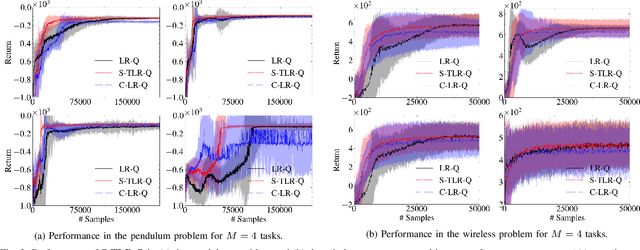
In pursuit of reinforcement learning systems that could train in physical environments, we investigate multi-task approaches as a means to alleviate the need for massive data acquisition. In a tabular scenario where the Q-functions are collected across tasks, we model our learning problem as optimizing a higher order tensor structure. Recognizing that close-related tasks may require similar actions, our proposed method imposes a low-rank condition on this aggregated Q-tensor. The rationale behind this approach to multi-task learning is that the low-rank structure enforces the notion of similarity, without the need to explicitly prescribe which tasks are similar, but inferring this information from a reduced amount of data simultaneously with the stochastic optimization of the Q-tensor. The efficiency of our low-rank tensor approach to multi-task learning is demonstrated in two numerical experiments, first in a benchmark environment formed by a collection of inverted pendulums, and then into a practical scenario involving multiple wireless communication devices.
Solving Finite-Horizon MDPs via Low-Rank Tensors
Jan 17, 2025

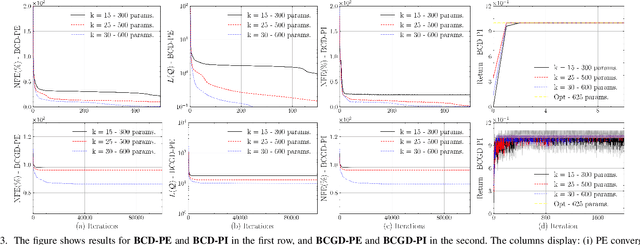

We study the problem of learning optimal policies in finite-horizon Markov Decision Processes (MDPs) using low-rank reinforcement learning (RL) methods. In finite-horizon MDPs, the policies, and therefore the value functions (VFs) are not stationary. This aggravates the challenges of high-dimensional MDPs, as they suffer from the curse of dimensionality and high sample complexity. To address these issues, we propose modeling the VFs of finite-horizon MDPs as low-rank tensors, enabling a scalable representation that renders the problem of learning optimal policies tractable. We introduce an optimization-based framework for solving the Bellman equations with low-rank constraints, along with block-coordinate descent (BCD) and block-coordinate gradient descent (BCGD) algorithms, both with theoretical convergence guarantees. For scenarios where the system dynamics are unknown, we adapt the proposed BCGD method to estimate the VFs using sampled trajectories. Numerical experiments further demonstrate that the proposed framework reduces computational demands in controlled synthetic scenarios and more realistic resource allocation problems.
Multilinear Tensor Low-Rank Approximation for Policy-Gradient Methods in Reinforcement Learning
Jan 08, 2025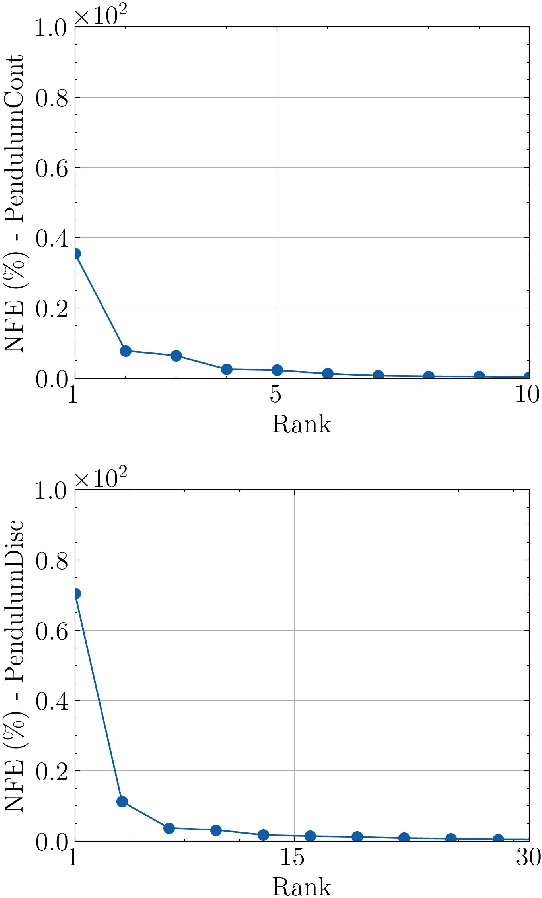
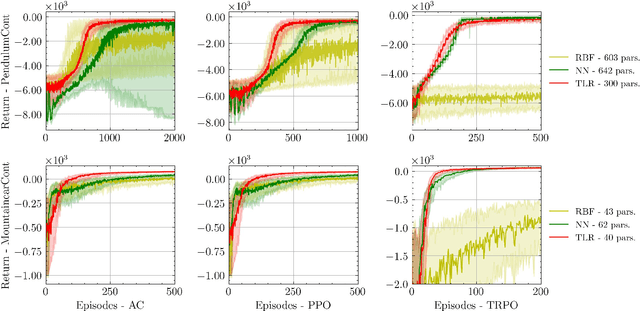
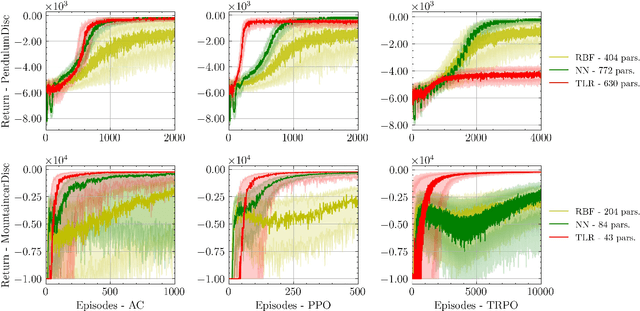
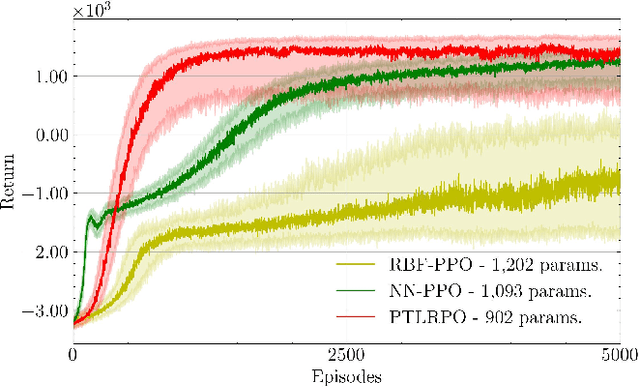
Reinforcement learning (RL) aims to estimate the action to take given a (time-varying) state, with the goal of maximizing a cumulative reward function. Predominantly, there are two families of algorithms to solve RL problems: value-based and policy-based methods, with the latter designed to learn a probabilistic parametric policy from states to actions. Most contemporary approaches implement this policy using a neural network (NN). However, NNs usually face issues related to convergence, architectural suitability, hyper-parameter selection, and underutilization of the redundancies of the state-action representations (e.g. locally similar states). This paper postulates multi-linear mappings to efficiently estimate the parameters of the RL policy. More precisely, we leverage the PARAFAC decomposition to design tensor low-rank policies. The key idea involves collecting the policy parameters into a tensor and leveraging tensor-completion techniques to enforce low rank. We establish theoretical guarantees of the proposed methods for various policy classes and validate their efficacy through numerical experiments. Specifically, we demonstrate that tensor low-rank policy models reduce computational and sample complexities in comparison to NN models while achieving similar rewards.
Low-Rank Tensors for Multi-Dimensional Markov Models
Nov 04, 2024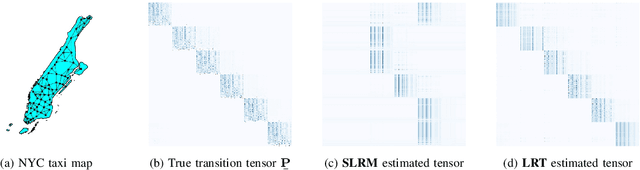
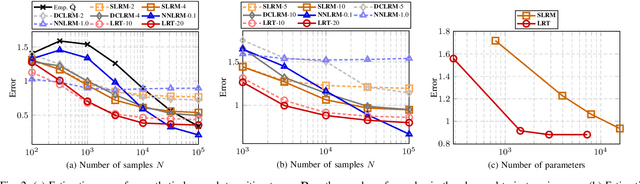
This work presents a low-rank tensor model for multi-dimensional Markov chains. A common approach to simplify the dynamical behavior of a Markov chain is to impose low-rankness on the transition probability matrix. Inspired by the success of these matrix techniques, we present low-rank tensors for representing transition probabilities on multi-dimensional state spaces. Through tensor decomposition, we provide a connection between our method and classical probabilistic models. Moreover, our proposed model yields a parsimonious representation with fewer parameters than matrix-based approaches. Unlike these methods, which impose low-rankness uniformly across all states, our tensor method accounts for the multi-dimensionality of the state space. We also propose an optimization-based approach to estimate a Markov model as a low-rank tensor. Our optimization problem can be solved by the alternating direction method of multipliers (ADMM), which enjoys convergence to a stationary solution. We empirically demonstrate that our tensor model estimates Markov chains more efficiently than conventional techniques, requiring both fewer samples and parameters. We perform numerical simulations for both a synthetic low-rank Markov chain and a real-world example with New York City taxi data, showcasing the advantages of multi-dimensionality for modeling state spaces.
Deterministic Policy Gradient Primal-Dual Methods for Continuous-Space Constrained MDPs
Aug 19, 2024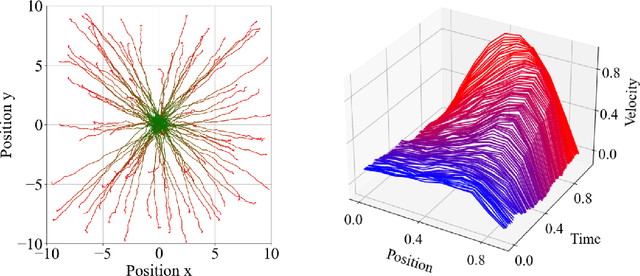
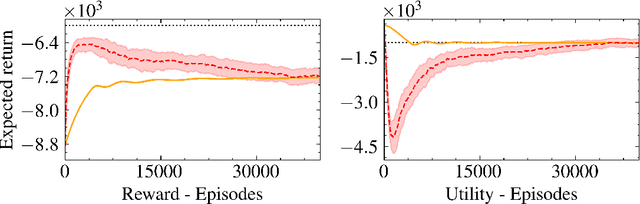
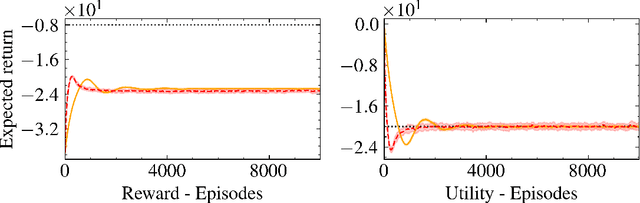
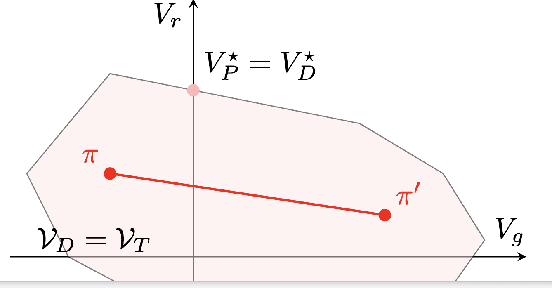
We study the problem of computing deterministic optimal policies for constrained Markov decision processes (MDPs) with continuous state and action spaces, which are widely encountered in constrained dynamical systems. Designing deterministic policy gradient methods in continuous state and action spaces is particularly challenging due to the lack of enumerable state-action pairs and the adoption of deterministic policies, hindering the application of existing policy gradient methods for constrained MDPs. To this end, we develop a deterministic policy gradient primal-dual method to find an optimal deterministic policy with non-asymptotic convergence. Specifically, we leverage regularization of the Lagrangian of the constrained MDP to propose a deterministic policy gradient primal-dual (D-PGPD) algorithm that updates the deterministic policy via a quadratic-regularized gradient ascent step and the dual variable via a quadratic-regularized gradient descent step. We prove that the primal-dual iterates of D-PGPD converge at a sub-linear rate to an optimal regularized primal-dual pair. We instantiate D-PGPD with function approximation and prove that the primal-dual iterates of D-PGPD converge at a sub-linear rate to an optimal regularized primal-dual pair, up to a function approximation error. Furthermore, we demonstrate the effectiveness of our method in two continuous control problems: robot navigation and fluid control. To the best of our knowledge, this appears to be the first work that proposes a deterministic policy search method for continuous-space constrained MDPs.