 Add to Chrome
 Add to Firefox
 Add to Edge
Prospects for quantum advantage in machine learning from the representability of functions
Dec 22, 2025
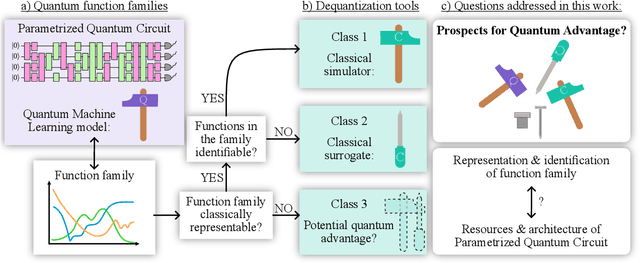
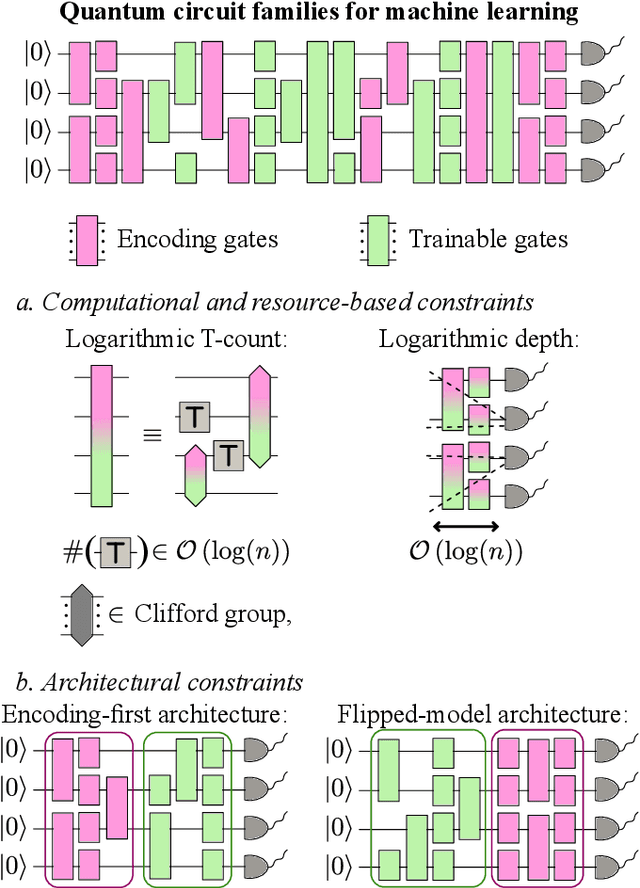
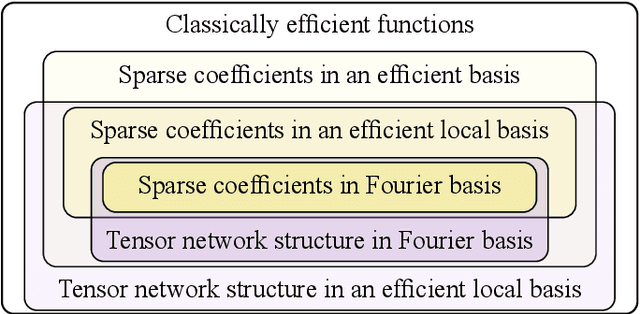
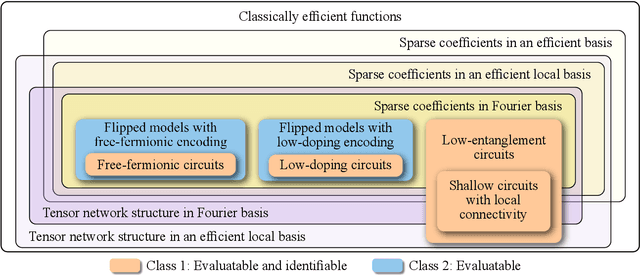
Demonstrating quantum advantage in machine learning tasks requires navigating a complex landscape of proposed models and algorithms. To bring clarity to this search, we introduce a framework that connects the structure of parametrized quantum circuits to the mathematical nature of the functions they can actually learn. Within this framework, we show how fundamental properties, like circuit depth and non-Clifford gate count, directly determine whether a model's output leads to efficient classical simulation or surrogation. We argue that this analysis uncovers common pathways to dequantization that underlie many existing simulation methods. More importantly, it reveals critical distinctions between models that are fully simulatable, those whose function space is classically tractable, and those that remain robustly quantum. This perspective provides a conceptual map of this landscape, clarifying how different models relate to classical simulability and pointing to where opportunities for quantum advantage may lie.

tn4ml: Tensor Network Training and Customization for Machine Learning
Feb 18, 2025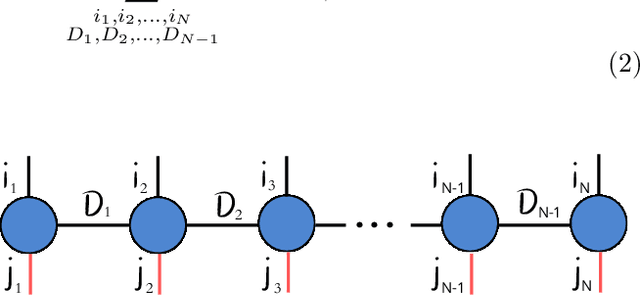
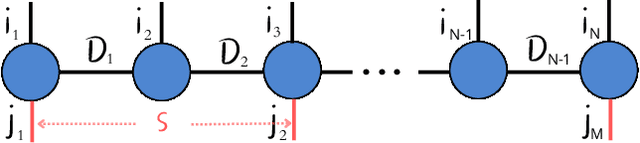
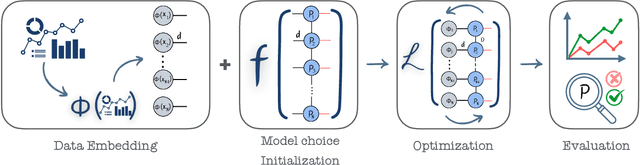

Tensor Networks have emerged as a prominent alternative to neural networks for addressing Machine Learning challenges in foundational sciences, paving the way for their applications to real-life problems. This paper introduces tn4ml, a novel library designed to seamlessly integrate Tensor Networks into optimization pipelines for Machine Learning tasks. Inspired by existing Machine Learning frameworks, the library offers a user-friendly structure with modules for data embedding, objective function definition, and model training using diverse optimization strategies. We demonstrate its versatility through two examples: supervised learning on tabular data and unsupervised learning on an image dataset. Additionally, we analyze how customizing the parts of the Machine Learning pipeline for Tensor Networks influences performance metrics.