 Add to Chrome
 Add to Firefox
 Add to Edge
An Open Toolkit for Underwater Field Robotics
Dec 17, 2025
Underwater robotics is becoming increasingly important for marine science, environmental monitoring, and subsea industrial operations, yet the development of underwater manipulation and actuation systems remains restricted by high costs, proprietary designs, and limited access to modular, research-oriented hardware. While open-source initiatives have democratized vehicle construction and control software, a substantial gap persists for joint-actuated systems-particularly those requiring waterproof, feedback-enabled actuation suitable for manipulators, grippers, and bioinspired devices. As a result, many research groups face lengthy development cycles, limited reproducibility, and difficulty transitioning laboratory prototypes to field-ready platforms. To address this gap, we introduce an open, cost-effective hardware and software toolkit for underwater manipulation research. The toolkit includes a depth-rated Underwater Robotic Joint (URJ) with early leakage detection, compact control and power management electronics, and a ROS2-based software stack for sensing and multi-mode actuation. All CAD models, fabrication files, PCB sources, firmware, and ROS2 packages are openly released, enabling local manufacturing, modification, and community-driven improvement. The toolkit has undergone extensive laboratory testing and multiple field deployments, demonstrating reliable operation up to 40 m depth across diverse applications, including a 3-DoF underwater manipulator, a tendon-driven soft gripper, and an underactuated sediment sampler. These results validate the robustness, versatility, and reusability of the toolkit for real marine environments. By providing a fully open, field-tested platform, this work aims to lower the barrier to entry for underwater manipulation research, improve reproducibility, and accelerate innovation in underwater field robotics.

Boundary Control Behaviors of Multiple Low-cost AUVs Using Acoustic Communication
Nov 28, 2024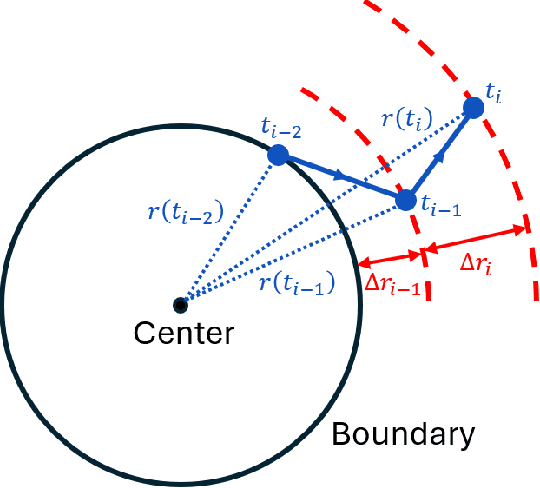
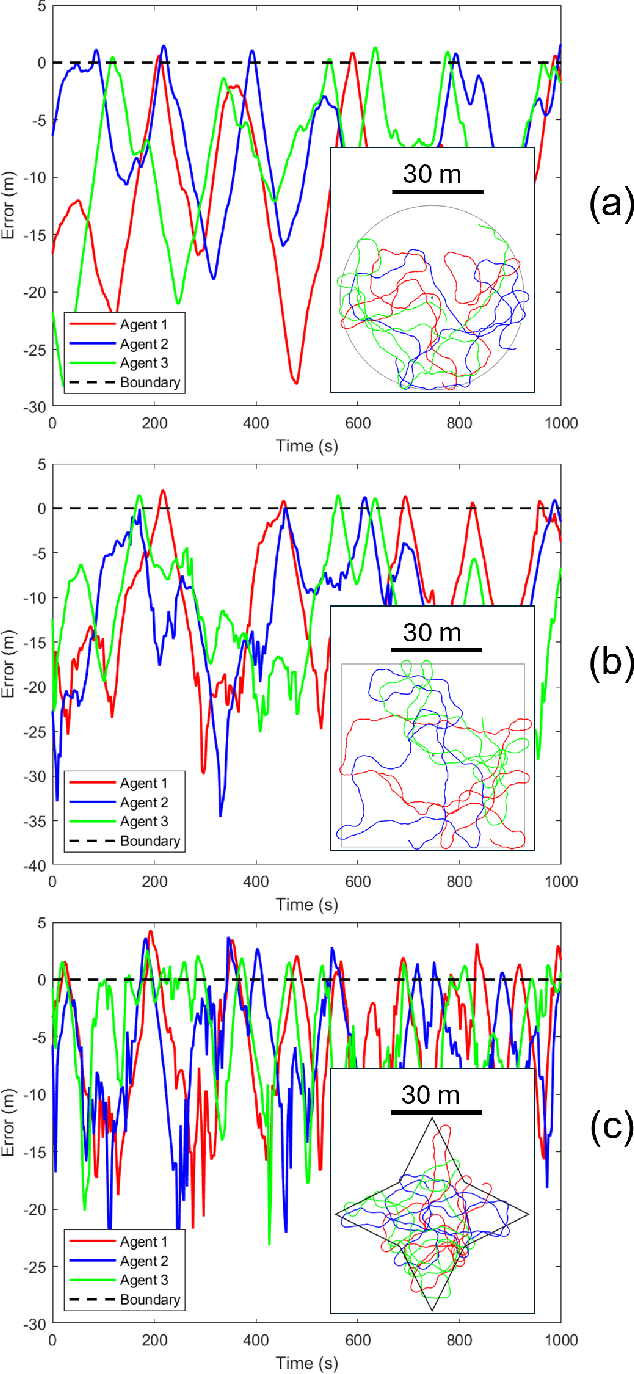

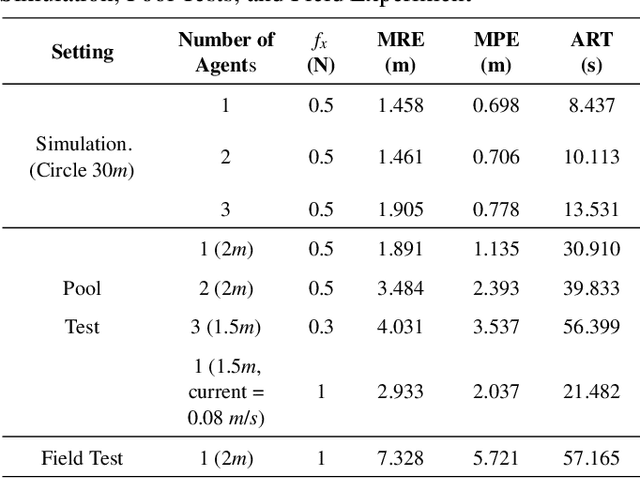
This study presents acoustic-based methods for the control of multiple autonomous underwater vehicles (AUV). This study proposes two different models for implementing boundary and path control on low-cost AUVs using acoustic communication and a single central acoustic beacon. Two methods are presented: the Range Variation-Based (RVB) model completely relies on range data obtained by acoustic modems, whereas the Heading Estimation-Based (HEB) model uses ranges and range rates to estimate the position of the central boundary beacon and perform assigned behaviors. The models are tested on two boundary control behaviors: Fencing and Milling. Fencing behavior ensures AUVs return within predefined boundaries, while Milling enables the AUVs to move cyclically on a predefined path around the beacon. Models are validated by successfully performing the boundary control behaviors in simulations, pool tests, including artificial underwater currents, and field tests conducted in the ocean. All tests were performed with fully autonomous platforms, and no external input or sensor was provided to the AUVs during validation. Quantitative and qualitative analyses are presented in the study, focusing on the effect and application of a multi-robot system.
Wireless teleoperation of HSURF artificial fish in complex paths
Jul 06, 2024In this paper we show the application of the new robotic multi-platform system HSURF to a specific use case of teleoperation, aimed at monitoring and inspection. The HSURF system, consists of 3 different kinds of platforms: floater, sinker and robotic fishes. The collaborative control of the 3 platforms allows a remotely based operator to control the fish in order to visit and inspect several targets underwater following a complex trajectory. A shared autonomy solution shows to be the most suitable, in order to minimize the effect of limited bandwidth and relevant delay intrinsic to acoustic communications. The control architecture is described and preliminary results of the acoustically teleoperated visits of multiple targets in a testing pool are provided.