 Add to Chrome
 Add to Firefox
 Add to Edge
Learning-based Probabilistic Load Forecasting with Post-hoc and In-model Uncertainty
Jul 14, 2026
Smart-building load forecasters are often trained offline on dense, multivariate, high-frequency data, but deployment may provide only hourly, feature-limited inputs. Missing features must then be reconstructed, and their errors can propagate through the model. If this input uncertainty is not reflected, prediction intervals may become miscalibrated, affecting demand-response scheduling. Our work examines where uncertainty should be placed once inference inputs are reconstructed. We develop a unified one-day-ahead probabilistic forecasting framework that aligns temporal resolution, reconstructs the unavailable inputs, and derives causal features, and we compare a modular post-hoc residual-quantile scheme with an integrated in-model quantile-learning scheme. The comparison uses three mid-scale Deep Learning (DL) backbones: recurrent, hybrid recurrent, and attention-based Temporal Fusion Transformer (TFT) models, under identical inputs, forecasting horizon, preprocessing rules, and training budgets. Results show that uncertainty placement is backbone-dependent. Integrated quantile learning is most reliable with the TFT, yielding 2.2-3.6% MAPE and 28-83W RMSE on the labeled test window, while producing intervals about 5x narrower than the modular intervals at the closest-to-nominal coverage level. Diebold-Mariano tests support the TFT ranking and the mixed behavior of the recurrent backbones. A reconstruction-sensitivity test shows that reconstructed inputs increase the Quantile Score (QS) by 106% while interval width remains nearly unchanged, indicating that the model does not automatically absorb reconstruction-induced uncertainty. Robustness checks against non-DL baselines and seasonal hold-out weeks support this ranking. Our results expose the limits of post-hoc residual quantiles when inference depends on reconstructed inputs.

Lightweight Authenticated Task Offloading in 6G-Cloud Vehicular Twin Networks
Feb 05, 2025Task offloading management in 6G vehicular networks is crucial for maintaining network efficiency, particularly as vehicles generate substantial data. Integrating secure communication through authentication introduces additional computational and communication overhead, significantly impacting offloading efficiency and latency. This paper presents a unified framework incorporating lightweight Identity-Based Cryptographic (IBC) authentication into task offloading within cloud-based 6G Vehicular Twin Networks (VTNs). Utilizing Proximal Policy Optimization (PPO) in Deep Reinforcement Learning (DRL), our approach optimizes authenticated offloading decisions to minimize latency and enhance resource allocation. Performance evaluation under varying network sizes, task sizes, and data rates reveals that IBC authentication can reduce offloading efficiency by up to 50% due to the added overhead. Besides, increasing network size and task size can further reduce offloading efficiency by up to 91.7%. As a countermeasure, increasing the transmission data rate can improve the offloading performance by as much as 63%, even in the presence of authentication overhead. The code for the simulations and experiments detailed in this paper is available on GitHub for further reference and reproducibility [1].
Accurate AI-Driven Emergency Vehicle Location Tracking in Healthcare ITS Digital Twin
Feb 05, 2025Creating a Digital Twin (DT) for Healthcare Intelligent Transportation Systems (HITS) is a hot research trend focusing on enhancing HITS management, particularly in emergencies where ambulance vehicles must arrive at the crash scene on time and track their real-time location is crucial to the medical authorities. Despite the claim of real-time representation, a temporal misalignment persists between the physical and virtual domains, leading to discrepancies in the ambulance's location representation. This study proposes integrating AI predictive models, specifically Support Vector Regression (SVR) and Deep Neural Networks (DNN), within a constructed mock DT data pipeline framework to anticipate the medical vehicle's next location in the virtual world. These models align virtual representations with their physical counterparts, i.e., metaphorically offsetting the synchronization delay between the two worlds. Trained meticulously on a historical geospatial dataset, SVR and DNN exhibit exceptional prediction accuracy in MATLAB and Python environments. Through various testing scenarios, we visually demonstrate the efficacy of our methodology, showcasing SVR and DNN's key role in significantly reducing the witnessed gap within the HITS's DT. This transformative approach enhances real-time synchronization in emergency HITS by approximately 88% to 93%.
AI-based traffic analysis in digital twin networks
Nov 01, 2024In today's networked world, Digital Twin Networks (DTNs) are revolutionizing how we understand and optimize physical networks. These networks, also known as 'Digital Twin Networks (DTNs)' or 'Networks Digital Twins (NDTs),' encompass many physical networks, from cellular and wireless to optical and satellite. They leverage computational power and AI capabilities to provide virtual representations, leading to highly refined recommendations for real-world network challenges. Within DTNs, tasks include network performance enhancement, latency optimization, energy efficiency, and more. To achieve these goals, DTNs utilize AI tools such as Machine Learning (ML), Deep Learning (DL), Reinforcement Learning (RL), Federated Learning (FL), and graph-based approaches. However, data quality, scalability, interpretability, and security challenges necessitate strategies prioritizing transparency, fairness, privacy, and accountability. This chapter delves into the world of AI-driven traffic analysis within DTNs. It explores DTNs' development efforts, tasks, AI models, and challenges while offering insights into how AI can enhance these dynamic networks. Through this journey, readers will gain a deeper understanding of the pivotal role AI plays in the ever-evolving landscape of networked systems.
Does Twinning Vehicular Networks Enhance Their Performance in Dense Areas?
Feb 16, 2024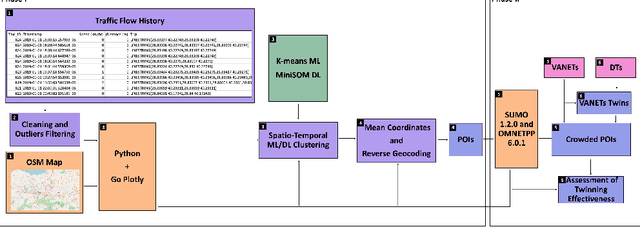
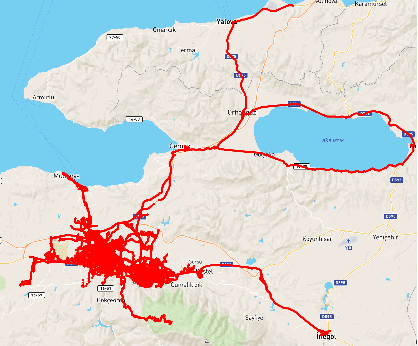
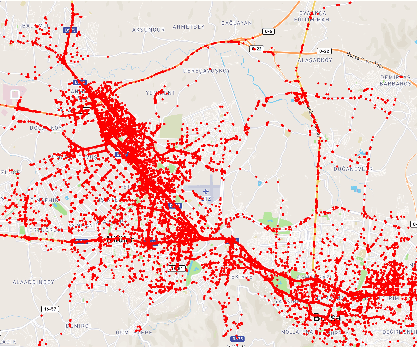
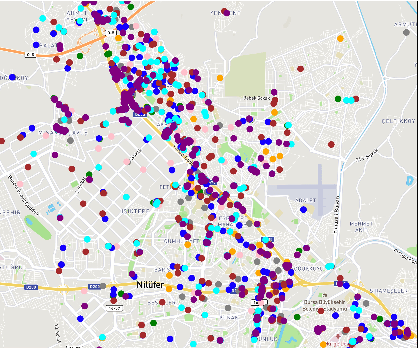
This paper investigates the potential of Digital Twins (DTs) to enhance network performance in densely populated urban areas, specifically focusing on vehicular networks. The study comprises two phases. In Phase I, we utilize traffic data and AI clustering to identify critical locations, particularly in crowded urban areas with high accident rates. In Phase II, we evaluate the advantages of twinning vehicular networks through three deployment scenarios: edge-based twin, cloud-based twin, and hybrid-based twin. Our analysis demonstrates that twinning significantly reduces network delays, with virtual twins outperforming physical networks. Virtual twins maintain low delays even with increased vehicle density, such as 15.05 seconds for 300 vehicles. Moreover, they exhibit faster computational speeds, with cloud-based twins being 1.7 times faster than edge twins in certain scenarios. These findings provide insights for efficient vehicular communication and underscore the potential of virtual twins in enhancing vehicular networks in crowded areas while emphasizing the importance of considering real-world factors when making deployment decisions.