 Add to Chrome
 Add to Firefox
 Add to Edge
CoCoLex: Confidence-guided Copy-based Decoding for Grounded Legal Text Generation
Aug 07, 2025
Due to their ability to process long and complex contexts, LLMs can offer key benefits to the Legal domain, but their adoption has been hindered by their tendency to generate unfaithful, ungrounded, or hallucinatory outputs. While Retrieval-Augmented Generation offers a promising solution by grounding generations in external knowledge, it offers no guarantee that the provided context will be effectively integrated. To address this, context-aware decoding strategies have been proposed to amplify the influence of relevant context, but they usually do not explicitly enforce faithfulness to the context. In this work, we introduce Confidence-guided Copy-based Decoding for Legal Text Generation (CoCoLex)-a decoding strategy that dynamically interpolates the model produced vocabulary distribution with a distribution derived based on copying from the context. CoCoLex encourages direct copying based on the model's confidence, ensuring greater fidelity to the source. Experimental results on five legal benchmarks demonstrate that CoCoLex outperforms existing context-aware decoding methods, particularly in long-form generation tasks.

Towards Explainability and Fairness in Swiss Judgement Prediction: Benchmarking on a Multilingual Dataset
Feb 26, 2024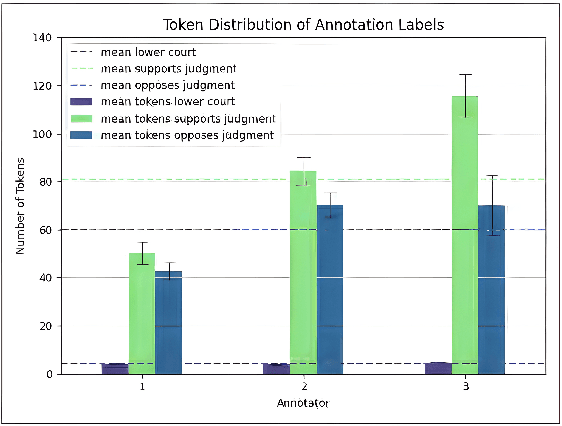
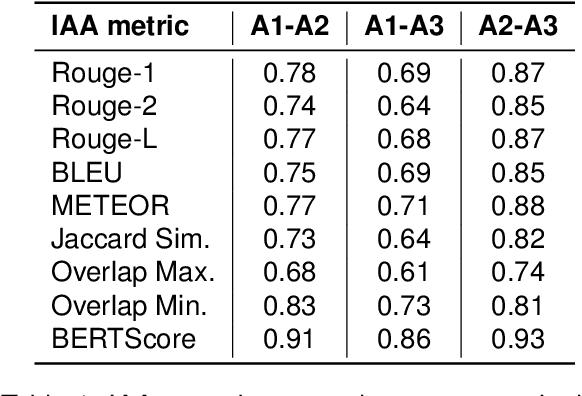
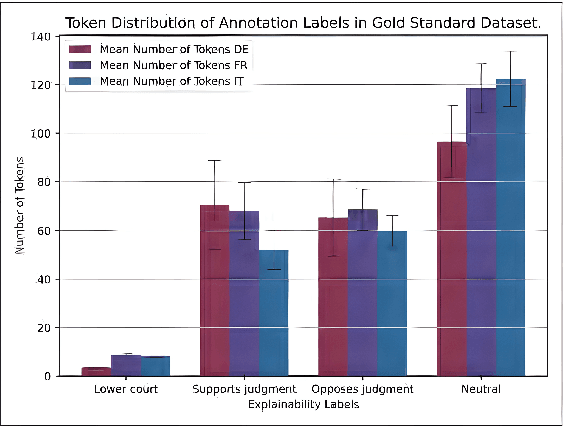
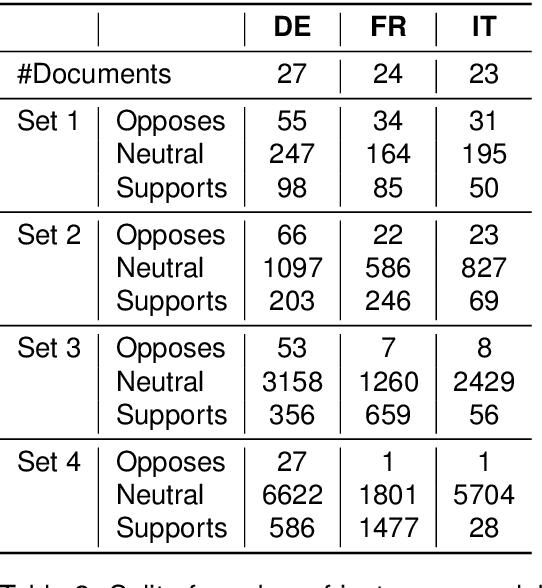
The assessment of explainability in Legal Judgement Prediction (LJP) systems is of paramount importance in building trustworthy and transparent systems, particularly considering the reliance of these systems on factors that may lack legal relevance or involve sensitive attributes. This study delves into the realm of explainability and fairness in LJP models, utilizing Swiss Judgement Prediction (SJP), the only available multilingual LJP dataset. We curate a comprehensive collection of rationales that `support' and `oppose' judgement from legal experts for 108 cases in German, French, and Italian. By employing an occlusion-based explainability approach, we evaluate the explainability performance of state-of-the-art monolingual and multilingual BERT-based LJP models, as well as models developed with techniques such as data augmentation and cross-lingual transfer, which demonstrated prediction performance improvement. Notably, our findings reveal that improved prediction performance does not necessarily correspond to enhanced explainability performance, underscoring the significance of evaluating models from an explainability perspective. Additionally, we introduce a novel evaluation framework, Lower Court Insertion (LCI), which allows us to quantify the influence of lower court information on model predictions, exposing current models' biases.