 Add to Chrome
 Add to Firefox
 Add to Edge
LLM-Augmented Therapy Normalization and Aspect-Based Sentiment Analysis for Treatment-Resistant Depression on Reddit
Mar 12, 2026
Treatment-resistant depression (TRD) is a severe form of major depressive disorder in which patients do not achieve remission despite multiple adequate treatment trials. Evidence across pharmacologic options for TRD remains limited, and trials often do not fully capture patient-reported tolerability. Large-scale online peer-support narratives therefore offer a complementary lens on how patients describe and evaluate medications in real-world use. In this study, we curated a corpus of 5,059 Reddit posts explicitly referencing TRD from 3,480 subscribers across 28 mental health-related subreddits from 2010 to 2025. Of these, 3,839 posts mentioned at least one medication, yielding 23,399 mentions of 81 generic-name medications after lexicon-based normalization of brand names, misspellings, and colloquialisms. We developed an aspect-based sentiment classifier by fine-tuning DeBERTa-v3 on the SMM4H 2023 therapy-sentiment Twitter corpus with large language model based data augmentation, achieving a micro-F1 score of 0.800 on the shared-task test set. Applying this classifier to Reddit, we quantified sentiment toward individual medications across three categories: positive, neutral, and negative, and tracked patterns by drug, subscriber, subreddit, and year. Overall, 72.1% of medication mentions were neutral, 14.8% negative, and 13.1% positive. Conventional antidepressants, especially SSRIs and SNRIs, showed consistently higher negative than positive proportions, whereas ketamine and esketamine showed comparatively more favorable sentiment profiles. These findings show that normalized medication extraction combined with aspect-based sentiment analysis can help characterize patient-perceived treatment experiences in TRD-related Reddit discourse, complementing clinical evidence with large-scale patient-generated perspectives.

Two-layer retrieval augmented generation framework for low-resource medical question-answering: proof of concept using Reddit data
May 29, 2024
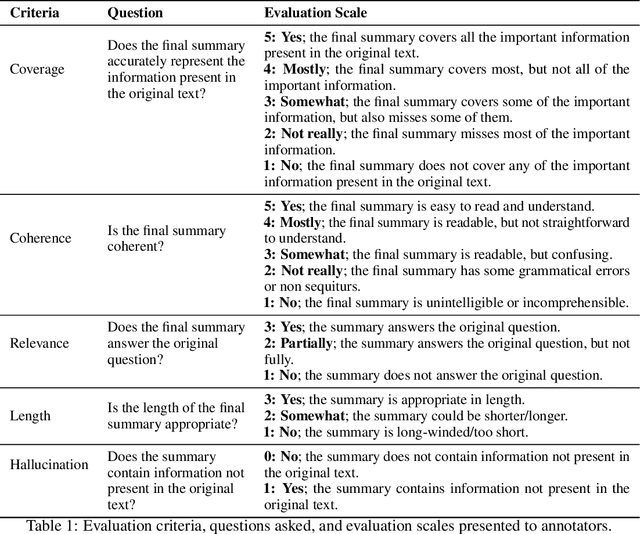

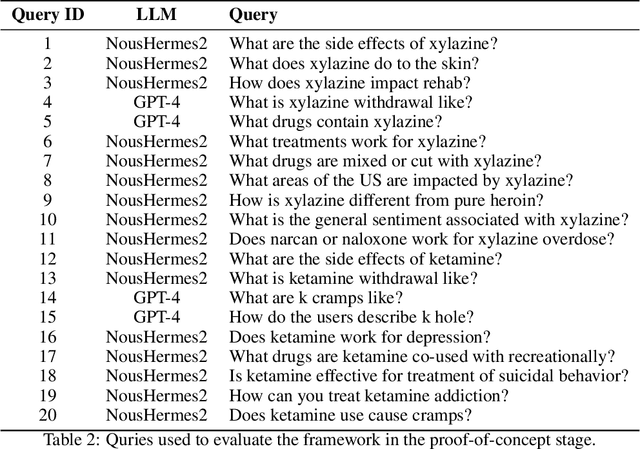
Retrieval augmented generation (RAG) provides the capability to constrain generative model outputs, and mitigate the possibility of hallucination, by providing relevant in-context text. The number of tokens a generative large language model (LLM) can incorporate as context is finite, thus limiting the volume of knowledge from which to generate an answer. We propose a two-layer RAG framework for query-focused answer generation and evaluate a proof-of-concept for this framework in the context of query-focused summary generation from social media forums, focusing on emerging drug-related information. The evaluations demonstrate the effectiveness of the two-layer framework in resource constrained settings to enable researchers in obtaining near real-time data from users.
Generalizable Natural Language Processing Framework for Migraine Reporting from Social Media
Dec 23, 2022
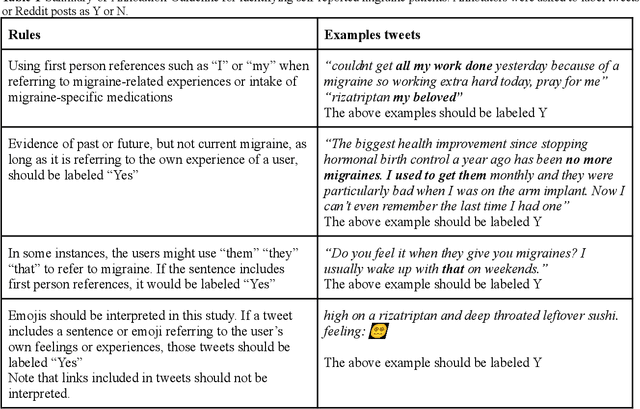
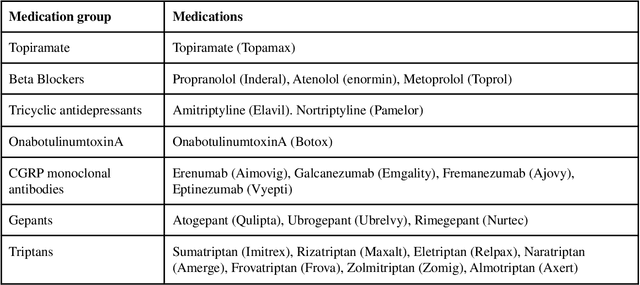

Migraine is a high-prevalence and disabling neurological disorder. However, information migraine management in real-world settings could be limited to traditional health information sources. In this paper, we (i) verify that there is substantial migraine-related chatter available on social media (Twitter and Reddit), self-reported by migraine sufferers; (ii) develop a platform-independent text classification system for automatically detecting self-reported migraine-related posts, and (iii) conduct analyses of the self-reported posts to assess the utility of social media for studying this problem. We manually annotated 5750 Twitter posts and 302 Reddit posts. Our system achieved an F1 score of 0.90 on Twitter and 0.93 on Reddit. Analysis of information posted by our 'migraine cohort' revealed the presence of a plethora of relevant information about migraine therapies and patient sentiments associated with them. Our study forms the foundation for conducting an in-depth analysis of migraine-related information using social media data.