 Add to Chrome
 Add to Firefox
 Add to Edge
Toward Trustworthy Autonomous Science: A Two-Year Community Roadmap
Jul 13, 2026
One year ago, the AISLE roadmap argued that autonomous laboratories operated as isolated islands and proposed a grassroots network organized around five critical dimensions. The field has since moved faster than anticipated. Multi-agent systems have produced experimentally validated hypotheses, self-driving laboratories have grown more interoperable and orchestrated, reasoning-trained and domain foundation models have raised the capability ceiling, and the Genesis Mission has placed autonomous experimentation at the center of U.S. federal science strategy, with industry emerging as a primary actor. Progress has met a sobering counter-current, including a corrected flagship discovery result, benchmarks showing that agents which rival experts on closed-ended questions still complete only a fraction of open-ended research, and fabricated citations surfacing at leading venues. We read this as the defining tension of the field. Producing a candidate discovery is no longer the hard part, but verifying it is, and this asymmetry now limits autonomous science more than raw model capability. We update the roadmap around seven dimensions, revisiting the original five and elevating two former cross-cutting concerns, trust, verification, and reproducibility, and safety, security, and governance, to first-class status. We assess the original milestones (M1 through M14) as achieved, partially achieved, reframed, or open, add four new milestones (M15 through M18), and scope the path forward to a two-year horizon. The first year concentrates on interfaces, protocol adoption, and the scaffolding of verification, and the second targets federation, zero-trust coordination, and governance. Throughout, we position the grassroots network as the interoperability fabric that lets national programs, international initiatives, and commercial platforms connect rather than re-silo.

Benchmarking energy consumption and latency for neuromorphic computing in condensed matter and particle physics
Sep 21, 2022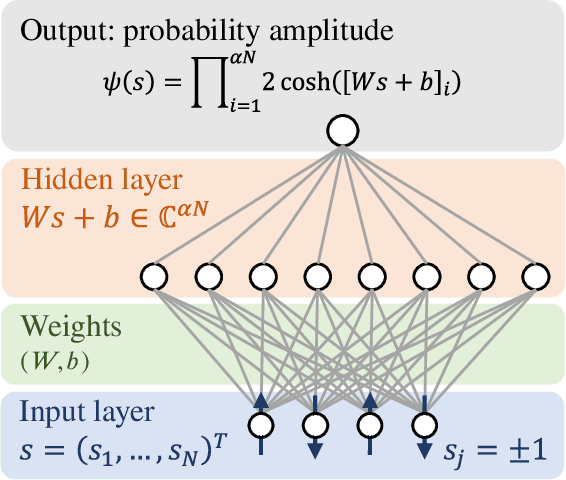
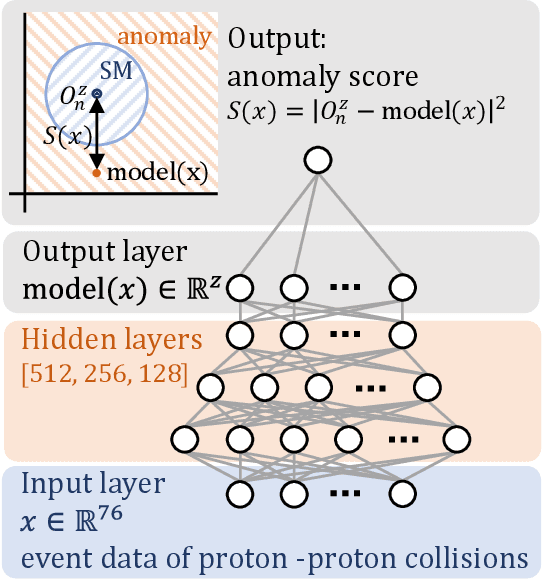
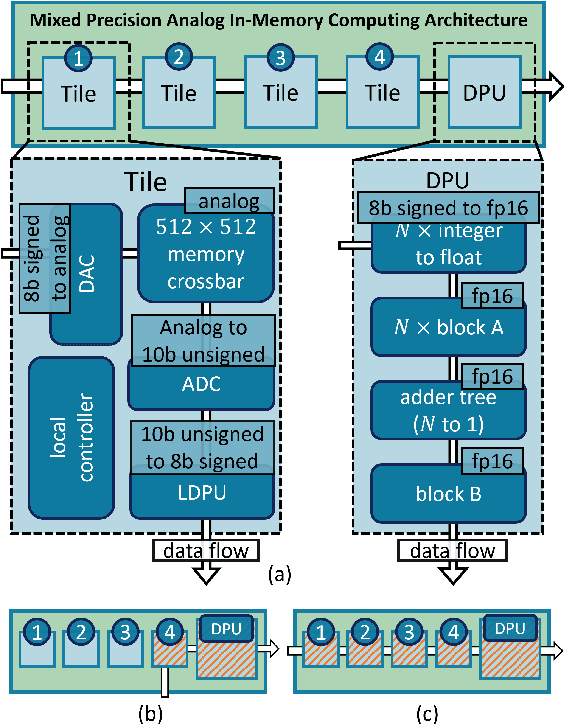
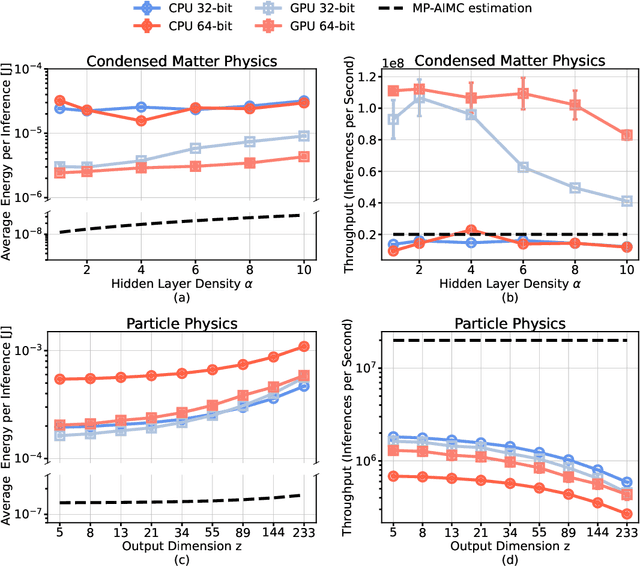
The massive use of artificial neural networks (ANNs), increasingly popular in many areas of scientific computing, rapidly increases the energy consumption of modern high-performance computing systems. An appealing and possibly more sustainable alternative is provided by novel neuromorphic paradigms, which directly implement ANNs in hardware. However, little is known about the actual benefits of running ANNs on neuromorphic hardware for use cases in scientific computing. Here we present a methodology for measuring the energy cost and compute time for inference tasks with ANNs on conventional hardware. In addition, we have designed an architecture for these tasks and estimate the same metrics based on a state-of-the-art analog in-memory computing (AIMC) platform, one of the key paradigms in neuromorphic computing. Both methodologies are compared for a use case in quantum many-body physics in two dimensional condensed matter systems and for anomaly detection at 40 MHz rates at the Large Hadron Collider in particle physics. We find that AIMC can achieve up to one order of magnitude shorter computation times than conventional hardware, at an energy cost that is up to three orders of magnitude smaller. This suggests great potential for faster and more sustainable scientific computing with neuromorphic hardware.