 Add to Chrome
 Add to Firefox
 Add to Edge
LoRSA: Toward Generalizable Parameter-Efficient Fine-Tuning for Biomedical Downstream Tasks
Aug 07, 2026
Parameter-efficient fine-tuning enables the adaptation of vision foundation models to biomedical tasks under limited computational resources, but a single low-rank update can constrain all task-specific changes to one narrow parameter subspace. This restriction may prevent the model from simultaneously representing globally shared task structure and localized residual directions required for generalization to unseen imaging domains. We introduce LoRSA, a global--residual adaptation framework that jointly learns a dense low-rank component and a dynamically structured-sparse low-rank component. The dense component captures globally coordinated task adaptation, while the structured component provides complementary residual corrections whose support evolves during training. We characterize the representational capacity, approximation properties, rank structure, and singular-subspace complementarity of this decomposition. We evaluate LoRSA for four-class breast-density classification using DINOv3-Base, with VinDr-Mammo as the source domain and MammosighTR and RSNA as unseen external domains. LoRSA remains competitive on the internal validation set and achieves the best external macro-F1 on both target datasets, improving upon the strongest competing method by 2.15 percentage points on MammosighTR and 3.09 percentage points on RSNA. Weight-matrix analysis further shows that approximately $92\%$ of the energy of each adaptation component lies outside the bilateral singular subspace of the other, indicating that the two components learn largely complementary update directions. These results suggest that organizing adaptation capacity into distinct global and residual paths can improve the external-domain generalization of parameter-efficiently adapted biomedical vision models.

Assessing the applicability of common performance metrics for real-world infrared small-target detection
Jan 10, 2023Infrared small target detection (IRSTD) is a challenging task in computer vision. During the last two decades, researchers' efforts are devoted to improving detection ability of IRSTDs. Despite the huge improvement in designing new algorithms, lack of extensive investigation of the evaluation metrics are evident. Therefore, in this paper, a systematic approach is utilized to: First, investigate the evaluation ability of current metrics; Second, propose new evaluation metrics to address shortcoming of common metrics. To this end, after carefully reviewing the problem, the required conditions to have a successful detection are analyzed. Then, the shortcomings of current evaluation metrics which include pre-thresholding as well as post-thresholding metrics are determined. Based on the requirements of real-world systems, new metrics are proposed. Finally, the proposed metrics are used to compare and evaluate four well-known small infrared target detection algorithms. The results show that new metrics are consistent with qualitative results.
Fast, Accurate and Object Boundary-Aware Surface Normal Estimation from Depth Maps
Sep 17, 2022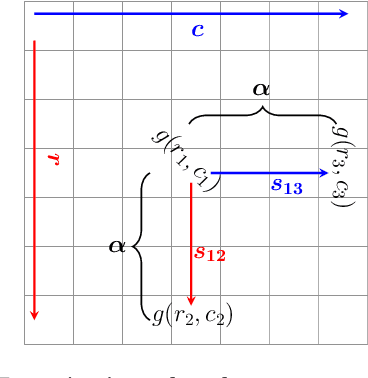
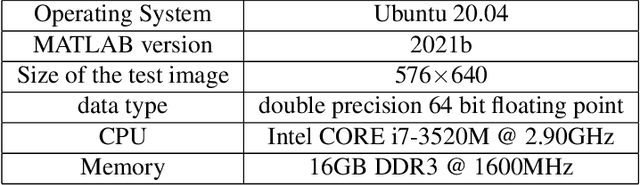
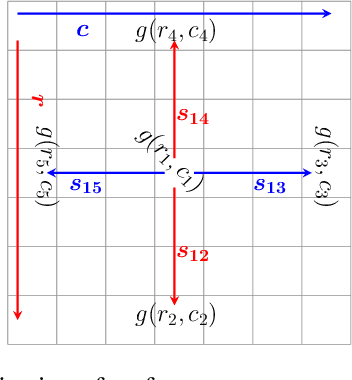
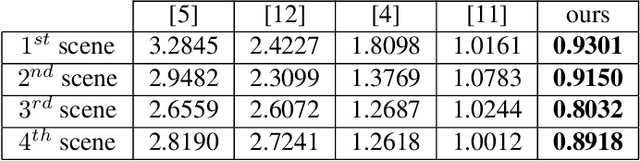
This paper proposes a fast and accurate surface normal estimation method which can be directly used on depth maps (organized point clouds). The surface normal estimation process is formulated as a closed-form expression. In order to reduce the effect of measurement noise, the averaging operation is utilized in multi-direction manner. The multi-direction normal estimation process is reformulated in the next step to be implemented efficiently. Finally, a simple yet effective method is proposed to remove erroneous normal estimation at depth discontinuities. The proposed method is compared to well-known surface normal estimation algorithms. The results show that the proposed algorithm not only outperforms the baseline algorithms in term of accuracy, but also is fast enough to be used in real-time applications.
Small Infrared Target Detection Using Absolute Directional Mean Difference Algorithm
Oct 07, 2018


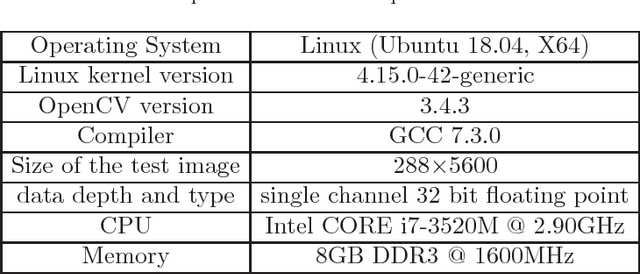
Infrared small target detection in an infrared search and track (IRST) system is a challenging task. This situation becomes more complicated when high gray-intensity structural backgrounds appear in the field of view (FoV) of the infrared seeker. While the majority of the infrared small target detection algorithms neglect directional information, in this paper, a directional approach is presented to suppress structural backgrounds and develop more effective detection algorithm. To this end, a similar concept to the average absolute gray difference (AAGD) is utilized to construct a directional small target detection algorithm called absolute directional mean difference (ADMD). Also, an efficient implementation procedure is presented for the proposed algorithm. The proposed algorithm effectively enhances the target area and eliminates background clutter. Simulation results on real infrared images prove the significant effectiveness of the proposed algorithm.