 Add to Chrome
 Add to Firefox
 Add to Edge
Building Machines that Learn and Think for Themselves: Commentary on Lake et al., Behavioral and Brain Sciences, 2017
Nov 22, 2017
We agree with Lake and colleagues on their list of key ingredients for building humanlike intelligence, including the idea that model-based reasoning is essential. However, we favor an approach that centers on one additional ingredient: autonomy. In particular, we aim toward agents that can both build and exploit their own internal models, with minimal human hand-engineering. We believe an approach centered on autonomous learning has the greatest chance of success as we scale toward real-world complexity, tackling domains for which ready-made formal models are not available. Here we survey several important examples of the progress that has been made toward building autonomous agents with humanlike abilities, and highlight some outstanding challenges.

An Adaptive Strategy for the Classification of G-Protein Coupled Receptors
Apr 25, 2007
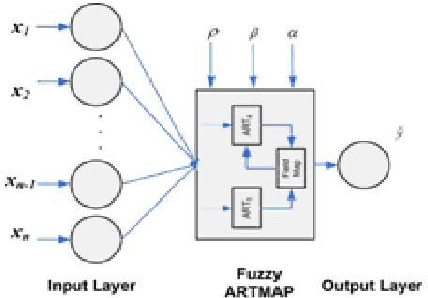
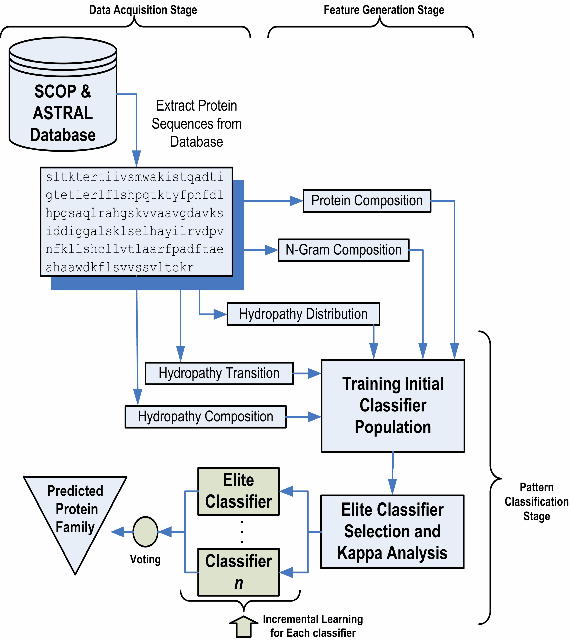
One of the major problems in computational biology is the inability of existing classification models to incorporate expanding and new domain knowledge. This problem of static classification models is addressed in this paper by the introduction of incremental learning for problems in bioinformatics. Many machine learning tools have been applied to this problem using static machine learning structures such as neural networks or support vector machines that are unable to accommodate new information into their existing models. We utilize the fuzzy ARTMAP as an alternate machine learning system that has the ability of incrementally learning new data as it becomes available. The fuzzy ARTMAP is found to be comparable to many of the widespread machine learning systems. The use of an evolutionary strategy in the selection and combination of individual classifiers into an ensemble system, coupled with the incremental learning ability of the fuzzy ARTMAP is proven to be suitable as a pattern classifier. The algorithm presented is tested using data from the G-Coupled Protein Receptors Database and shows good accuracy of 83%. The system presented is also generally applicable, and can be used in problems in genomics and proteomics.