 Add to Chrome
 Add to Firefox
 Add to Edge
Physics-Informed Functional Link Constrained Framework with Domain Mapping for Solving Bending Analysis of an Exponentially Loaded Perforated Beam
Apr 08, 2026
This article presents a novel and comprehensive approach for analyzing bending behavior of the tapered perforated beam under an exponential load. The governing differential equation includes important factors like filling ratio ($α$), number of rows of holes ($N$), tapering parameters ($φ$ and $ψ$), and exponential loading parameter ($γ$), providing a realistic and flexible representation of perforated beam configuration. Main goal of this work is to see how well the Domain mapped physics-informed Functional link Theory of Functional Connection (DFL-TFC) method analyses bending response of perforated beam with square holes under exponential loading. For comparison purposes, a corresponding PINN-based formulation is developed. Outcomes clearly show that the proposed DFL-TFC framework gives better results, including faster convergence, reduced computational cost, and improved solution accuracy when compared to the PINN approach. These findings highlight effectiveness and potential of DFL-TFC method for solving complex engineering problems governed by differential equations. Within this framework, hidden layer is replaced by a functional expansion block that enriches input representation via orthogonal polynomial basis functions, and the domain of DE mapped to corresponding domain of orthogonal polynomials. A Constrained Expression (CE), constructed through the Theory of Functional Connections (TFC) using boundary conditions, ensures that constraints are exactly satisfied. In CE, free function is represented using a Functional Link Neural Network (FLNN), which learns to solve resulting unconstrained optimization problem. The obtained results are further validated through the Galerkin and PINN solutions.

Response Prediction of Structural System Subject to Earthquake Motions using Artificial Neural Network
May 15, 2007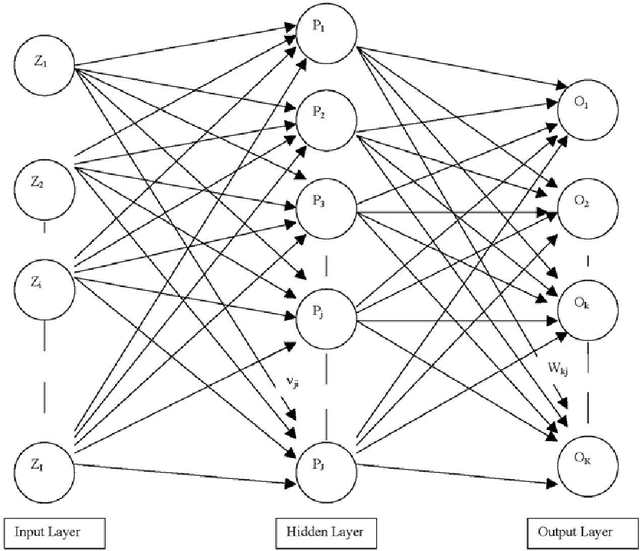
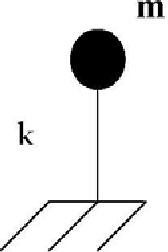
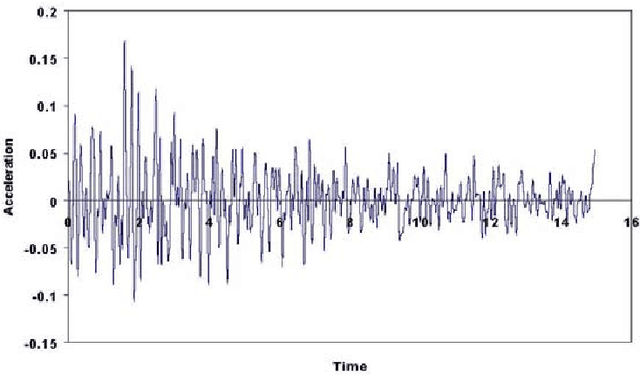
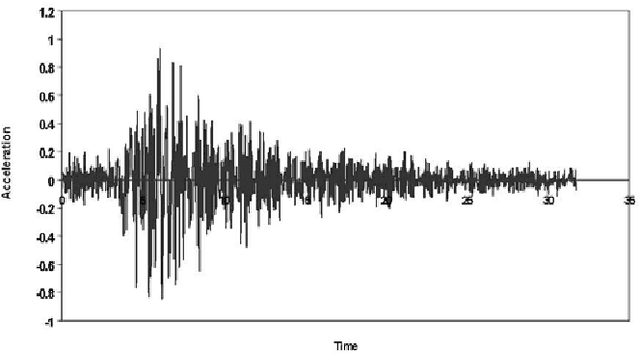
This paper uses Artificial Neural Network (ANN) models to compute response of structural system subject to Indian earthquakes at Chamoli and Uttarkashi ground motion data. The system is first trained for a single real earthquake data. The trained ANN architecture is then used to simulate earthquakes with various intensities and it was found that the predicted responses given by ANN model are accurate for practical purposes. When the ANN is trained by a part of the ground motion data, it can also identify the responses of the structural system well. In this way the safeness of the structural systems may be predicted in case of future earthquakes without waiting for the earthquake to occur for the lessons. Time period and the corresponding maximum response of the building for an earthquake has been evaluated, which is again trained to predict the maximum response of the building at different time periods. The trained time period versus maximum response ANN model is also tested for real earthquake data of other place, which was not used in the training and was found to be in good agreement.