 Add to Chrome
 Add to Firefox
 Add to Edge
Room compensation for loudspeaker reproduction using a supporting source
Apr 14, 2026
Room compensation aims to improve the accuracy of loudspeaker reproduction in reverberant environments. Traditional methods, however, are limited to improving only spectral (timbral) and temporal accuracy, neglecting the spatial accuracy of loudspeaker reproduction. Proposed is a method that compensates for both spectral and spatial properties of loudspeaker reproduction, by adding energy to the perceived reverberant sound field in a frequency-selective manner using a delayed secondary supporting source. This approach allows for the modification of the direct to reverberant ratio as a function of frequency, altering spatial and spectral reproduction. The proposed method is perceptually evaluated, demonstrating its ability to alter the perception of a primary loudspeaker without the listener perceiving the supporting source. The results show that the proposed method performs comparably to a well-established commercial room compensation algorithm and has several advantages over traditional room compensation methods.

Room impulse response prototyping using receiver distance estimations for high quality room equalisation algorithms
Sep 16, 2024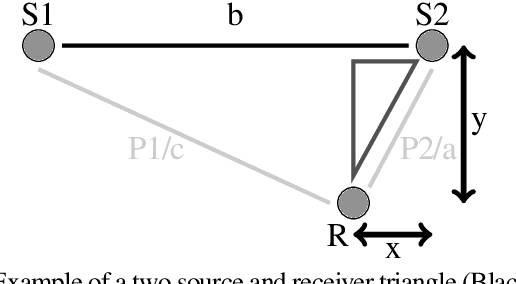
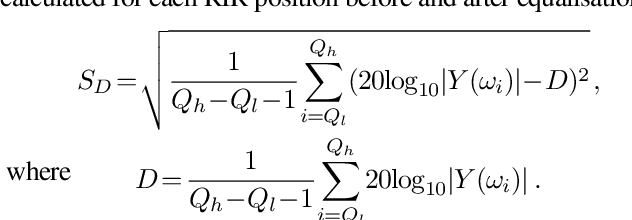
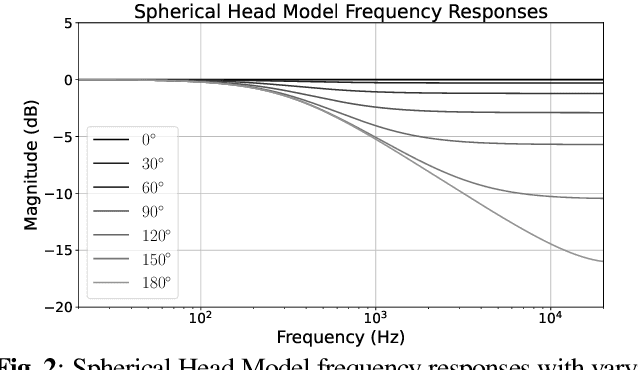
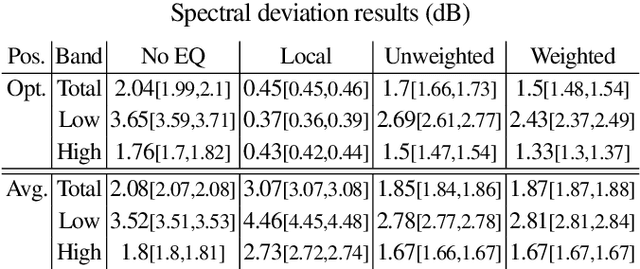
Room equalisation aims to increase the quality of loudspeaker reproduction in reverberant environments, compensating for colouration caused by imperfect room reflections and frequency dependant loudspeaker directivity. A common technique in the field of room equalisation, is to invert a prototype Room Impulse Response (RIR). Rather than inverting a single RIR at the listening position, a prototype response is composed of several responses distributed around the listening area. This paper proposes a method of impulse response prototyping, using estimated receiver positions, to form a weighted average prototype response. A method of receiver distance estimation is described, supporting the implementation of the prototype RIR. The proposed prototyping method is compared to other methods by measuring their post equalisation spectral deviation at several positions in a simulated room.