 Add to Chrome
 Add to Firefox
 Add to Edge
FrontierOR: Benchmarking LLMs' Capacity for Efficient Algorithm Design in Large-Scale Optimization
May 26, 2026
Large language models (LLMs) are increasingly used for optimization modeling and solver-code generation, yet practical operations research and optimization problems often require a harder capability: designing scalable algorithms that exploit problem structure and outperform direct formulation-and-solve baselines. Existing benchmarks are limited to small or simplified examples far below real-world scale and complexity. We introduce FrontierOR, among the first benchmarks to systematically evaluate LLM-based efficient algorithm design for realistic large-scale optimization problems. FrontierOR includes 180 tasks derived from methodologically diverse papers published in top-tier operations research venues, each with standardized instances and a hidden, expert-verified evaluation suite. We evaluate seven LLMs spanning frontier, cost-effective, and open-source models both in one-shot and test-time evolution settings. The results reveal that frontier models still struggle to move from executable formulations to efficient optimization algorithms: the strongest one-shot model outperforms Gurobi in only 31% of cases in both solution quality and computational efficiency, and even strong coding agents with test-time evolution achieve only 50% on selected hard tasks. FrontierOR establishes a practical evaluation platform for LLM-based optimization algorithm design, which enables future LLMs and agents to be systematically tested on whether they can move beyond correct formulation toward a feasible, high-quality, and efficient algorithm.

Enabling Data-Driven and Empathetic Interactions: A Context-Aware 3D Virtual Agent in Mixed Reality for Enhanced Financial Customer Experience
Oct 15, 2024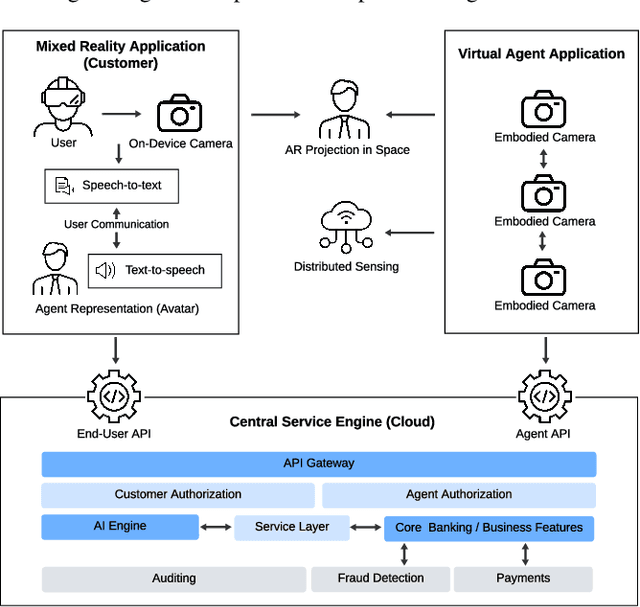
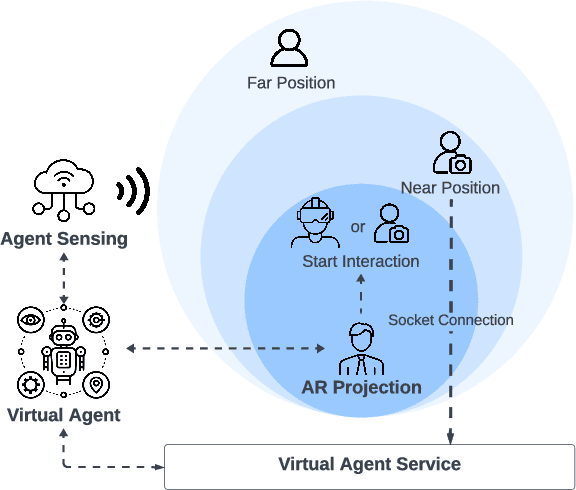
In this paper, we introduce a novel system designed to enhance customer service in the financial and retail sectors through a context-aware 3D virtual agent, utilizing Mixed Reality (MR) and Vision Language Models (VLMs). Our approach focuses on enabling data-driven and empathetic interactions that ensure customer satisfaction by introducing situational awareness of the physical location, personalized interactions based on customer profiles, and rigorous privacy and security standards. We discuss our design considerations critical for deployment in real-world customer service environments, addressing challenges in user data management and sensitive information handling. We also outline the system architecture and key features unique to banking and retail environments. Our work demonstrates the potential of integrating MR and VLMs in service industries, offering practical insights in customer service delivery while maintaining high standards of security and personalization.