 Add to Chrome
 Add to Firefox
 Add to Edge
The Effects of Population Size on the Performance of BEAGLE GPU-Based Genetic Programming Runs
Apr 27, 2026
The Beagle framework, through GPU-based Genetic Programming, enables population dynamics previously unattainable (within practical time frames) by CPU-constrained Genetic Programming systems. This work explores how GPU-enabled population sizes impact the success of training for symbolic regression problems. Specifically, when using constant population sizes, we see benefits of using very narrow and deep searches (as narrow as 1000 individuals) for some problems, while other problems benefit from very broad and shallow searches (as broad as 10 million individuals). We also explore stepped population sizes that start with large populations and drop to small populations to balance the breadth and depth of search.

EvoIQA - Explaining Image Distortions with Evolved White-Box Logic
Mar 16, 2026Traditional Image Quality Assessment (IQA) metrics typically fall into one of two extremes: rigid, hand-crafted mathematical models or "black-box" deep learning architectures that completely lack interpretability. To bridge this gap, we propose EvoIQA, a fully explainable symbolic regression framework based on Genetic Programming that Evolves explicit, human-readable mathematical formulas for image quality assessment (IQA). Utilizing a rich terminal set from the VSI, VIF, FSIM, and HaarPSI metrics, our framework inherently maps structural, chromatic, and information-theoretic degradations into observable mathematical equations. Our results demonstrate that the evolved GP models consistently achieve strong alignment between the predictions and human visual preferences. Furthermore, they not only outperform traditional hand-crafted metrics but also achieve performance parity with complex, state-of-the-art deep learning models like DB-CNN, proving that we no longer have to sacrifice interpretability for state-of-the-art performance.
GPU-Accelerated Genetic Programming for Symbolic Regression with Beagle Framework
Mar 10, 2026Beagle is a new software framework that enables execution of Genetic Programming tasks on the GPU. Currently available for symbolic regression, it processes individuals of the population and fitness cases for training in a way that maximizes throughput on extant GPU platforms. In this contribution, we report on the benchmarking of Beagle on the Feynman Symbolic Regression dataset and compare its performance with a fast CPU system called StackGP and the widely available PySR system under the same wall clock budget. We also report on the use of two different fitness functions, one a point-to-point error function, the other a correlation fitness function. The results demonstrate that the Beagle's GPU-aided Symbolic Regression significantly outperforms leading CPU-based frameworks.
Pneumothorax Segmentation: Deep Learning Image Segmentation to predict Pneumothorax
Dec 16, 2019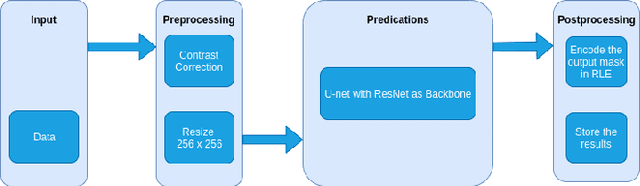
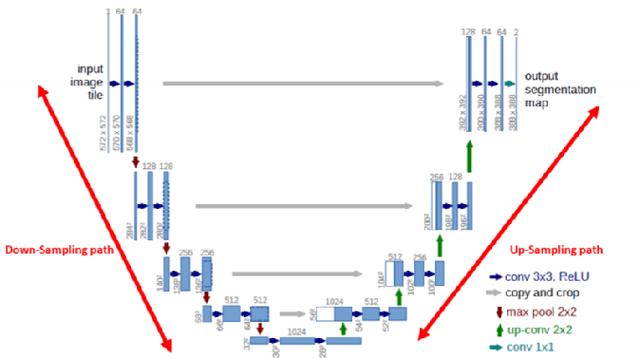
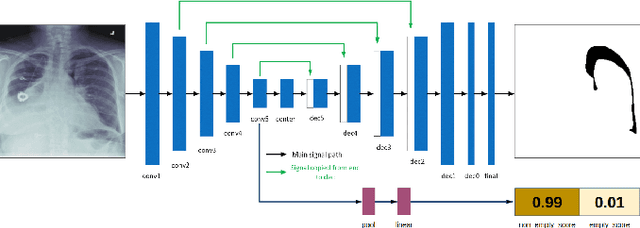
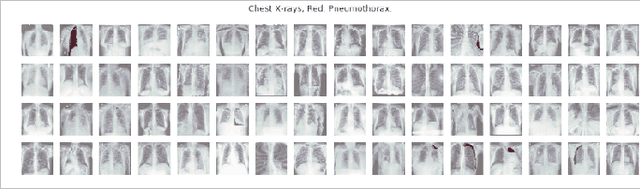
Computer vision has shown promising results in medical image processing. Pneumothorax is a deadly condition and if not diagnosed and treated at time then it causes death. It can be diagnosed with chest X-ray images. We need an expert and experienced radiologist to predict whether a person is suffering from pneumothorax or not by looking at the chest X-ray images. Everyone does not have access to such a facility. Moreover, in some cases, we need quick diagnoses. So we propose an image segmentation model to predict and give the output a mask that will assist the doctor in taking this crucial decision. Deep Learning has proved their worth in many areas and outperformed man state-of-the-art models. We want to use the power of these deep learning model to solve this problem. We have used U-net [13] architecture with ResNet [17] as a backbone and achieved promising results. U-net [13] performs very well in medical image processing and semantic segmentation. Our problem falls in the semantic segmentation category.