 Add to Chrome
 Add to Firefox
 Add to Edge
Privacy and Safety Experiences and Concerns of U.S. Women Using Generative AI for Seeking Sexual and Reproductive Health Information
Mar 10, 2026
The rapid adoption of generative AI (GenAI) chatbots has reshaped access to sexual and reproductive health (SRH) information, particularly following the overturning of Roe v. Wade, as individuals assigned female at birth increasingly turn to online sources. However, existing research remains largely model-centered, paying limited attention to user privacy and safety. We conducted semi-structured interviews with 18 U.S.-based participants from both restrictive and non-restrictive states who had used GenAI chatbots to seek SRH information. Adoption was influenced by perceived utility, usability, credibility, accessibility, and anthropomorphism, and many participants disclosed sensitive personal SRH details. Participants identified multiple privacy risks, including excessive data collection, government surveillance, profiling, model training, and data commodification. While most participants accepted these risks in exchange for perceived utility, abortion-related queries elicited heightened safety concerns. Few participants employed protective strategies beyond minimizing disclosures or deleting data. Based on these findings, we offer design and policy recommendations, such as health-specific features and stronger moderation practices, to enhance privacy and safety in GenAI-supported SRH information seeking.

Surveys Considered Harmful? Reflecting on the Use of Surveys in AI Research, Development, and Governance
Jul 26, 2024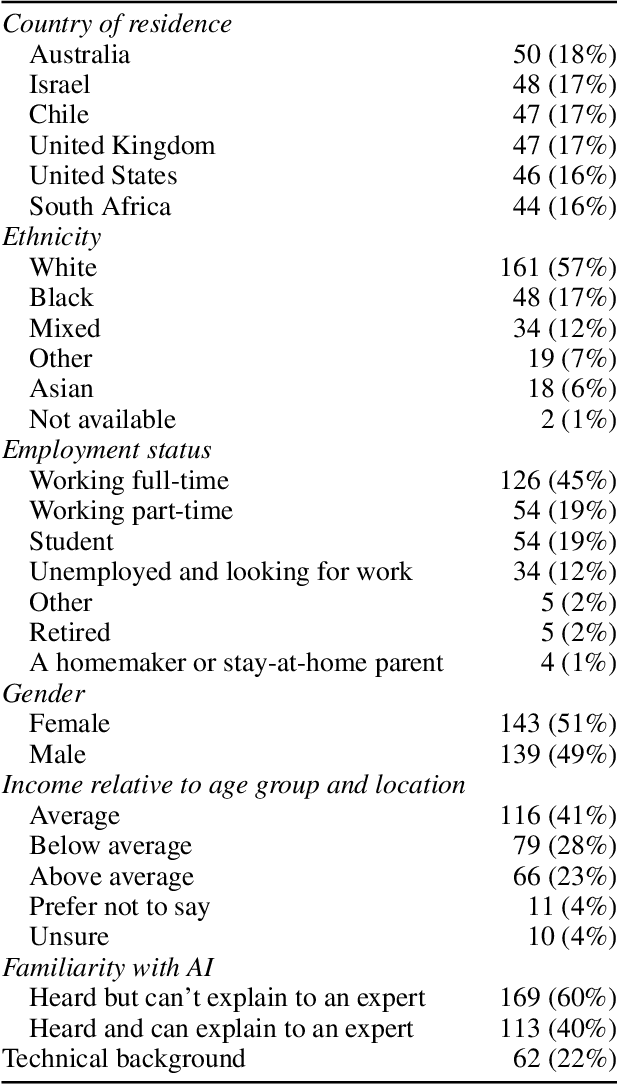
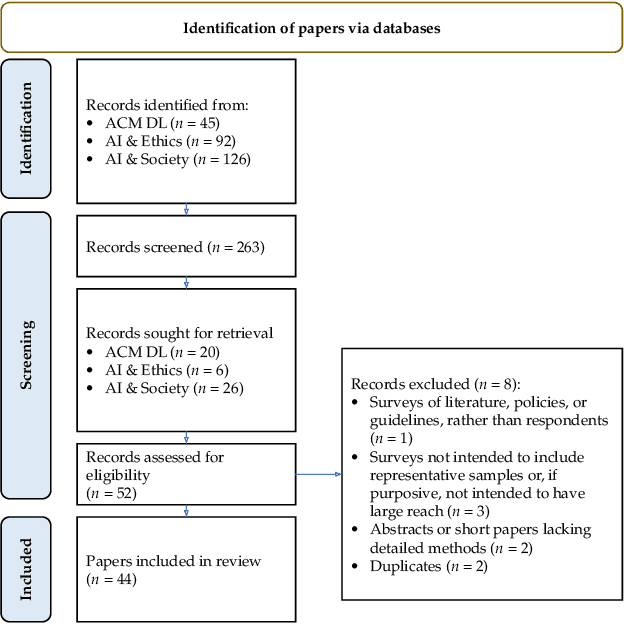
Calls for engagement with the public in Artificial Intelligence (AI) research, development, and governance are increasing, leading to the use of surveys to capture people's values, perceptions, and experiences related to AI. In this paper, we critically examine the state of human participant surveys associated with these topics. Through both a reflexive analysis of a survey pilot spanning six countries and a systematic literature review of 44 papers featuring public surveys related to AI, we explore prominent perspectives and methodological nuances associated with surveys to date. We find that public surveys on AI topics are vulnerable to specific Western knowledge, values, and assumptions in their design, including in their positioning of ethical concepts and societal values, lack sufficient critical discourse surrounding deployment strategies, and demonstrate inconsistent forms of transparency in their reporting. Based on our findings, we distill provocations and heuristic questions for our community, to recognize the limitations of surveys for meeting the goals of engagement, and to cultivate shared principles to design, deploy, and interpret surveys cautiously and responsibly.