 Add to Chrome
 Add to Firefox
 Add to Edge
Elbow-Based MoE Routing: A Training-Free Inference Time Plugin for Expert Selection
Aug 05, 2026
Mixture-of-Experts (MoE) models enable model scaling while maintaining low inference-time compute by activating only a subset of experts per token. However, conventional routing relies on a fixed top-k selection, forcing the model to spend the same compute regardless of how many experts are relevant. We introduce elbow-based routing, a training-free inference-time modification that dynamically adjusts the number of experts on a per-token basis. Our method examines the sorted router probability distribution and identifies an elbow point that separates high- and low-probability experts. We find that most router distributions exhibit clear inflection points suitable for this strategy, and we show both theoretically and empirically that elbow-based routing preserves expert load balance. Experiments on a state-of-the-art MoE model demonstrate an average latency reduction of 5.3% while maintaining accuracy across six benchmarks.

Incorrect by Construction: Fine Tuning Neural Networks for Guaranteed Performance on Finite Sets of Examples
Aug 03, 2020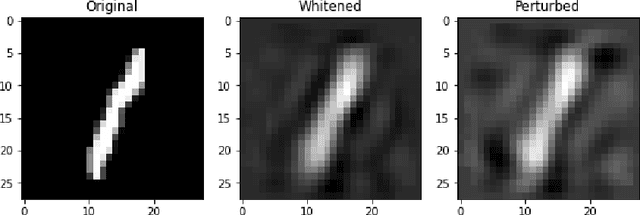
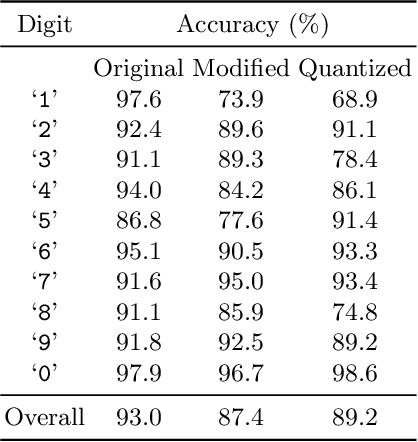
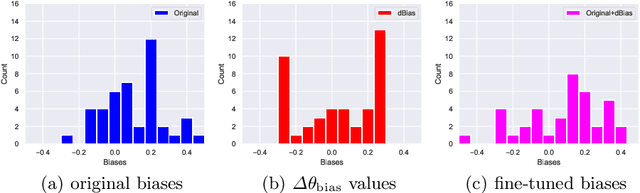
There is great interest in using formal methods to guarantee the reliability of deep neural networks. However, these techniques may also be used to implant carefully selected input-output pairs. We present initial results on a novel technique for using SMT solvers to fine tune the weights of a ReLU neural network to guarantee outcomes on a finite set of particular examples. This procedure can be used to ensure performance on key examples, but it could also be used to insert difficult-to-find incorrect examples that trigger unexpected performance. We demonstrate this approach by fine tuning an MNIST network to incorrectly classify a particular image and discuss the potential for the approach to compromise reliability of freely-shared machine learning models.