 Add to Chrome
 Add to Firefox
 Add to Edge
Explanation Bias is a Product: Revealing the Hidden Lexical and Position Preferences in Post-Hoc Feature Attribution
Dec 11, 2025
Good quality explanations strengthen the understanding of language models and data. Feature attribution methods, such as Integrated Gradient, are a type of post-hoc explainer that can provide token-level insights. However, explanations on the same input may vary greatly due to underlying biases of different methods. Users may be aware of this issue and mistrust their utility, while unaware users may trust them inadequately. In this work, we delve beyond the superficial inconsistencies between attribution methods, structuring their biases through a model- and method-agnostic framework of three evaluation metrics. We systematically assess both the lexical and position bias (what and where in the input) for two transformers; first, in a controlled, pseudo-random classification task on artificial data; then, in a semi-controlled causal relation detection task on natural data. We find that lexical and position biases are structurally unbalanced in our model comparison, with models that score high on one type score low on the other. We also find signs that methods producing anomalous explanations are more likely to be biased themselves.

Memory-Augmented Generative Adversarial Transformers
Feb 29, 2024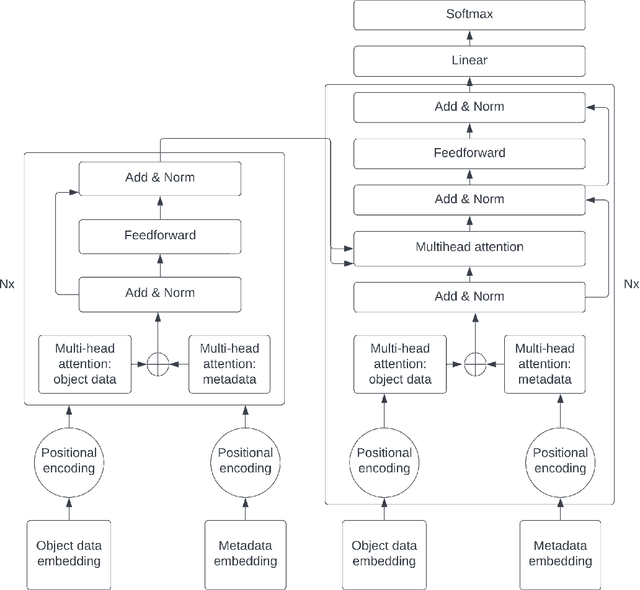
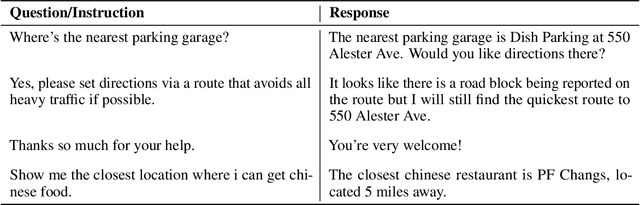
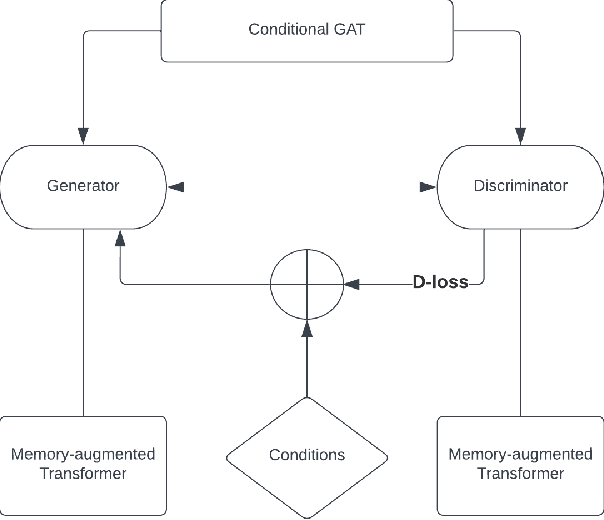
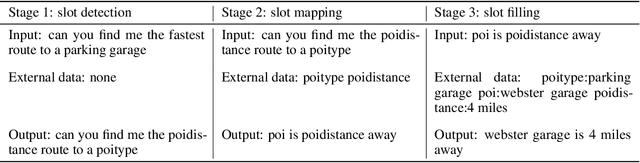
Conversational AI systems that rely on Large Language Models, like Transformers, have difficulty interweaving external data (like facts) with the language they generate. Vanilla Transformer architectures are not designed for answering factual questions with high accuracy. This paper investigates a possible route for addressing this problem. We propose to extend the standard Transformer architecture with an additional memory bank holding extra information (such as facts drawn from a knowledge base), and an extra attention layer for addressing this memory. We add this augmented memory to a Generative Adversarial Network-inspired Transformer architecture. This setup allows for implementing arbitrary felicity conditions on the generated language of the Transformer. We first demonstrate how this machinery can be deployed for handling factual questions in goal-oriented dialogues. Secondly, we demonstrate that our approach can be useful for applications like {\it style adaptation} as well: the adaptation of utterances according to certain stylistic (external) constraints, like social properties of human interlocutors in dialogues.