 Add to Chrome
 Add to Firefox
 Add to Edge
Why do you cite? An investigation on citation intents and decision-making classification processes
Jul 18, 2024
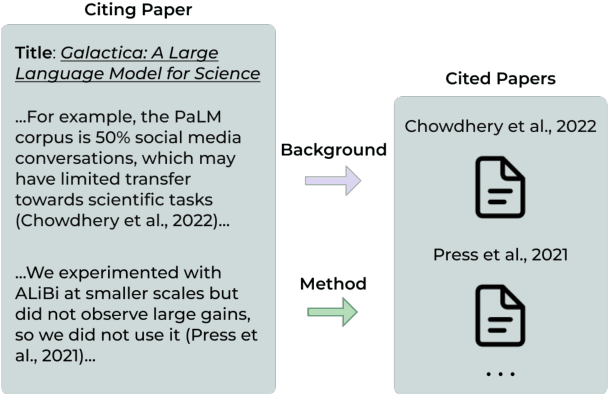
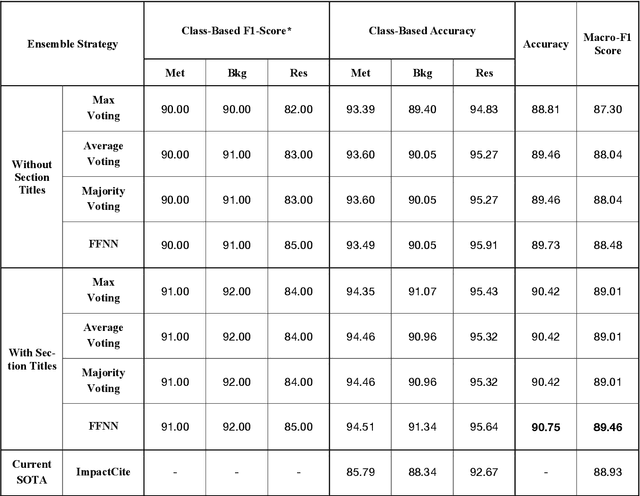

Identifying the reason for which an author cites another work is essential to understand the nature of scientific contributions and to assess their impact. Citations are one of the pillars of scholarly communication and most metrics employed to analyze these conceptual links are based on quantitative observations. Behind the act of referencing another scholarly work there is a whole world of meanings that needs to be proficiently and effectively revealed. This study emphasizes the importance of trustfully classifying citation intents to provide more comprehensive and insightful analyses in research assessment. We address this task by presenting a study utilizing advanced Ensemble Strategies for Citation Intent Classification (CIC) incorporating Language Models (LMs) and employing Explainable AI (XAI) techniques to enhance the interpretability and trustworthiness of models' predictions. Our approach involves two ensemble classifiers that utilize fine-tuned SciBERT and XLNet LMs as baselines. We further demonstrate the critical role of section titles as a feature in improving models' performances. The study also introduces a web application developed with Flask and currently available at http://137.204.64.4:81/cic/classifier, aimed at classifying citation intents. One of our models sets as a new state-of-the-art (SOTA) with an 89.46% Macro-F1 score on the SciCite benchmark. The integration of XAI techniques provides insights into the decision-making processes, highlighting the contributions of individual words for level-0 classifications, and of individual models for the metaclassification. The findings suggest that the inclusion of section titles significantly enhances classification performances in the CIC task. Our contributions provide useful insights for developing more robust datasets and methodologies, thus fostering a deeper understanding of scholarly communication.
