 Add to Chrome
 Add to Firefox
 Add to Edge
Act, Think or Abstain: Complexity-Aware Adaptive Inference for Vision-Language-Action Models
Mar 05, 2026
Current research on Vision-Language-Action (VLA) models predominantly focuses on enhancing generalization through established reasoning techniques. While effective, these improvements invariably increase computational complexity and inference latency. Furthermore, these mechanisms are typically applied indiscriminately, resulting in the inefficient allocation of resources for trivial tasks while simultaneously failing to provide the uncertainty estimation necessary to prevent catastrophic failure on out-of-distribution tasks. Inspired by human cognition, we propose an adaptive framework that dynamically routes VLA execution based on the complexity of the perceived state. Our approach transforms the VLA's vision-language backbone into an active detection tool by projecting latent embeddings into an ensemble of parametric and non-parametric estimators. This allows the system to execute known tasks immediately (Act), reason about ambiguous scenarios (Think), and preemptively halt execution when encountering significant physical or semantic anomalies (Abstain). In our empirical analysis, we observe a phenomenon where visual embeddings alone are superior for inferring task complexity due to the semantic invariance of language. Evaluated on the LIBERO and LIBERO-PRO benchmarks as well as on a real robot, our vision-only configuration achieves 80% F1-Score using as little as 5% of training data, establishing itself as a reliable and efficient task complexity detector.

BTGenBot-2: Efficient Behavior Tree Generation with Small Language Models
Feb 02, 2026Recent advances in robot learning increasingly rely on LLM-based task planning, leveraging their ability to bridge natural language with executable actions. While prior works showcased great performances, the widespread adoption of these models in robotics has been challenging as 1) existing methods are often closed-source or computationally intensive, neglecting the actual deployment on real-world physical systems, and 2) there is no universally accepted, plug-and-play representation for robotic task generation. Addressing these challenges, we propose BTGenBot-2, a 1B-parameter open-source small language model that directly converts natural language task descriptions and a list of robot action primitives into executable behavior trees in XML. Unlike prior approaches, BTGenBot-2 enables zero-shot BT generation, error recovery at inference and runtime, while remaining lightweight enough for resource-constrained robots. We further introduce the first standardized benchmark for LLM-based BT generation, covering 52 navigation and manipulation tasks in NVIDIA Isaac Sim. Extensive evaluations demonstrate that BTGenBot-2 consistently outperforms GPT-5, Claude Opus 4.1, and larger open-source models across both functional and non-functional metrics, achieving average success rates of 90.38% in zero-shot and 98.07% in one-shot, while delivering up to 16x faster inference compared to the previous BTGenBot.
Improving Robustness of Vision-Language-Action Models by Restoring Corrupted Visual Inputs
Feb 01, 2026Vision-Language-Action (VLA) models have emerged as a dominant paradigm for generalist robotic manipulation, unifying perception and control within a single end-to-end architecture. However, despite their success in controlled environments, reliable real-world deployment is severely hindered by their fragility to visual disturbances. While existing literature extensively addresses physical occlusions caused by scene geometry, a critical mode remains largely unexplored: image corruptions. These sensor-level artifacts, ranging from electronic noise and dead pixels to lens contaminants, directly compromise the integrity of the visual signal prior to interpretation. In this work, we quantify this vulnerability, demonstrating that state-of-the-art VLAs such as $π_{0.5}$ and SmolVLA, suffer catastrophic performance degradation, dropping from 90\% success rates to as low as 2\%, under common signal artifacts. To mitigate this, we introduce the Corruption Restoration Transformer (CRT), a plug-and-play and model-agnostic vision transformer designed to immunize VLA models against sensor disturbances. Leveraging an adversarial training objective, CRT restores clean observations from corrupted inputs without requiring computationally expensive fine-tuning of the underlying model. Extensive experiments across the LIBERO and Meta-World benchmarks demonstrate that CRT effectively recovers lost performance, enabling VLAs to maintain near-baseline success rates, even under severe visual corruption.
BTGenBot: Behavior Tree Generation for Robotic Tasks with Lightweight LLMs
Mar 19, 2024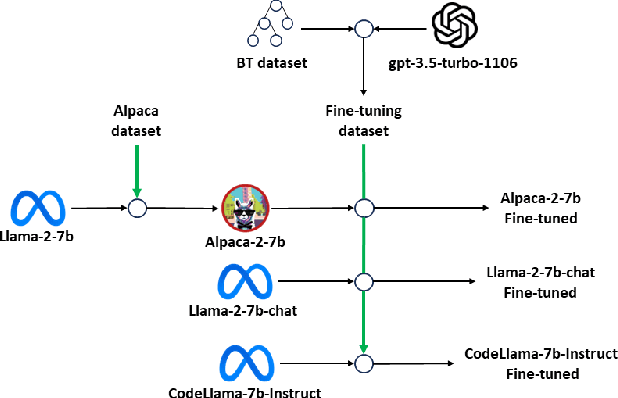
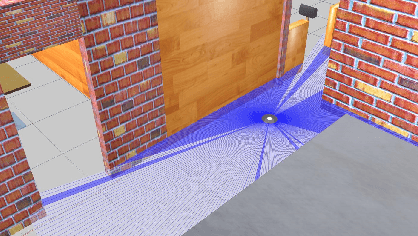
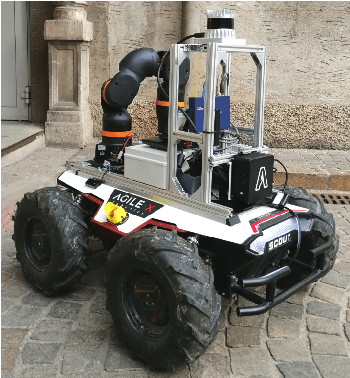
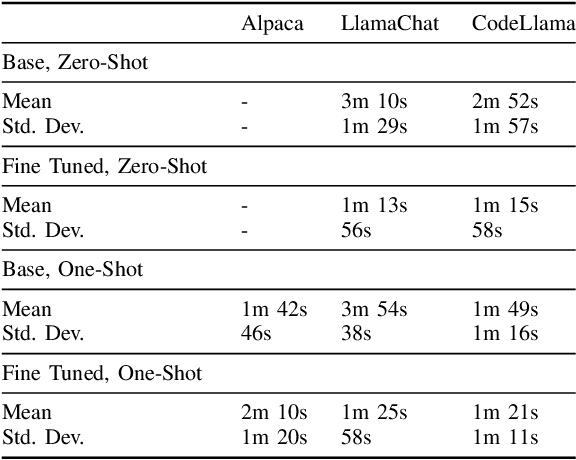
This paper presents a novel approach to generating behavior trees for robots using lightweight large language models (LLMs) with a maximum of 7 billion parameters. The study demonstrates that it is possible to achieve satisfying results with compact LLMs when fine-tuned on a specific dataset. The key contributions of this research include the creation of a fine-tuning dataset based on existing behavior trees using GPT-3.5 and a comprehensive comparison of multiple LLMs (namely llama2, llama-chat, and code-llama) across nine distinct tasks. To be thorough, we evaluated the generated behavior trees using static syntactical analysis, a validation system, a simulated environment, and a real robot. Furthermore, this work opens the possibility of deploying such solutions directly on the robot, enhancing its practical applicability. Findings from this study demonstrate the potential of LLMs with a limited number of parameters in generating effective and efficient robot behaviors.