 Add to Chrome
 Add to Firefox
 Add to Edge
An empirical evaluation of the risks of AI model updates using clinical data: stability, arbitrariness, and fairness
Apr 27, 2026
Artificial Intelligence and Machine Learning (AI/ML) models used in clinical settings are increasingly deployed to support clinical decision-making. However, when training data become stale due to changes in demographics, environment, or patient behaviors, model performance can degrade substantially. While updating models with new training data is necessary, such updates may also introduce new risks. We evaluated the proposed monitoring framework on four publicly available U.S.-based Type 1 Diabetes datasets containing high-resolution continuous glucose monitoring (CGM) data, comprising approximately 11,300 weekly observations from 496 participants under 20 years of age. All datasets included structured sociodemographic information. Using the prediction of severe hyperglycemia events in children with type 1 diabetes as a case study, we examine how different model update strategies can adversely affect model stability (e.g., by causing predictions to "flip" for a large number of cases after an update), increase arbitrariness in predictions, or worsen accuracy equity and the balance of error rates across subpopulations. We propose multiple dimensions for continuous monitoring to detect these issues and argue that such monitoring is essential for the development of trustworthy clinical decision support systems.

Disparate Model Performance and Stability in Machine Learning Clinical Support for Diabetes and Heart Diseases
Dec 27, 2024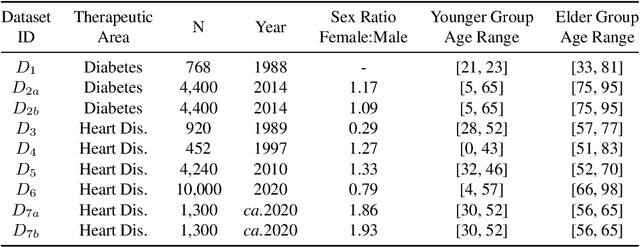
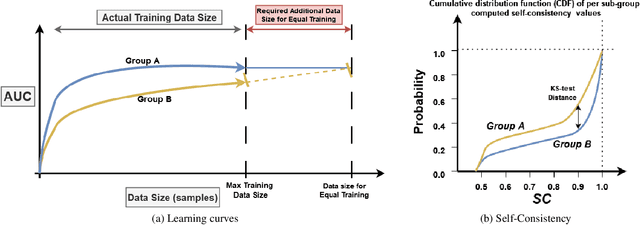
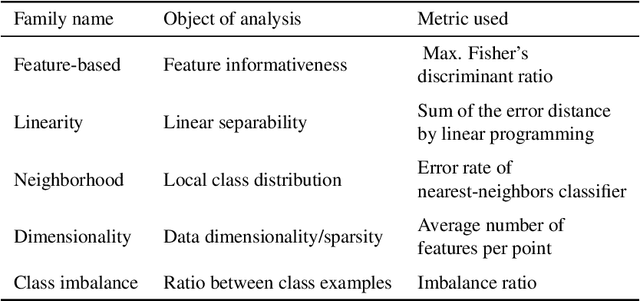
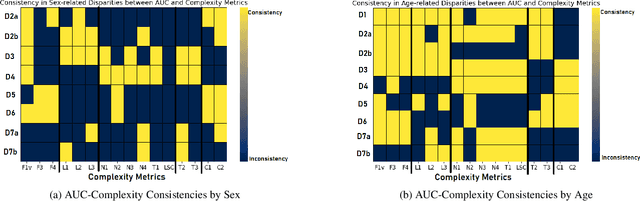
Machine Learning (ML) algorithms are vital for supporting clinical decision-making in biomedical informatics. However, their predictive performance can vary across demographic groups, often due to the underrepresentation of historically marginalized populations in training datasets. The investigation reveals widespread sex- and age-related inequities in chronic disease datasets and their derived ML models. Thus, a novel analytical framework is introduced, combining systematic arbitrariness with traditional metrics like accuracy and data complexity. The analysis of data from over 25,000 individuals with chronic diseases revealed mild sex-related disparities, favoring predictive accuracy for males, and significant age-related differences, with better accuracy for younger patients. Notably, older patients showed inconsistent predictive accuracy across seven datasets, linked to higher data complexity and lower model performance. This highlights that representativeness in training data alone does not guarantee equitable outcomes, and model arbitrariness must be addressed before deploying models in clinical settings.