 Add to Chrome
 Add to Firefox
 Add to Edge
Rethinking Scaffolding in LLM Tutors: The Interactional Mismatch Between Benchmarks and Real-World Deployments
Jun 14, 2026
A central pedagogical value evaluated in AI tutor benchmarks is scaffolding: guiding students through graduated steps toward a solution. Alignment and evaluation methods for embedding scaffolding behaviour into chatbots, however, rest on an implicit assumption: that students will take up the scaffolding and engage in the conversation. To examine whether this assumption holds, we introduce an evaluation pipeline around two metrics - Chatbot Scaffolding and Student Uptake - and apply them across nine datasets of 9,490 chats, spanning AI tutor benchmarks and real-world deployments of educational chatbots. Our analysis reveals that while benchmarks assume a high-scaffolding, high-student-uptake environment, students in real-world settings exhibit lower levels of uptake overall - frequently bypassing the chatbot's pedagogical framing to drive the interaction toward their own learning goals at little interpersonal cost. We argue that bypassing scaffolding is not necessarily detrimental; rather, it frequently highlights a mismatch between a chatbot's pedagogical framing and the student's learning goals. To meaningfully evaluate the effectiveness of a chatbot's assistance, future benchmarks must move beyond the assumption that students will simply take up the scaffolding, and instead evaluate how these chatbots navigate diverse learning contexts and student-driven interaction patterns.

Scaling through abstractions -- high-performance vectorial wave simulations for seismic inversion with Devito
Apr 22, 2020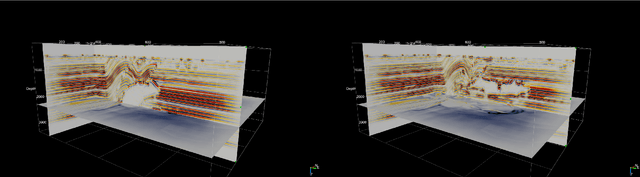
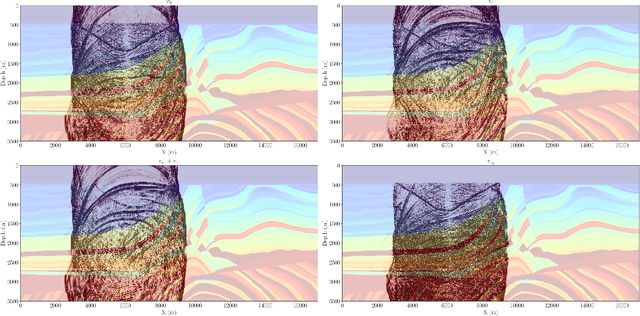
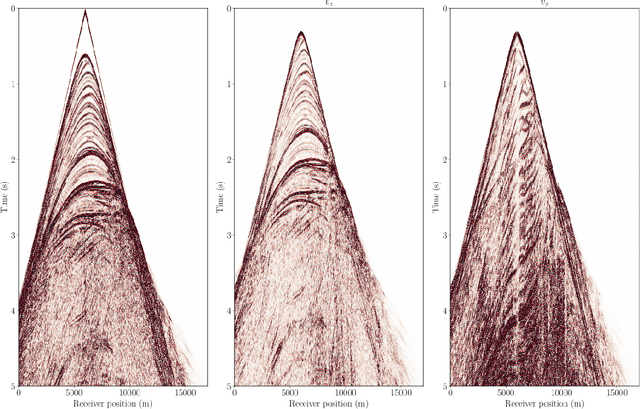
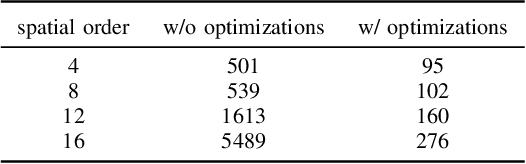
[Devito] is an open-source Python project based on domain-specific language and compiler technology. Driven by the requirements of rapid HPC applications development in exploration seismology, the language and compiler have evolved significantly since inception. Sophisticated boundary conditions, tensor contractions, sparse operations and features such as staggered grids and sub-domains are all supported; operators of essentially arbitrary complexity can be generated. To accommodate this flexibility whilst ensuring performance, data dependency analysis is utilized to schedule loops and detect computational-properties such as parallelism. In this article, the generation and simulation of MPI-parallel propagators (along with their adjoints) for the pseudo-acoustic wave-equation in tilted transverse isotropic media and the elastic wave-equation are presented. Simulations are carried out on industry scale synthetic models in a HPC Cloud system and reach a performance of 28TFLOP/s, hence demonstrating Devito's suitability for production-grade seismic inversion problems.