 Add to Chrome
 Add to Firefox
 Add to Edge
Long-Context Long-Form Question Answering for Legal Domain
Feb 06, 2026
Legal documents have complex document layouts involving multiple nested sections, lengthy footnotes and further use specialized linguistic devices like intricate syntax and domain-specific vocabulary to ensure precision and authority. These inherent characteristics of legal documents make question answering challenging, and particularly so when the answer to the question spans several pages (i.e. requires long-context) and is required to be comprehensive (i.e. a long-form answer). In this paper, we address the challenges of long-context question answering in context of long-form answers given the idiosyncrasies of legal documents. We propose a question answering system that can (a) deconstruct domain-specific vocabulary for better retrieval from source documents, (b) parse complex document layouts while isolating sections and footnotes and linking them appropriately, (c) generate comprehensive answers using precise domain-specific vocabulary. We also introduce a coverage metric that classifies the performance into recall-based coverage categories allowing human users to evaluate the recall with ease. We curate a QA dataset by leveraging the expertise of professionals from fields such as law and corporate tax. Through comprehensive experiments and ablation studies, we demonstrate the usability and merit of the proposed system.

Towards Complex Ontology Alignment using Large Language Models
Apr 16, 2024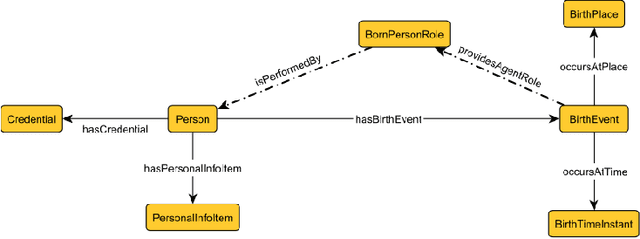
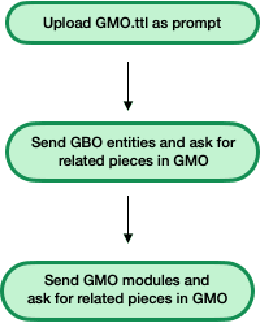
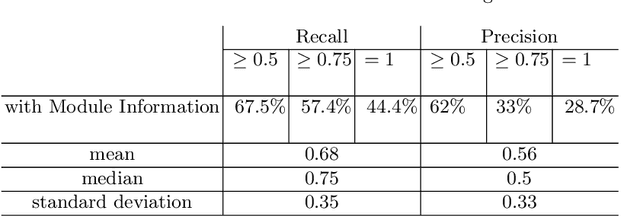
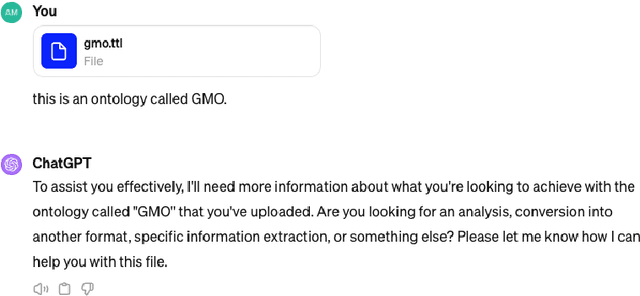
Ontology alignment, a critical process in the Semantic Web for detecting relationships between different ontologies, has traditionally focused on identifying so-called "simple" 1-to-1 relationships through class labels and properties comparison. The more practically useful exploration of more complex alignments remains a hard problem to automate, and as such is largely underexplored, i.e. in application practice it is usually done manually by ontology and domain experts. Recently, the surge in Natural Language Processing (NLP) capabilities, driven by advancements in Large Language Models (LLMs), presents new opportunities for enhancing ontology engineering practices, including ontology alignment tasks. This paper investigates the application of LLM technologies to tackle the complex ontology alignment challenge. Leveraging a prompt-based approach and integrating rich ontology content so-called modules our work constitutes a significant advance towards automating the complex alignment task.