 Add to Chrome
 Add to Firefox
 Add to Edge
Hybrid Learning and Optimization-Based Dynamic Scheduling for DL Workloads on Heterogeneous GPU Clusters
Dec 11, 2025
Modern cloud platforms increasingly host large-scale deep learning (DL) workloads, demanding high-throughput, low-latency GPU scheduling. However, the growing heterogeneity of GPU clusters and limited visibility into application characteristics pose major challenges for existing schedulers, which often rely on offline profiling or application-specific assumptions. We present RLTune, an application-agnostic reinforcement learning (RL)-based scheduling framework that dynamically prioritizes and allocates DL jobs on heterogeneous GPU clusters. RLTune integrates RL-driven prioritization with MILP-based job-to-node mapping to optimize system-wide objectives such as job completion time (JCT), queueing delay, and resource utilization. Trained on large-scale production traces from Microsoft Philly, Helios, and Alibaba, RLTune improves GPU utilization by up to 20%, reduces queueing delay by up to 81%, and shortens JCT by as much as 70 percent. Unlike prior approaches, RLTune generalizes across diverse workloads without requiring per-job profiling, making it practical for cloud providers to deploy at scale for more efficient, fair, and sustainable DL workload management.

10Cache: Heterogeneous Resource-Aware Tensor Caching and Migration for LLM Training
Nov 18, 2025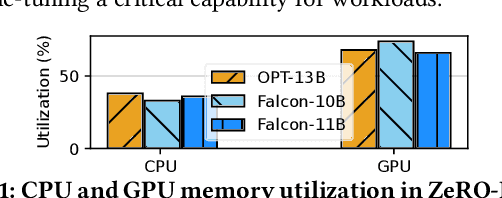

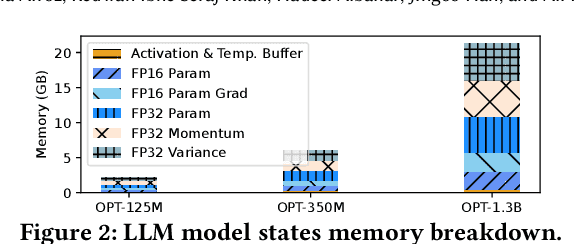
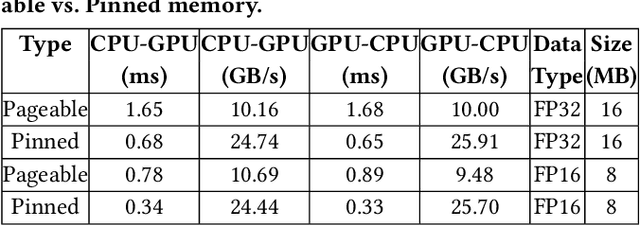
Training large language models (LLMs) in the cloud faces growing memory bottlenecks due to the limited capacity and high cost of GPUs. While GPU memory offloading to CPU and NVMe has made large-scale training more feasible, existing approaches suffer from high tensor migration latency and suboptimal device memory utilization, ultimately increasing training time and cloud costs. To address these challenges, we present 10Cache, a resource-aware tensor caching and migration system that accelerates LLM training by intelligently coordinating memory usage across GPU, CPU, and NVMe tiers. 10Cache profiles tensor execution order to construct prefetch policies, allocates memory buffers in pinned memory based on tensor size distributions, and reuses memory buffers to minimize allocation overhead. Designed for cloud-scale deployments, 10Cache improves memory efficiency and reduces reliance on high-end GPUs. Across diverse LLM workloads, it achieves up to 2x speedup in training time, improves GPU cache hit rate by up to 86.6x, and increases CPU/GPU memory utilization by up to 2.15x and 1.33x, respectively, compared to state-of-the-art offloading methods. These results demonstrate that 10Cache is a practical and scalable solution for optimizing LLM training throughput and resource efficiency in cloud environments.
Ensuring Fair LLM Serving Amid Diverse Applications
Nov 24, 2024
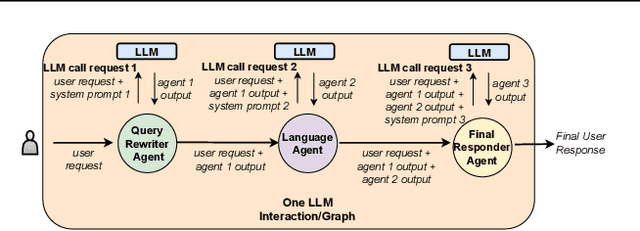
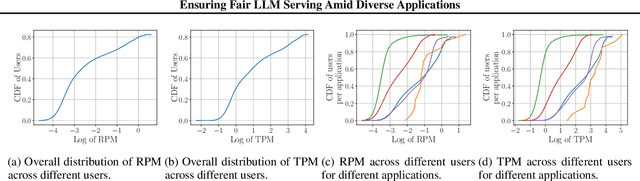

In a multi-tenant large language model (LLM) serving platform hosting diverse applications, some users may submit an excessive number of requests, causing the service to become unavailable to other users and creating unfairness. Existing fairness approaches do not account for variations in token lengths across applications and multiple LLM calls, making them unsuitable for such platforms. To address the fairness challenge, this paper analyzes millions of requests from thousands of users on MS CoPilot, a real-world multi-tenant LLM platform hosted by Microsoft. Our analysis confirms the inadequacy of existing methods and guides the development of FairServe, a system that ensures fair LLM access across diverse applications. FairServe proposes application-characteristic aware request throttling coupled with a weighted service counter based scheduling technique to curb abusive behavior and ensure fairness. Our experimental results on real-world traces demonstrate FairServe's superior performance compared to the state-of-the-art method in ensuring fairness. We are actively working on deploying our system in production, expecting to benefit millions of customers world-wide.