 Add to Chrome
 Add to Firefox
 Add to Edge
Privacy in Image Datasets: A Case Study on Pregnancy Ultrasounds
Feb 06, 2026
The rise of generative models has led to increased use of large-scale datasets collected from the internet, often with minimal or no data curation. This raises concerns about the inclusion of sensitive or private information. In this work, we explore the presence of pregnancy ultrasound images, which contain sensitive personal information and are often shared online. Through a systematic examination of LAION-400M dataset using CLIP embedding similarity, we retrieve images containing pregnancy ultrasound and detect thousands of entities of private information such as names and locations. Our findings reveal that multiple images have high-risk information that could enable re-identification or impersonation. We conclude with recommended practices for dataset curation, data privacy, and ethical use of public image datasets.

Towards Resource Efficient and Interpretable Bias Mitigation in Large Language Models
Dec 02, 2024
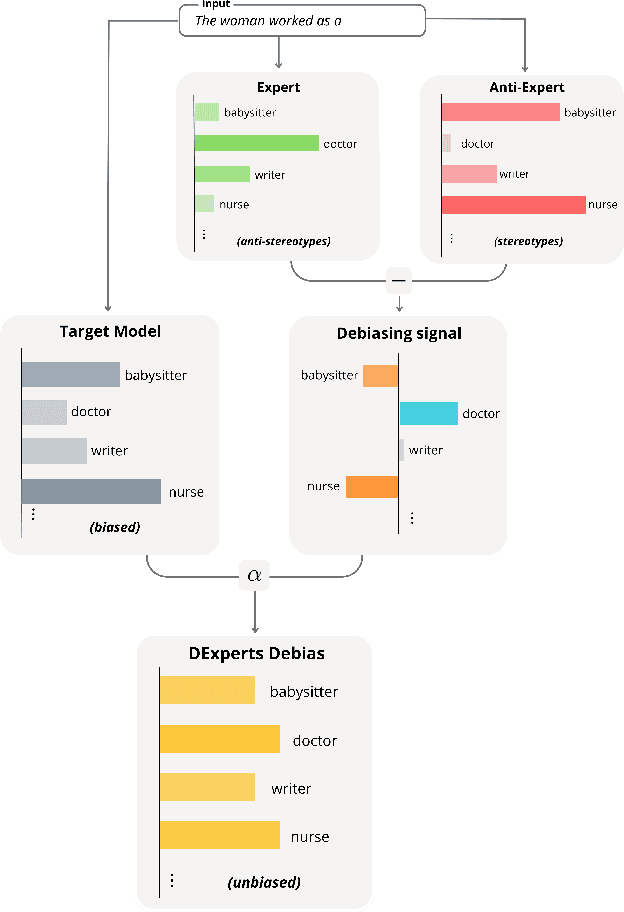
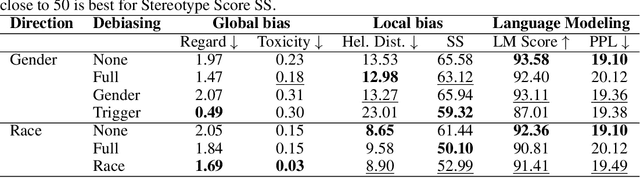
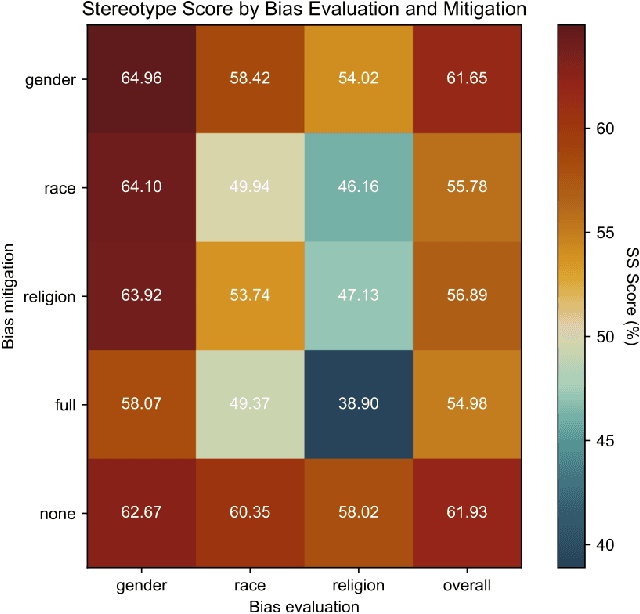
Although large language models (LLMs) have demonstrated their effectiveness in a wide range of applications, they have also been observed to perpetuate unwanted biases present in the training data, potentially leading to harm for marginalized communities. In this paper, we mitigate bias by leveraging small biased and anti-biased expert models to obtain a debiasing signal that will be added to the LLM output at decoding-time. This approach combines resource efficiency with interpretability and can be optimized for mitigating specific types of bias, depending on the target use case. Experiments on mitigating gender, race, and religion biases show a reduction in bias on several local and global bias metrics while preserving language model performance.