 Add to Chrome
 Add to Firefox
 Add to Edge
Conditional Generative Models for High-Resolution Range Profiles: Capturing Geometry-Driven Trends in a Large-Scale Maritime Dataset
Feb 09, 2026
High-resolution range profiles (HRRPs) enable fast onboard processing for radar automatic target recognition, but their strong sensitivity to acquisition conditions limits robustness across operational scenarios. Conditional HRRP generation can mitigate this issue, yet prior studies are constrained by small, highly specific datasets. We study HRRP synthesis on a largescale maritime database representative of coastal surveillance variability. Our analysis indicates that the fundamental scenario drivers are geometric: ship dimensions and the desired aspect angle. Conditioning on these variables, we train generative models and show that the synthesized signatures reproduce the expected line-of-sight geometric trend observed in real data. These results highlight the central role of acquisition geometry for robust HRRP generation.

MFN Decomposition and Related Metrics for High-Resolution Range Profiles Generative Models
Feb 09, 2026High-resolution range profile (HRRP ) data are in vogue in radar automatic target recognition (RATR). With the interest in classifying models using HRRP, filling gaps in datasets using generative models has recently received promising contributions. Evaluating generated data is a challenging topic, even for explicit data like face images. However, the evaluation methods used in the state-ofthe-art of HRRP generation rely on classification models. Such models, called ''black-box'', do not allow either explainability on generated data or multi-level evaluation. This work focuses on decomposing HRRP data into three components: the mask, the features, and the noise. Using this decomposition, we propose two metrics based on the physical interpretation of those data. We take profit from an expensive dataset to evaluate our metrics on a challenging task and demonstrate the discriminative ability of those.
AI-Augmented Multi Function Radar Engineering with Digital Twin: Towards Proactivity
Jun 18, 2020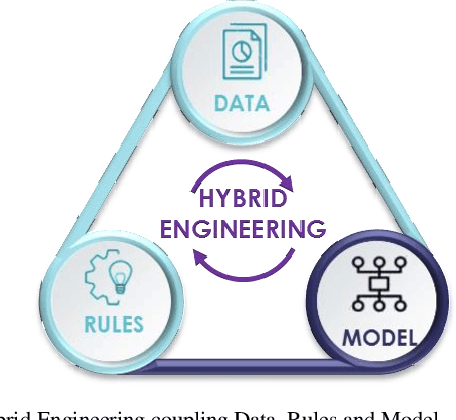
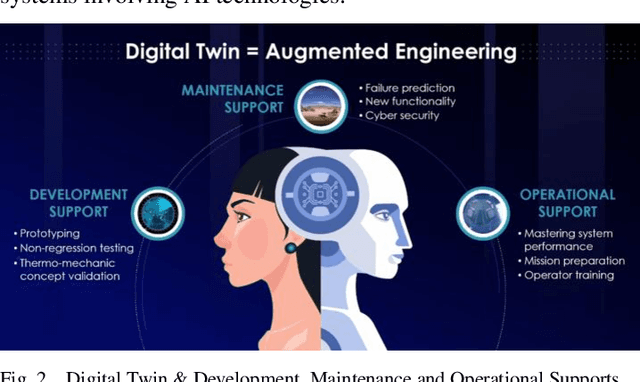
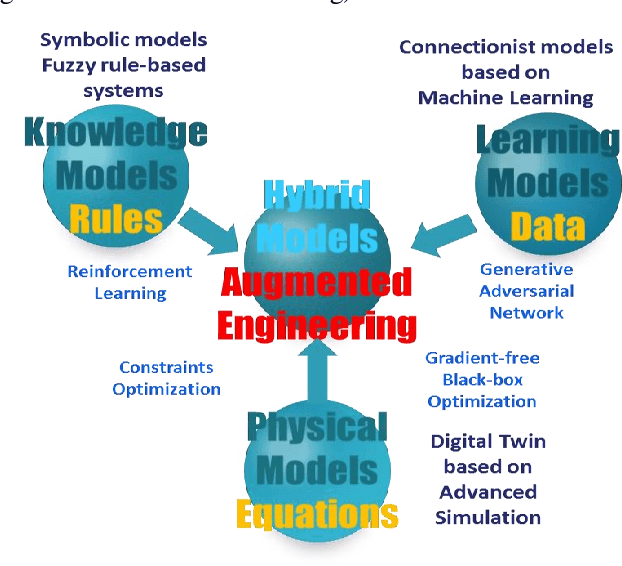
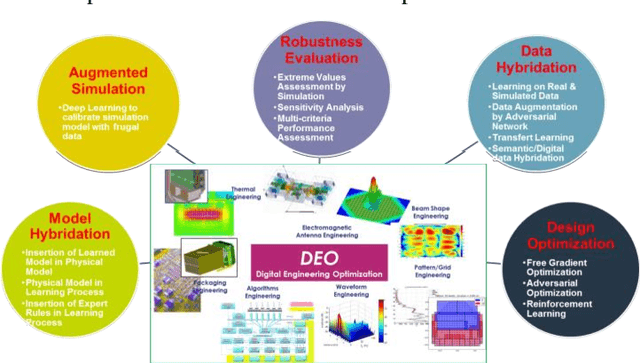
Thales new generation digital multi-missions radars, fully-digital and software-defined, like the Sea Fire and Ground Fire radars, benefit from a considerable increase of accessible degrees of freedoms to optimally design their operational modes. To effectively leverage these design choices and turn them into operational capabilities, it is necessary to develop new engineering tools, using artificial intelligence. Innovative optimization algorithms in the discrete and continuous domains, coupled with a radar Digital Twins, allowed construction of a generic tool for "search" mode design (beam synthesis, waveform and volume grid) compliant with the available radar time budget. The high computation speeds of these algorithms suggest tool application in a "Proactive Radar" configuration, which would dynamically propose to the operator, operational modes better adapted to environment, threats and the equipment failure conditions.