 Add to Chrome
 Add to Firefox
 Add to Edge
Leveraging Physiological Signals to Predict Exam Outcomes with Machine Learning
Jun 12, 2026
This study investigates the application of machine learning models to predict exam outcomes using physiological data collected during examination sessions. Physiological stress indicators, including electrodermal activity, heart rate, and skin temperature, were analyzed to uncover their association with academic performance. A variety of machine learning approaches were employed, ranging from standard models like logistic regression, random forest, and support vector machines to more advanced architectures, including transformers, long short-term memory (LSTM), and gated recurrent unit (GRU) models. This diversity aimed to capture the complex interactions within the data effectively. A key focus was assessing the adaptability of transformers in processing numerical data and evaluating their performance in this novel context. Standard performance metrics, such as accuracy, precision, recall, and F1-score, were used to compare model efficacy. The experimental results demonstrate that while deep learning models generally excel at capturing complex relationships in physiological data, simpler models like random forests can sometimes achieve superior performance while offering computational efficiency and interpretability. Furthermore, transformers demonstrated notable versatility, showcasing performances comparable to those of the LSTM and GRU models. This research underscores the importance of experimenting with a broad class of models that align with the objectives of the problem at hand, balancing precision, efficiency, and interpretability. By elucidating the relationships between physiological signals and academic performance, this study contributes to understanding stressors affecting students' mental health. It further promotes leveraging physiological data to enhance student well-being and academic outcomes.

Graph Attention Network-Based Detection of Autism Spectrum Disorder
Mar 27, 2026Autism Spectrum Disorder (ASD) is a neurodevelopmental condition characterized by atypical brain connectivity. One of the crucial steps in addressing ASD is its early detection. This study introduces a novel computational framework that employs an Attention-Based Graph Convolutional Network, referred to as the GATGraphClassifier, for detecting ASD. We utilize Functional Magnetic Resonance Imaging (fMRI) data from the Autism Brain Imaging Data Exchange (ABIDE) repository to construct functional connectivity matrices using Pearson correlation, which captures interactions between various brain regions. These matrices are then transformed into graph representations, where the nodes and edges represent the brain regions and functional connections, respectively. The GATGraphClassifier employs attention mechanisms to identify critical connectivity patterns, thereby enhancing the model's interpretability and diagnostic accuracy. Our proposed framework demonstrates superior performance across all standard classification metrics compared to existing state-of-the-art methods. Notably, we achieved an average accuracy of 88.79\% on the test data over 30 independent runs, surpassing the benchmark model's performance by 12.27\%. In addition, we identified the crucial brain regions associated with ASD, consistent with the previous studies, and a few novel regions. This study not only contributes to the advancement of ASD detection but also shows the potential for broader adaptability of GATGraphClassifier in analyzing complex relational data in various fields, where understanding intricate connectivity and interaction patterns is essential.
Comparative study of machine learning and deep learning methods on ASD classification
Sep 18, 2022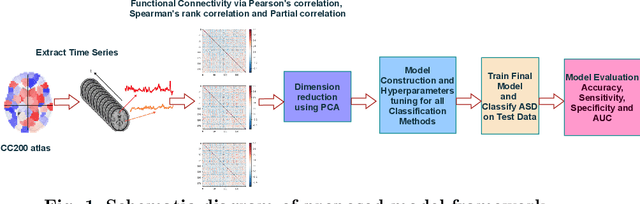
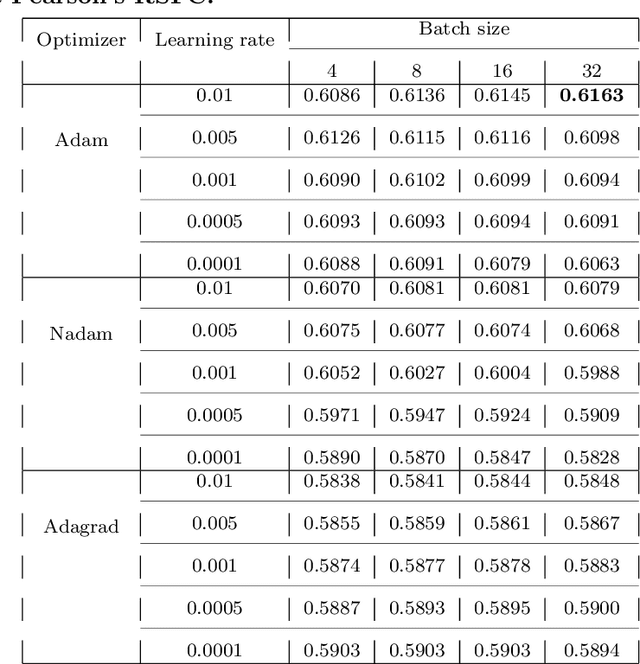
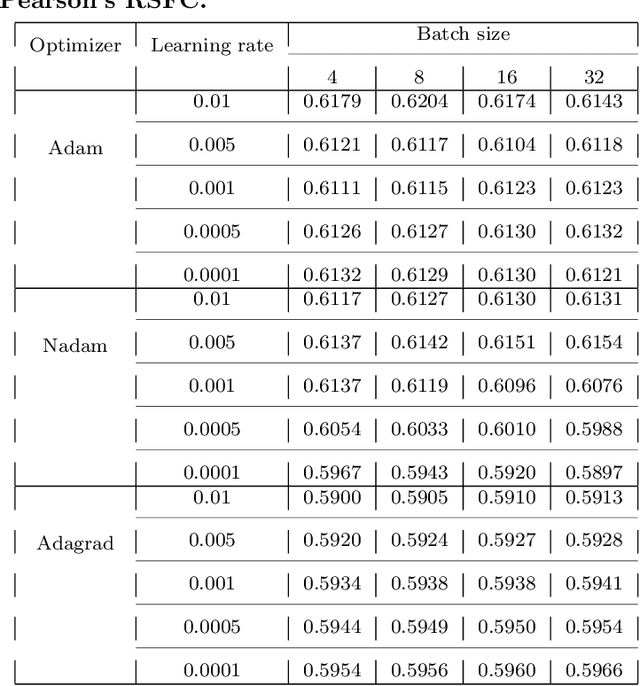
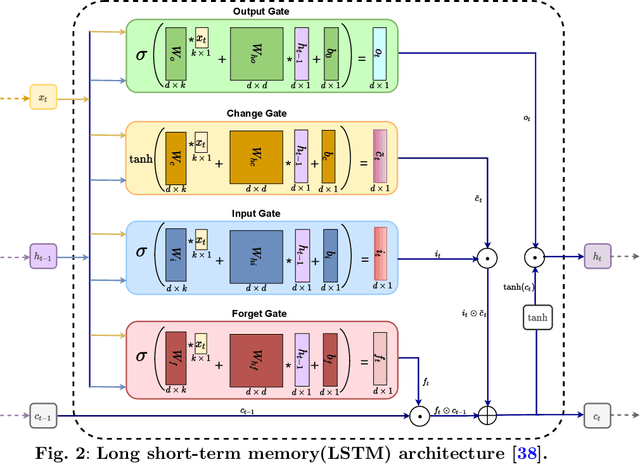
The autism dataset is studied to identify the differences between autistic and healthy groups. For this, the resting-state Functional Magnetic Resonance Imaging (rs-fMRI) data of the two groups are analyzed, and networks of connections between brain regions were created. Several classification frameworks are developed to distinguish the connectivity patterns between the groups. The best models for statistical inference and precision were compared, and the tradeoff between precision and model interpretability was analyzed. Finally, the classification accuracy measures were reported to justify the performance of our framework. Our best model can classify autistic and healthy patients on the multisite ABIDE I data with 71% accuracy.
Sparse Popularity Adjusted Stochastic Block Model
Oct 03, 2019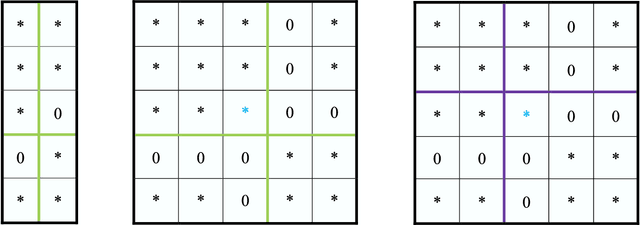
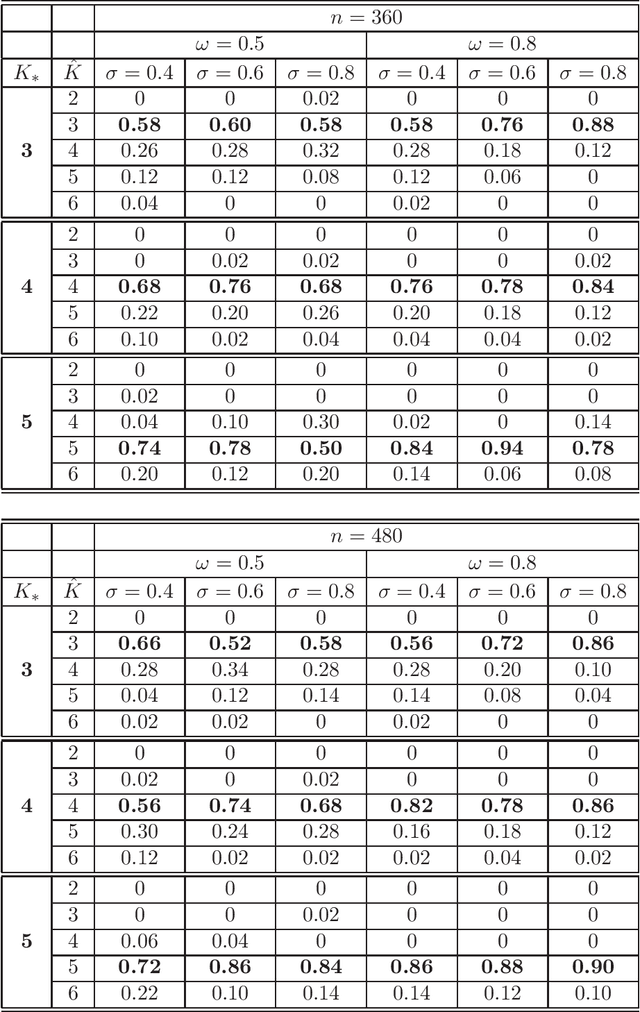
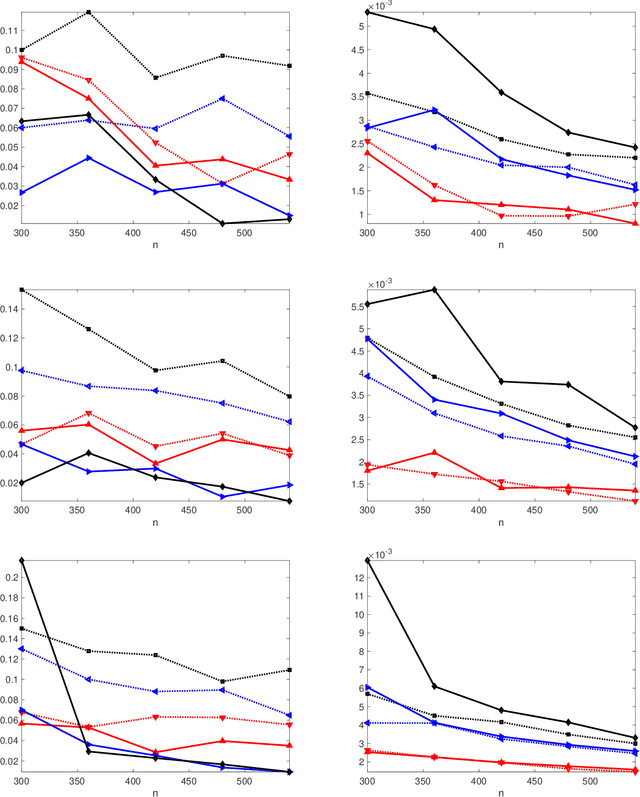
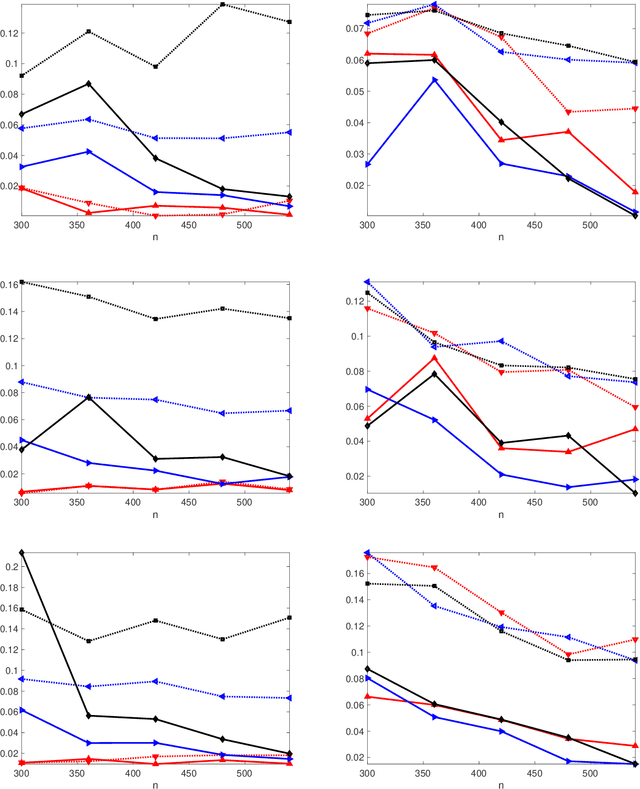
The objective of the present paper is to study the Popularity Adjusted Block Model (PABM) in the sparse setting. Unlike in other block models, the flexibility of PABM allows to set some of the connection probabilities to zero while maintaining the rest of the probabilities non-negligible, leading to the Sparse Popularity Adjusted Block Model (SPABM). The latter reduces the size of parameter set and leads to improved precision of estimation and clustering. The theory is complemented by the simulation study and real data examples.