 Add to Chrome
 Add to Firefox
 Add to Edge
A Dynamical Systems and System Identification Framework for Phase Amplitude Coupling Analysis
Mar 09, 2026
Phase-amplitude coupling (PAC), a form of cross-frequency interaction, has been implicated in various cognitive functions and, by extension, in neural communication and information integration. Accurately detecting and characterising PAC is essential for understanding its role in processes such as memory and attention. However, this remains a significant challenge. Most existing methods rely on variations in the temporal profile to detect PAC, but they often suffer from key limitations, most notably, their sensitivity to filter bandwidth selection and their susceptibility to detecting spurious couplings. Previous studies have suggested that approaches grounded in the actual generative dynamics of PAC may offer improved accuracy. In this study, we adopt a dynamical systems perspective and propose a novel method for PAC detection and characterisation based on nonlinear system identification. This approach involves identifying a nonlinear dynamical model that captures the temporal dynamics underlying PAC. The resulting generative model enables noise-free simulation of estimated PAC signals, facilitating detailed analysis of modulation strength and the low-frequency phase at which the high-frequency bursts occur. The proposed method accounts for harmonic-induced spurious couplings through empirically derived criteria and remains robust to high noise levels and variations in slow-frequency power, offering an accurate and interpretable framework for PAC analysis. The performance of the proposed approach is illustrated using several simulated examples and a real case using local field potentials (LFP) data. The results are compared with several popular methods.

NonSysId: A nonlinear system identification package with improved model term selection for NARMAX models
Nov 25, 2024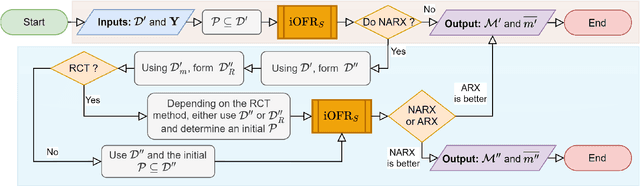
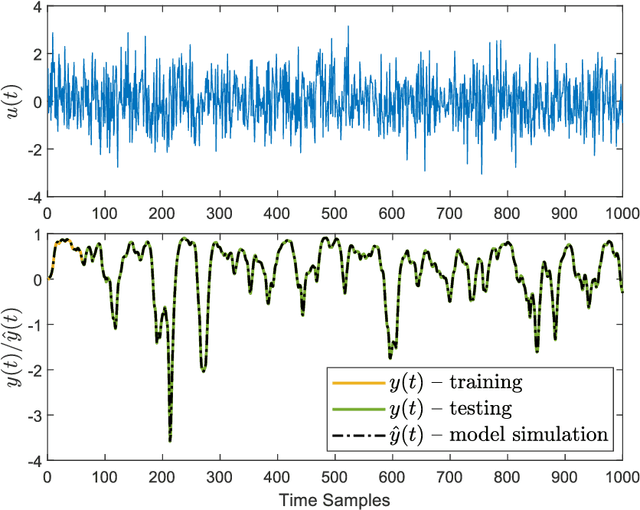
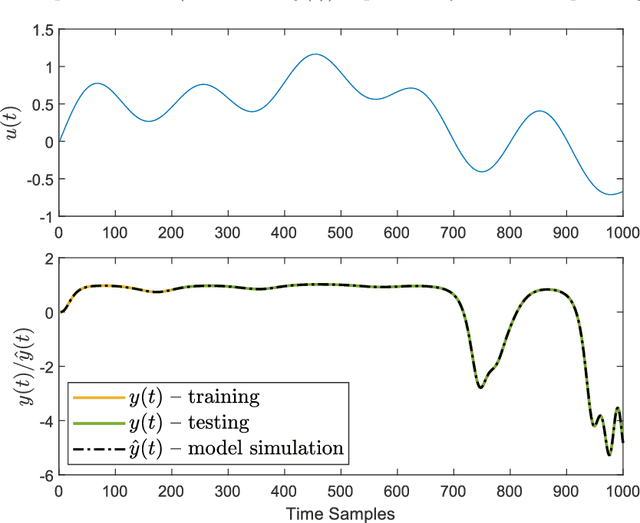
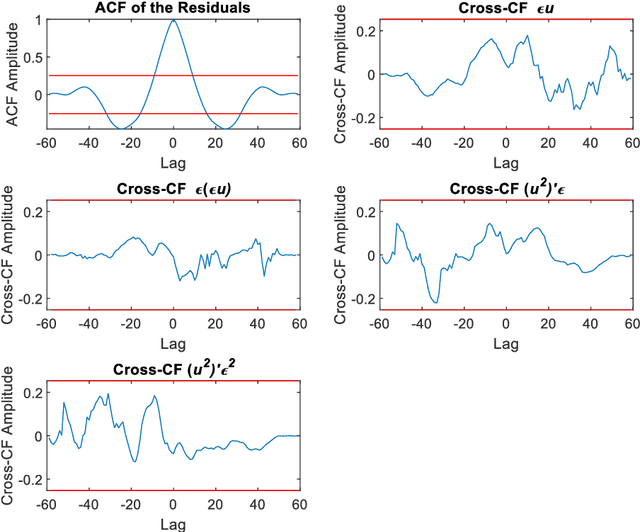
System identification involves constructing mathematical models of dynamic systems using input-output data, enabling analysis and prediction of system behaviour in both time and frequency domains. This approach can model the entire system or capture specific dynamics within it. For meaningful analysis, it is essential for the model to accurately reflect the underlying system's behaviour. This paper introduces NonSysId, an open-sourced MATLAB software package designed for nonlinear system identification, specifically focusing on NARMAX models. The software incorporates an advanced term selection methodology that prioritises on simulation (free-run) accuracy while preserving model parsimony. A key feature is the integration of iterative Orthogonal Forward Regression (iOFR) with Predicted Residual Sum of Squares (PRESS) statistic-based term selection, facilitating robust model generalisation without the need for a separate validation dataset. Furthermore, techniques for reducing computational overheads are implemented. These features make NonSysId particularly suitable for real-time applications such as structural health monitoring, fault diagnosis, and biomedical signal processing, where it is a challenge to capture the signals under consistent conditions, resulting in limited or no validation data.