 Add to Chrome
 Add to Firefox
 Add to Edge
Multiplicity of Stable Attractors in Disordered Neural Models
Jul 24, 2026
We show how large-deviation statistics allows one to obtain reliable estimates of the multiplicity of stable fixed-points in a model of neural ordinary differential equations previously employed in computational tasks. The result is obtained by developing a suitable perturbative method in the amplitude of the disorder. It turns out that for not-too-large coupling strengths there are no qualitative differences between the symmetric case, when the dynamics is a purely gradient evolution, and the asymmetric case, when limit cycles and chaos can, in principle, arise. The selection of this specific model is dictated by pedagogical reasons, but we are confident that the approach can be extended to other many-degree-of-freedom dynamical models characterized by different classes of random coupling matrices.

Approximating velocity fields with planted attractors via Neural-ODEs for classification purposes
Jun 24, 2026In this work, Neural ODEs equipped with a curated collection of equilibrium points have been successfully employed for classification tasks. The planted attractors serve as indicators for the target classes, while the velocity field leveraging the universal approximation capabilities of the architecture shapes the dynamical landscape. This process defines the basins of attraction of the trained model, effectively directing each input (provided as an initial condition) toward its corresponding destination target.
Exact Fixed-Point Constraints in Neural-ODEs with Provable Universality
May 11, 2026We introduce a technique that enables Neural-ODEs to approximate arbitrary velocity fields with a priori planted fixed-points. Specifically, a recipe is given to explicitly accommodate for a finite collection of points in the reference multi-dimensional space of the Neural-ODE where the velocity field is exactly equal to zero. In this way, the gradient-based training is rigorously constrained inside the prescribed hypothesis class while leaving the expressive power of the Neural-ODE unaltered. We rigorously prove the universality of the Neural-ODE under any local constraints in the velocity field and give a computationally convenient way of imposing the fixed points. Our method is then tested on two paradigmatic physical models.
Fast Analysis of the OpenAI O1-Preview Model in Solving Random K-SAT Problem: Does the LLM Solve the Problem Itself or Call an External SAT Solver?
Sep 17, 2024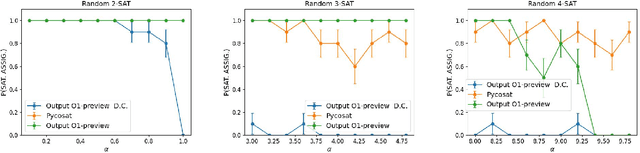
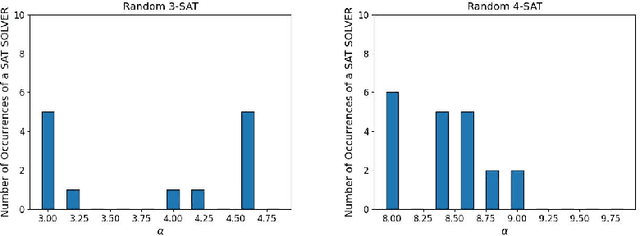
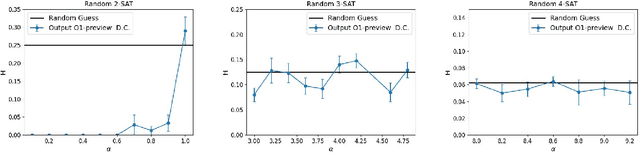
In this manuscript I present an analysis on the performance of OpenAI O1-preview model in solving random K-SAT instances for K$\in {2,3,4}$ as a function of $\alpha=M/N$ where $M$ is the number of clauses and $N$ is the number of variables of the satisfiable problem. I show that the model can call an external SAT solver to solve the instances, rather than solving them directly. Despite using external solvers, the model reports incorrect assignments as output. Moreover, I propose and present an analysis to quantify whether the OpenAI O1-preview model demonstrates a spark of intelligence or merely makes random guesses when outputting an assignment for a Boolean satisfiability problem.
Learning in Wilson-Cowan model for metapopulation
Jun 24, 2024The Wilson-Cowan model for metapopulation, a Neural Mass Network Model, treats different subcortical regions of the brain as connected nodes, with connections representing various types of structural, functional, or effective neuronal connectivity between these regions. Each region comprises interacting populations of excitatory and inhibitory cells, consistent with the standard Wilson-Cowan model. By incorporating stable attractors into such a metapopulation model's dynamics, we transform it into a learning algorithm capable of achieving high image and text classification accuracy. We test it on MNIST and Fashion MNIST, in combination with convolutional neural networks, on CIFAR-10 and TF-FLOWERS, and, in combination with a transformer architecture (BERT), on IMDB, always showing high classification accuracy. These numerical evaluations illustrate that minimal modifications to the Wilson-Cowan model for metapopulation can reveal unique and previously unobserved dynamics.
Automatic Input Feature Relevance via Spectral Neural Networks
Jun 03, 2024Working with high-dimensional data is a common practice, in the field of machine learning. Identifying relevant input features is thus crucial, so as to obtain compact dataset more prone for effective numerical handling. Further, by isolating pivotal elements that form the basis of decision making, one can contribute to elaborate on - ex post - models' interpretability, so far rather elusive. Here, we propose a novel method to estimate the relative importance of the input components for a Deep Neural Network. This is achieved by leveraging on a spectral re-parametrization of the optimization process. Eigenvalues associated to input nodes provide in fact a robust proxy to gauge the relevance of the supplied entry features. Unlike existing techniques, the spectral features ranking is carried out automatically, as a byproduct of the network training. The technique is successfully challenged against both synthetic and real data.
A Short Review on Novel Approaches for Maximum Clique Problem: from Classical algorithms to Graph Neural Networks and Quantum algorithms
Mar 13, 2024This manuscript provides a comprehensive review of the Maximum Clique Problem, a computational problem that involves finding subsets of vertices in a graph that are all pairwise adjacent to each other. The manuscript covers in a simple way classical algorithms for solving the problem and includes a review of recent developments in graph neural networks and quantum algorithms. The review concludes with benchmarks for testing classical as well as new learning, and quantum algorithms.
The Garden of Forking Paths: Observing Dynamic Parameters Distribution in Large Language Models
Mar 13, 2024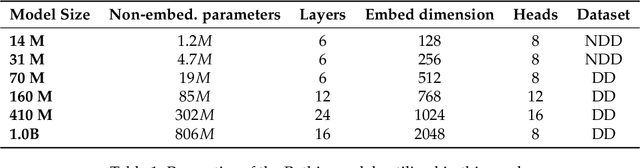
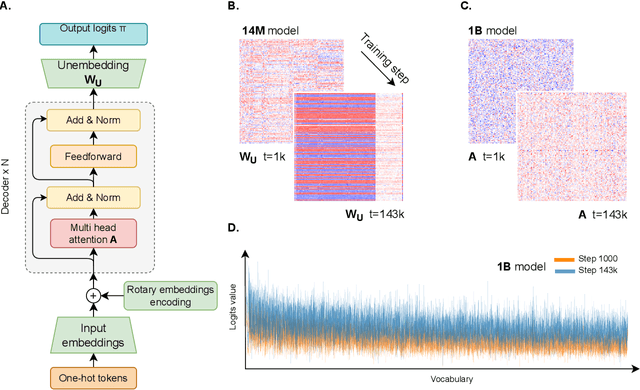
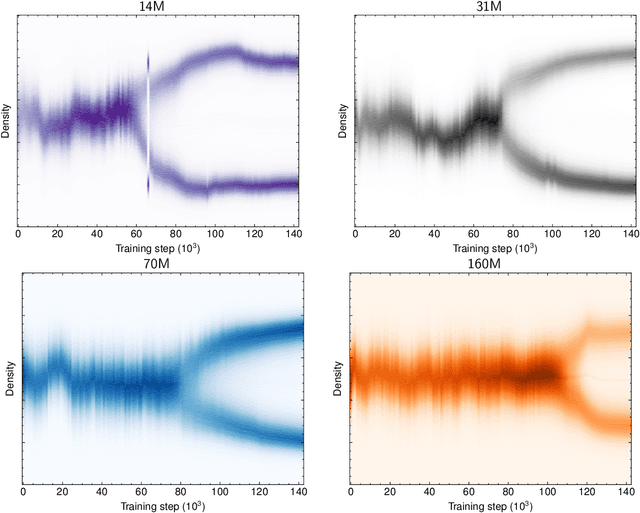
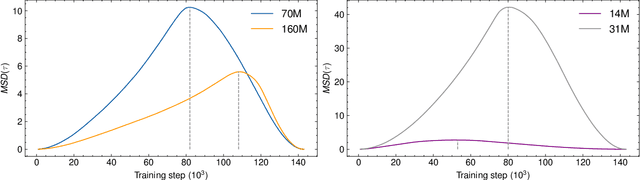
A substantial gap persists in understanding the reasons behind the exceptional performance of the Transformer architecture in NLP. A particularly unexplored area involves the mechanistic description of how the distribution of parameters evolves over time during training. In this work we suggest that looking at the time evolution of the statistic distribution of model parameters, and specifically at bifurcation effects, can help understanding the model quality, potentially reducing training costs and evaluation efforts and empirically showing the reasons behind the effectiveness of weights sparsification.
Engineered Ordinary Differential Equations as Classification Algorithm (EODECA): thorough characterization and testing
Dec 22, 2023EODECA (Engineered Ordinary Differential Equations as Classification Algorithm) is a novel approach at the intersection of machine learning and dynamical systems theory, presenting a unique framework for classification tasks [1]. This method stands out with its dynamical system structure, utilizing ordinary differential equations (ODEs) to efficiently handle complex classification challenges. The paper delves into EODECA's dynamical properties, emphasizing its resilience against random perturbations and robust performance across various classification scenarios. Notably, EODECA's design incorporates the ability to embed stable attractors in the phase space, enhancing reliability and allowing for reversible dynamics. In this paper, we carry out a comprehensive analysis by expanding on the work [1], and employing a Euler discretization scheme. In particular, we evaluate EODECA's performance across five distinct classification problems, examining its adaptability and efficiency. Significantly, we demonstrate EODECA's effectiveness on the MNIST and Fashion MNIST datasets, achieving impressive accuracies of $98.06\%$ and $88.21\%$, respectively. These results are comparable to those of a multi-layer perceptron (MLP), underscoring EODECA's potential in complex data processing tasks. We further explore the model's learning journey, assessing its evolution in both pre and post training environments and highlighting its ability to navigate towards stable attractors. The study also investigates the invertibility of EODECA, shedding light on its decision-making processes and internal workings. This paper presents a significant step towards a more transparent and robust machine learning paradigm, bridging the gap between machine learning algorithms and dynamical systems methodologies.
Complex Recurrent Spectral Network
Dec 12, 2023This paper presents a novel approach to advancing artificial intelligence (AI) through the development of the Complex Recurrent Spectral Network ($\mathbb{C}$-RSN), an innovative variant of the Recurrent Spectral Network (RSN) model. The $\mathbb{C}$-RSN is designed to address a critical limitation in existing neural network models: their inability to emulate the complex processes of biological neural networks dynamically and accurately. By integrating key concepts from dynamical systems theory and leveraging principles from statistical mechanics, the $\mathbb{C}$-RSN model introduces localized non-linearity, complex fixed eigenvalues, and a distinct separation of memory and input processing functionalities. These features collectively enable the $\mathbb{C}$-RSN evolving towards a dynamic, oscillating final state that more closely mirrors biological cognition. Central to this work is the exploration of how the $\mathbb{C}$-RSN manages to capture the rhythmic, oscillatory dynamics intrinsic to biological systems, thanks to its complex eigenvalue structure and the innovative segregation of its linear and non-linear components. The model's ability to classify data through a time-dependent function, and the localization of information processing, is demonstrated with an empirical evaluation using the MNIST dataset. Remarkably, distinct items supplied as a sequential input yield patterns in time which bear the indirect imprint of the insertion order (and of the time of separation between contiguous insertions).