 Add to Chrome
 Add to Firefox
 Add to Edge
Pip-Stereo: Progressive Iterations Pruner for Iterative Optimization based Stereo Matching
Feb 24, 2026
While iterative stereo matching achieves high accuracy, its dependence on Recurrent Neural Networks (RNN) hinders edge deployment, a challenge underexplored in existing researches. We analyze iterative refinement and reveal that disparity updates are spatially sparse and temporally redundant. First, we introduce a progressive iteration pruning strategy that suppresses redundant update steps, effectively collapsing the recursive computation into a near-single-pass inference. Second, we propose a collaborative monocular prior transfer framework that implicitly embeds depth priors without requiring a dedicated monocular encoder, thereby eliminating its associated computational burden. Third, we develop FlashGRU, a hardware-aware RNN operator leveraging structured sparsity and I/O-conscious design, achieving a 7.28$\times$ speedup, 76.6\% memory peak reduction and 80.9\% global memory requests reduction over natvie ConvGRUs under 2K resolution. Our PipStereo enables real-time, high-fidelity stereo matching on edge hardware: it processes 320$\times$640 frames in just 75ms on an NVIDIA Jetson Orin NX (FP16) and 19ms on RTX 4090, matching the accuracy of large iterative based models, and our generalization ability and accuracy far exceeds that of existing real-time methods. Our embedded AI projects will be updated at: https://github.com/XPENG-Aridge-AI.

SparseSSP: 3D Subcellular Structure Prediction from Sparse-View Transmitted Light Images
Jul 03, 2024
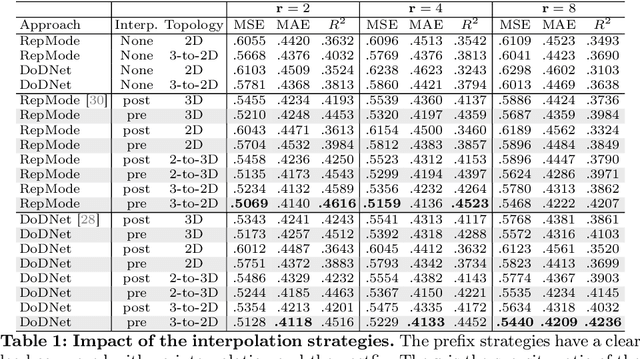


Traditional fluorescence staining is phototoxic to live cells, slow, and expensive; thus, the subcellular structure prediction (SSP) from transmitted light (TL) images is emerging as a label-free, faster, low-cost alternative. However, existing approaches utilize 3D networks for one-to-one voxel level dense prediction, which necessitates a frequent and time-consuming Z-axis imaging process. Moreover, 3D convolutions inevitably lead to significant computation and GPU memory overhead. Therefore, we propose an efficient framework, SparseSSP, predicting fluorescent intensities within the target voxel grid in an efficient paradigm instead of relying entirely on 3D topologies. In particular, SparseSSP makes two pivotal improvements to prior works. First, SparseSSP introduces a one-to-many voxel mapping paradigm, which permits the sparse TL slices to reconstruct the subcellular structure. Secondly, we propose a hybrid dimensions topology, which folds the Z-axis information into channel features, enabling the 2D network layers to tackle SSP under low computational cost. We conduct extensive experiments to validate the effectiveness and advantages of SparseSSP on diverse sparse imaging ratios, and our approach achieves a leading performance compared to pure 3D topologies. SparseSSP reduces imaging frequencies compared to previous dense-view SSP (i.e., the number of imaging is reduced up to 87.5% at most), which is significant in visualizing rapid biological dynamics on low-cost devices and samples.