 Add to Chrome
 Add to Firefox
 Add to Edge
Physics-Informed Attention Mechanism and Generalization Capability of Deep Learning-Based Grain Growth Evolution Prediction
Jun 15, 2026
Machine Learning (ML) models for grain growth prediction are typically trained on idealized synthetic data, yet practical applications require generalization to conditions outside the training distribution. This study evaluated the Out-Of-Distribution (OOD) generalization capability of the trained model from our previous study across three test cases, including experimental microstructures, microstructures characterized by a bimodal grain size distribution, and abnormal grain growth. To further probe whether physics-informed architectural design could improve robustness under these different conditions, a boundary-masked attention mechanism was proposed specifically for grain growth, constraining attention to grain boundary pixels. Both the baseline and the proposed physics-informed attention model were evaluated without retraining or fine-tuning on the OOD data. Both models successfully generalized to all three test cases, yet the boundary-masked attention mechanism provided substantial improvements, with the most notable gains for microstructures characterized by a bimodal grain size distribution, where Structural Similarity Index Measure (SSIM) improved from \num{0.6221} to \num{0.7609} and mean grain size ($\overline{R}$) error decreased from \SI{8.75}{\percent} to \SI{3.57}{\percent}. The attention heatmap analysis revealed that the boundary-masked attention model learned to concentrate attention on large grain boundaries in a manner consistent with curvature-driven grain growth physics, emerging from training without being explicitly encoded into the architecture. These results indicate that models trained on synthetic data can generalize to diverse OOD conditions without retraining, and that physics-informed attention may improve accuracy when the boundary morphology matches the training domain.

High-fidelity Grain Growth Modeling: Leveraging Deep Learning for Fast Computations
May 08, 2025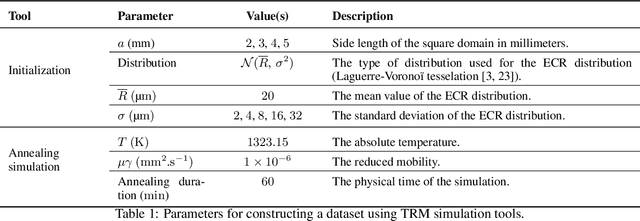
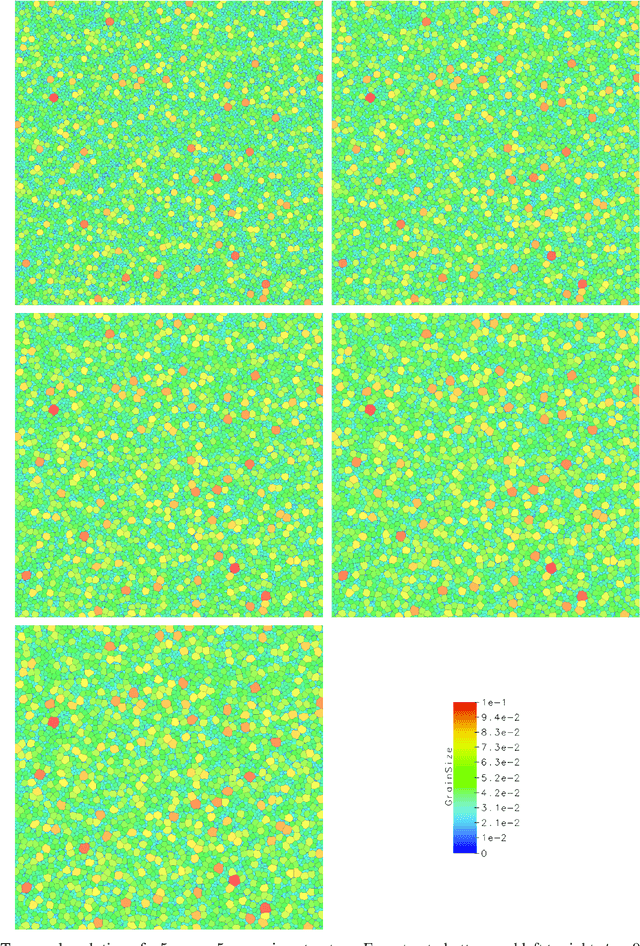
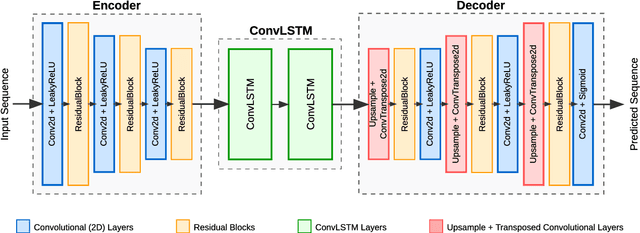
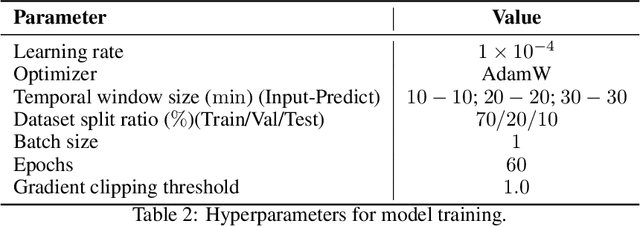
Grain growth simulation is crucial for predicting metallic material microstructure evolution during annealing and resulting final mechanical properties, but traditional partial differential equation-based methods are computationally expensive, creating bottlenecks in materials design and manufacturing. In this work, we introduce a machine learning framework that combines a Convolutional Long Short-Term Memory networks with an Autoencoder to efficiently predict grain growth evolution. Our approach captures both spatial and temporal aspects of grain evolution while encoding high-dimensional grain structure data into a compact latent space for pattern learning, enhanced by a novel composite loss function combining Mean Squared Error, Structural Similarity Index Measurement, and Boundary Preservation to maintain structural integrity of grain boundary topology of the prediction. Results demonstrated that our machine learning approach accelerates grain growth prediction by up to \SI{89}{\times} faster, reducing computation time from \SI{10}{\minute} to approximately \SI{10}{\second} while maintaining high-fidelity predictions. The best model (S-30-30) achieving a structural similarity score of \SI{86.71}{\percent} and mean grain size error of just \SI{0.07}{\percent}. All models accurately captured grain boundary topology, morphology, and size distributions. This approach enables rapid microstructural prediction for applications where conventional simulations are prohibitively time-consuming, potentially accelerating innovation in materials science and manufacturing.