 Add to Chrome
 Add to Firefox
 Add to Edge
Understanding Mental States in Active and Autonomous Driving with EEG
Dec 09, 2025
Understanding how driver mental states differ between active and autonomous driving is critical for designing safe human-vehicle interfaces. This paper presents the first EEG-based comparison of cognitive load, fatigue, valence, and arousal across the two driving modes. Using data from 31 participants performing identical tasks in both scenarios of three different complexity levels, we analyze temporal patterns, task-complexity effects, and channel-wise activation differences. Our findings show that although both modes evoke similar trends across complexity levels, the intensity of mental states and the underlying neural activation differ substantially, indicating a clear distribution shift between active and autonomous driving. Transfer-learning experiments confirm that models trained on active driving data generalize poorly to autonomous driving and vice versa. We attribute this distribution shift primarily to differences in motor engagement and attentional demands between the two driving modes, which lead to distinct spatial and temporal EEG activation patterns. Although autonomous driving results in lower overall cortical activation, participants continue to exhibit measurable fluctuations in cognitive load, fatigue, valence, and arousal associated with readiness to intervene, task-evoked emotional responses, and monotony-related passive fatigue. These results emphasize the need for scenario-specific data and models when developing next-generation driver monitoring systems for autonomous vehicles.

Graph-Based Learning of Spectro-Topographical EEG Representations with Gradient Alignment for Brain-Computer Interfaces
Dec 08, 2025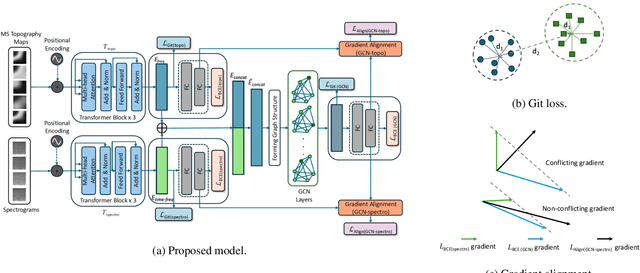
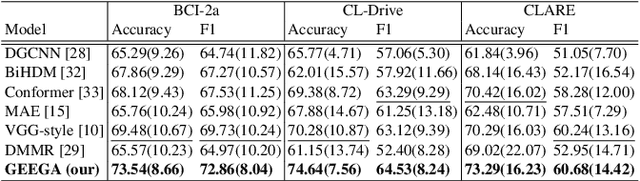
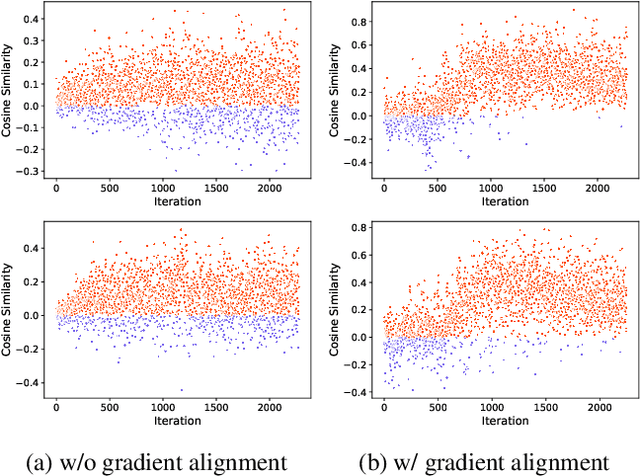
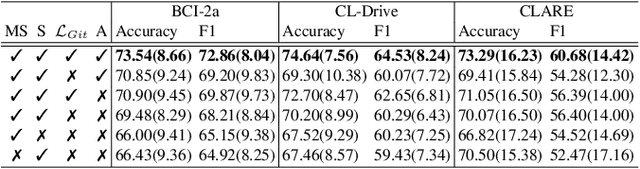
We present a novel graph-based learning of EEG representations with gradient alignment (GEEGA) that leverages multi-domain information to learn EEG representations for brain-computer interfaces. Our model leverages graph convolutional networks to fuse embeddings from frequency-based topographical maps and time-frequency spectrograms, capturing inter-domain relationships. GEEGA addresses the challenge of achieving high inter-class separability, which arises from the temporally dynamic and subject-sensitive nature of EEG signals by incorporating the center loss and pairwise difference loss. Additionally, GEEGA incorporates a gradient alignment strategy to resolve conflicts between gradients from different domains and the fused embeddings, ensuring that discrepancies, where gradients point in conflicting directions, are aligned toward a unified optimization direction. We validate the efficacy of our method through extensive experiments on three publicly available EEG datasets: BCI-2a, CL-Drive and CLARE. Comprehensive ablation studies further highlight the impact of various components of our model.
Multi-Domain EEG Representation Learning with Orthogonal Mapping and Attention-based Fusion for Cognitive Load Classification
Nov 16, 2025We propose a new representation learning solution for the classification of cognitive load based on Electroencephalogram (EEG). Our method integrates both time and frequency domains by first passing the raw EEG signals through the convolutional encoder to obtain the time domain representations. Next, we measure the Power Spectral Density (PSD) for all five EEG frequency bands and generate the channel power values as 2D images referred to as multi-spectral topography maps. These multi-spectral topography maps are then fed to a separate encoder to obtain the representations in frequency domain. Our solution employs a multi-domain attention module that maps these domain-specific embeddings onto a shared embedding space to emphasize more on important inter-domain relationships to enhance the representations for cognitive load classification. Additionally, we incorporate an orthogonal projection constraint during the training of our method to effectively increase the inter-class distances while improving intra-class clustering. This enhancement allows efficient discrimination between different cognitive states and aids in better grouping of similar states within the feature space. We validate the effectiveness of our model through extensive experiments on two public EEG datasets, CL-Drive and CLARE for cognitive load classification. Our results demonstrate the superiority of our multi-domain approach over the traditional single-domain techniques. Moreover, we conduct ablation and sensitivity analyses to assess the impact of various components of our method. Finally, robustness experiments on different amounts of added noise demonstrate the stability of our method compared to other state-of-the-art solutions.
CLARE: Cognitive Load Assessment in REaltime with Multimodal Data
Apr 26, 2024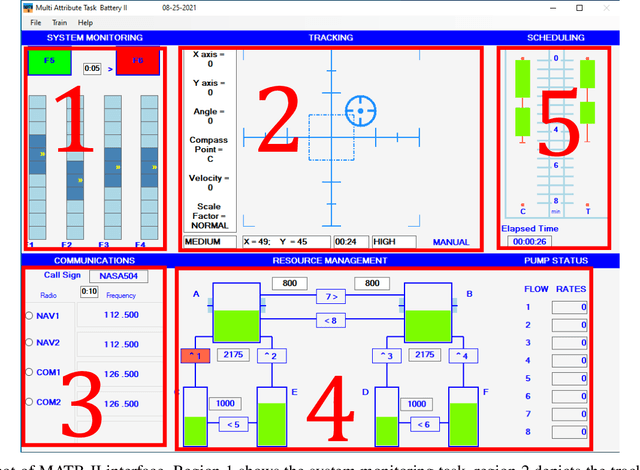
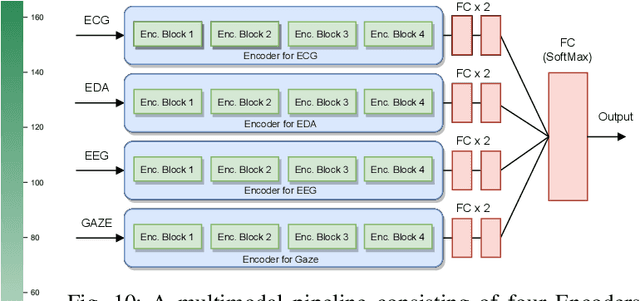
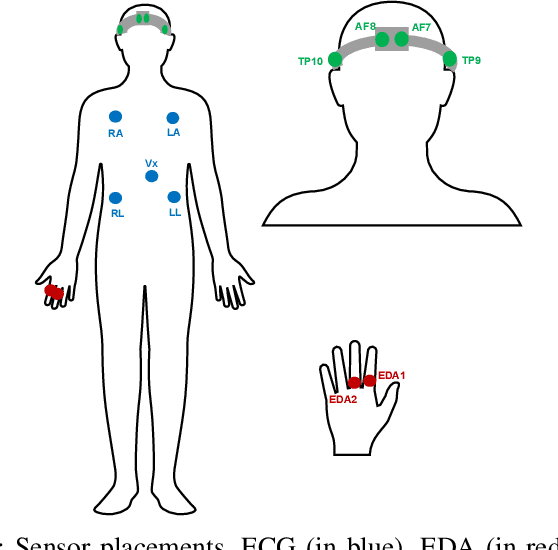

We present a novel multimodal dataset for Cognitive Load Assessment in REaltime (CLARE). The dataset contains physiological and gaze data from 24 participants with self-reported cognitive load scores as ground-truth labels. The dataset consists of four modalities, namely, Electrocardiography (ECG), Electrodermal Activity (EDA), Electroencephalogram (EEG), and Gaze tracking. To map diverse levels of mental load on participants during experiments, each participant completed four nine-minutes sessions on a computer-based operator performance and mental workload task (the MATB-II software) with varying levels of complexity in one minute segments. During the experiment, participants reported their cognitive load every 10 seconds. For the dataset, we also provide benchmark binary classification results with machine learning and deep learning models on two different evaluation schemes, namely, 10-fold and leave-one-subject-out (LOSO) cross-validation. Benchmark results show that for 10-fold evaluation, the convolutional neural network (CNN) based deep learning model achieves the best classification performance with ECG, EDA, and Gaze. In contrast, for LOSO, the best performance is achieved by the deep learning model with ECG, EDA, and EEG.
EEG-based Cognitive Load Classification using Feature Masked Autoencoding and Emotion Transfer Learning
Aug 01, 2023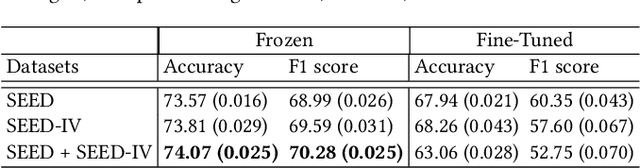
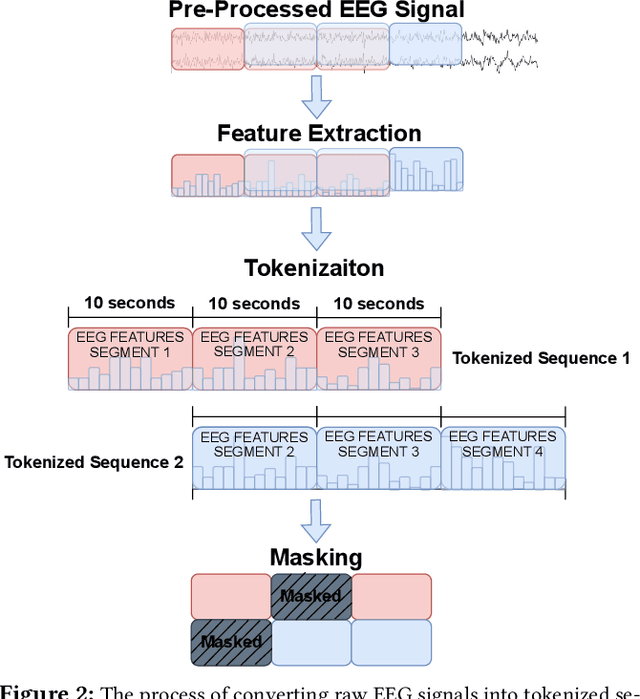
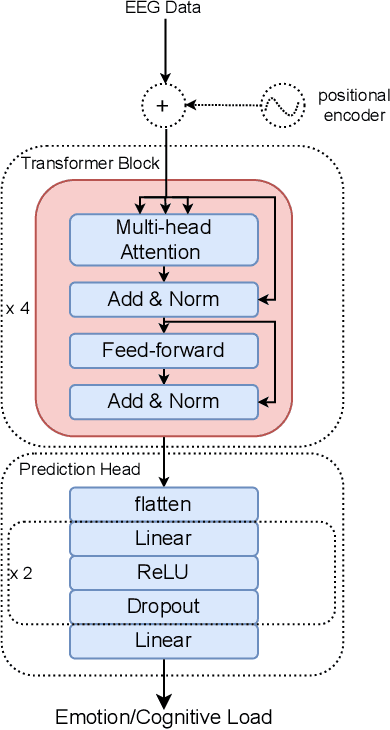
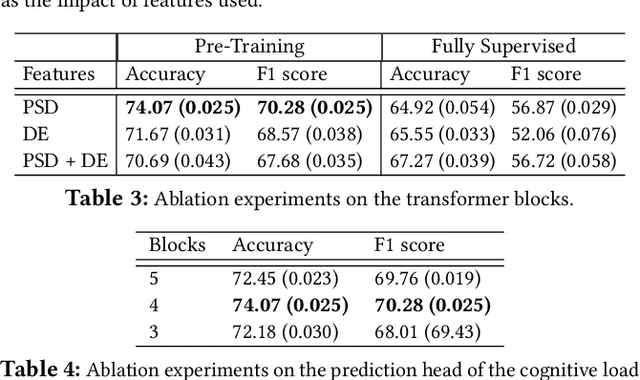
Cognitive load, the amount of mental effort required for task completion, plays an important role in performance and decision-making outcomes, making its classification and analysis essential in various sensitive domains. In this paper, we present a new solution for the classification of cognitive load using electroencephalogram (EEG). Our model uses a transformer architecture employing transfer learning between emotions and cognitive load. We pre-train our model using self-supervised masked autoencoding on emotion-related EEG datasets and use transfer learning with both frozen weights and fine-tuning to perform downstream cognitive load classification. To evaluate our method, we carry out a series of experiments utilizing two publicly available EEG-based emotion datasets, namely SEED and SEED-IV, for pre-training, while we use the CL-Drive dataset for downstream cognitive load classification. The results of our experiments show that our proposed approach achieves strong results and outperforms conventional single-stage fully supervised learning. Moreover, we perform detailed ablation and sensitivity studies to evaluate the impact of different aspects of our proposed solution. This research contributes to the growing body of literature in affective computing with a focus on cognitive load, and opens up new avenues for future research in the field of cross-domain transfer learning using self-supervised pre-training.
Multimodal Brain-Computer Interface for In-Vehicle Driver Cognitive Load Measurement: Dataset and Baselines
Apr 09, 2023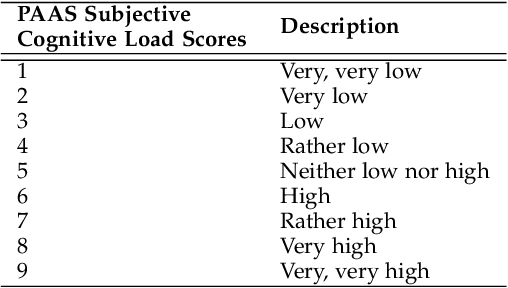
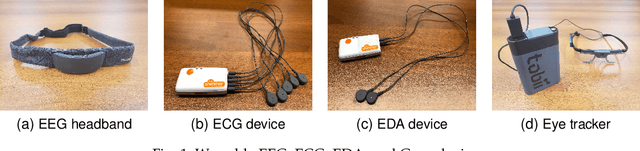
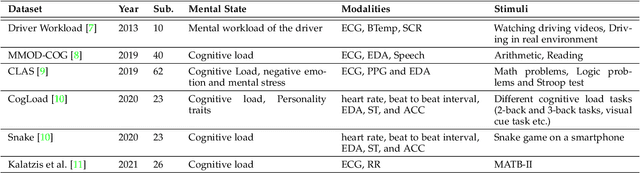
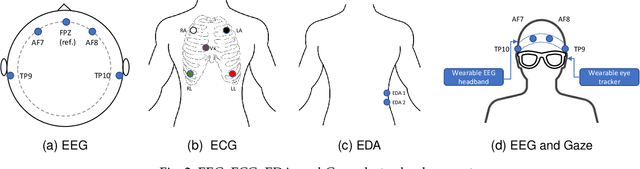
Through this paper, we introduce a novel driver cognitive load assessment dataset, CL-Drive, which contains Electroencephalogram (EEG) signals along with other physiological signals such as Electrocardiography (ECG) and Electrodermal Activity (EDA) as well as eye tracking data. The data was collected from 21 subjects while driving in an immersive vehicle simulator, in various driving conditions, to induce different levels of cognitive load in the subjects. The tasks consisted of 9 complexity levels for 3 minutes each. Each driver reported their subjective cognitive load every 10 seconds throughout the experiment. The dataset contains the subjective cognitive load recorded as ground truth. In this paper, we also provide benchmark classification results for different machine learning and deep learning models for both binary and ternary label distributions. We followed 2 evaluation criteria namely 10-fold and leave-one-subject-out (LOSO). We have trained our models on both hand-crafted features as well as on raw data.