 Add to Chrome
 Add to Firefox
 Add to Edge
Reward-Guided Discrete Diffusion via Clean-Sample Markov Chain for Molecule and Biological Sequence Design
Feb 10, 2026
Discrete diffusion models have recently emerged as a powerful class of generative models for chemistry and biology data. In these fields, the goal is to generate various samples with high rewards (e.g., drug-likeness in molecules), making reward-based guidance crucial. Most existing methods are based on guiding the diffusion model using intermediate rewards but tend to underperform since intermediate rewards are noisy due to the non-smooth nature of reward functions used in scientific domains. To address this, we propose Clean-Sample Markov Chain (CSMC) Sampler, a method that performs effective test-time reward-guided sampling for discrete diffusion models, enabling local search without relying on intermediate rewards. CSMC constructs a Markov chain of clean samples using the Metropolis-Hastings algorithm such that its stationary distribution is the target distribution. We design a proposal distribution by sequentially applying the forward and backward diffusion processes, making the acceptance probability tractable. Experiments on molecule and biological sequence generation with various reward functions demonstrate that our method consistently outperforms prior approaches that rely on intermediate rewards.

Unconditional Priors Matter! Improving Conditional Generation of Fine-Tuned Diffusion Models
Mar 26, 2025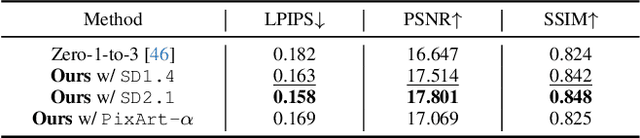
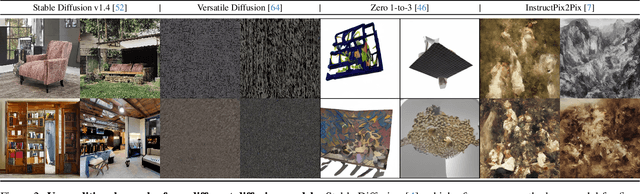
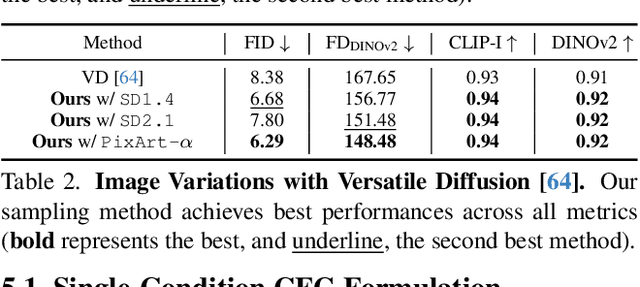
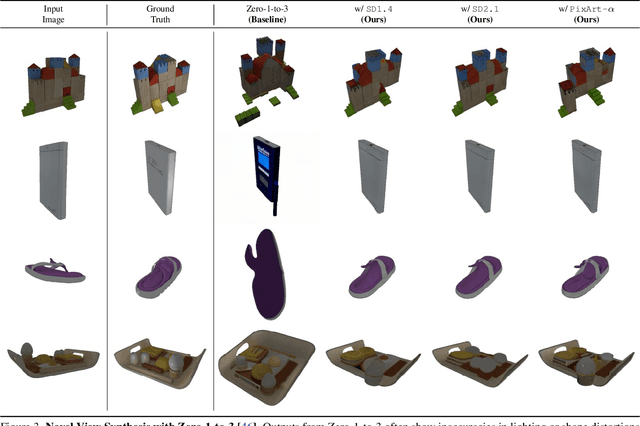
Classifier-Free Guidance (CFG) is a fundamental technique in training conditional diffusion models. The common practice for CFG-based training is to use a single network to learn both conditional and unconditional noise prediction, with a small dropout rate for conditioning. However, we observe that the joint learning of unconditional noise with limited bandwidth in training results in poor priors for the unconditional case. More importantly, these poor unconditional noise predictions become a serious reason for degrading the quality of conditional generation. Inspired by the fact that most CFG-based conditional models are trained by fine-tuning a base model with better unconditional generation, we first show that simply replacing the unconditional noise in CFG with that predicted by the base model can significantly improve conditional generation. Furthermore, we show that a diffusion model other than the one the fine-tuned model was trained on can be used for unconditional noise replacement. We experimentally verify our claim with a range of CFG-based conditional models for both image and video generation, including Zero-1-to-3, Versatile Diffusion, DiT, DynamiCrafter, and InstructPix2Pix.
Large Catapults in Momentum Gradient Descent with Warmup: An Empirical Study
Nov 25, 2023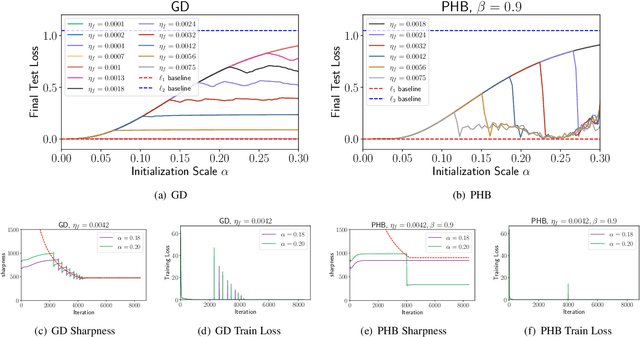
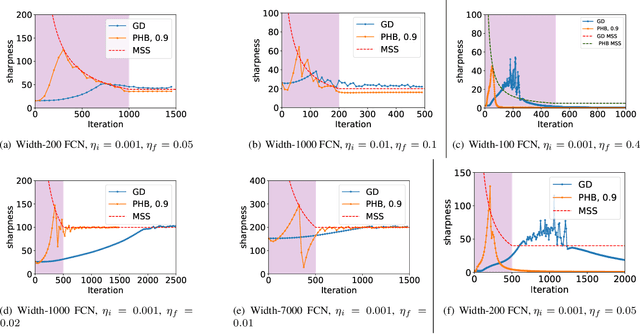
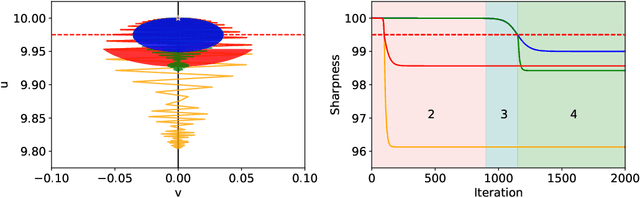
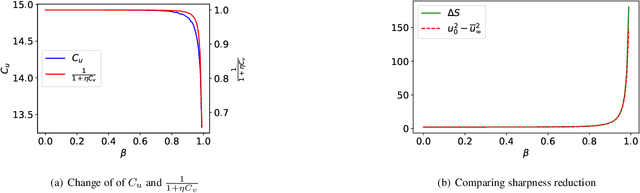
Although gradient descent with momentum is widely used in modern deep learning, a concrete understanding of its effects on the training trajectory still remains elusive. In this work, we empirically show that momentum gradient descent with a large learning rate and learning rate warmup displays large catapults, driving the iterates towards flatter minima than those found by gradient descent. We then provide empirical evidence and theoretical intuition that the large catapult is caused by momentum "amplifying" the self-stabilization effect (Damian et al., 2023).