 Add to Chrome
 Add to Firefox
 Add to Edge
Words to Describe What I'm Feeling: Exploring the Potential of AI Agents for High Subjectivity Decisions in Advance Care Planning
Dec 12, 2025
Serious illness can deprive patients of the capacity to speak for themselves. As populations age and caregiver networks shrink, the need for reliable support in Advance Care Planning (ACP) grows. To probe this fraught design space of using proxy agents for high-risk, high-subjectivity decisions, we built an experience prototype (\acpagent{}) and asked 15 participants in 4 workshops to train it to be their personal proxy in ACP decisions. We analysed their coping strategies and feature requests and mapped the results onto axes of agent autonomy and human control. Our findings argue for a potential new role of AI in ACP where agents act as personal advocates for individuals, building mutual intelligibility over time. We conclude with design recommendations to balance the risks and benefits of such an agent.

AVEID: Automatic Video System for Measuring Engagement In Dementia
Dec 21, 2017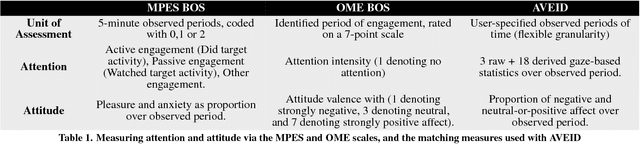
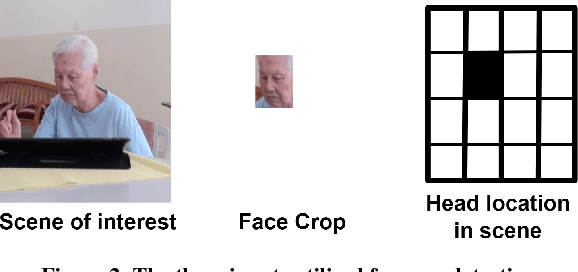
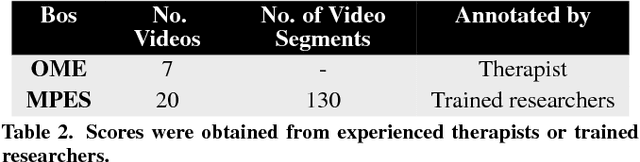
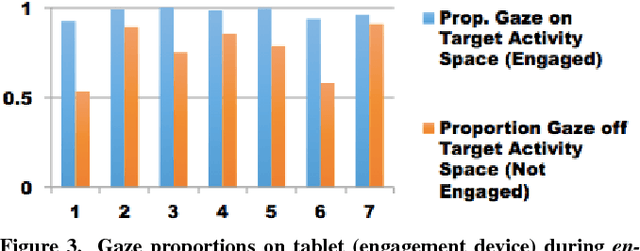
Engagement in dementia is typically measured using behavior observational scales (BOS) that are tedious and involve intensive manual labor to annotate, and are therefore not easily scalable. We propose AVEID, a low cost and easy-to-use video-based engagement measurement tool to determine the engagement level of a person with dementia (PwD) during digital interaction. We show that the objective behavioral measures computed via AVEID correlate well with subjective expert impressions for the popular MPES and OME BOS, confirming its viability and effectiveness. Moreover, AVEID measures can be obtained for a variety of engagement designs, thereby facilitating large-scale studies with PwD populations.